These are electric fish. Every gymnotiform but one is weakly electric: an electric organ running down the body emits a continuous wave or a train of pulses — the electric organ discharge (EOD) — and sensors in the skin read how nearby objects distort it, so the fish “sees” in the dark by electrolocation and signals rivals and mates with its EOD. The electric eel (Electrophorus) is the exception: it is strongly electric, discharging hundreds of volts to stun prey and deter attackers — genuinely dangerous, and never a casual home fish. Two things follow for keeping them: nearly all are nocturnal, murky-water predators that want a dim, well-planted, cave-filled tank and will eat bite-sized tankmates; and, being scaleless, they are sensitive to medications (no copper, half doses). Note two common mix-ups. The “clown” or “featherback” knifefishes of Asia (Chitala, Notopterus) are not in this family — they are Old-World bonytongues, covered elsewhere. And the electric eel lives here, among the knifefishes, not with the true eels.
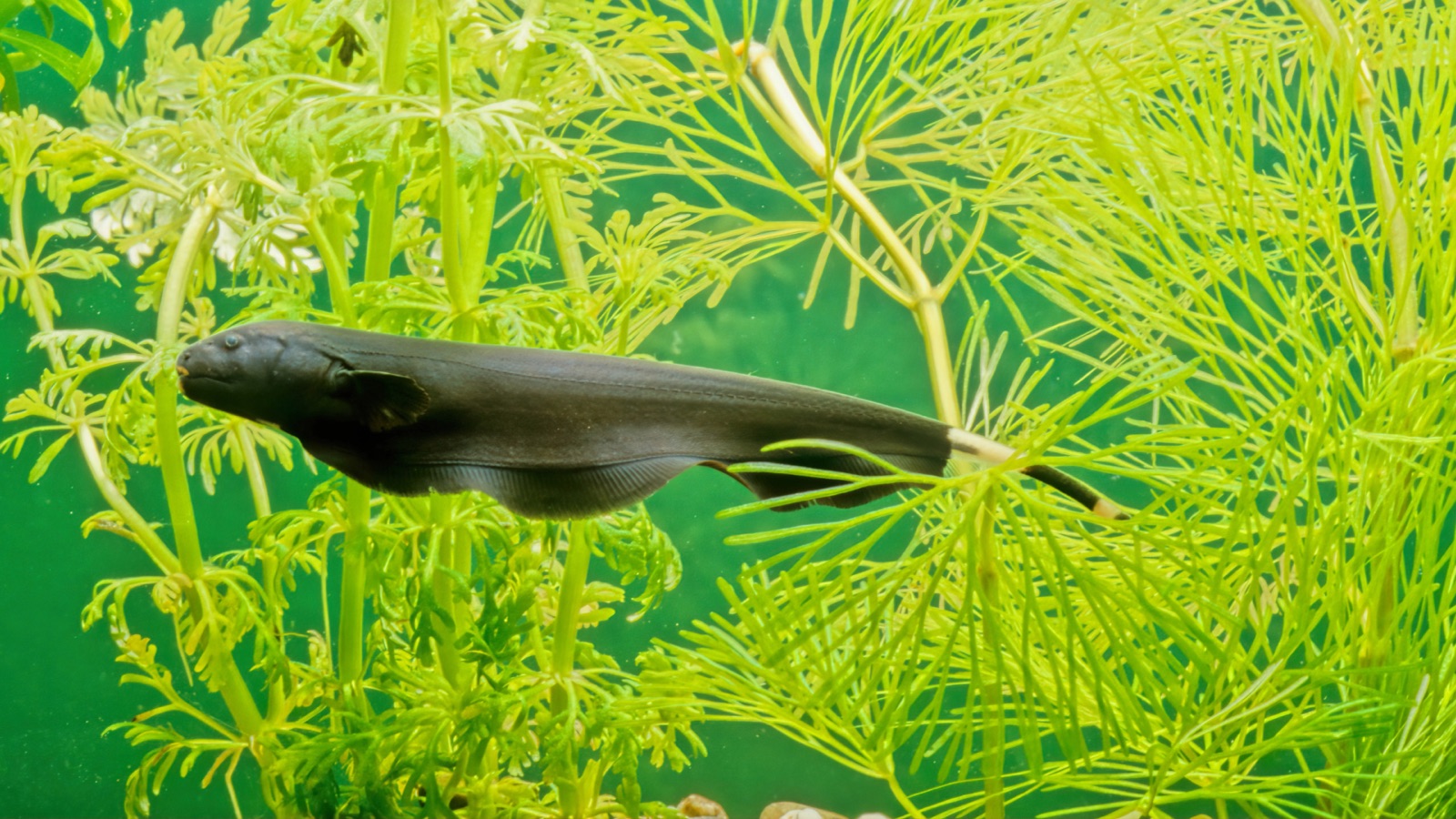
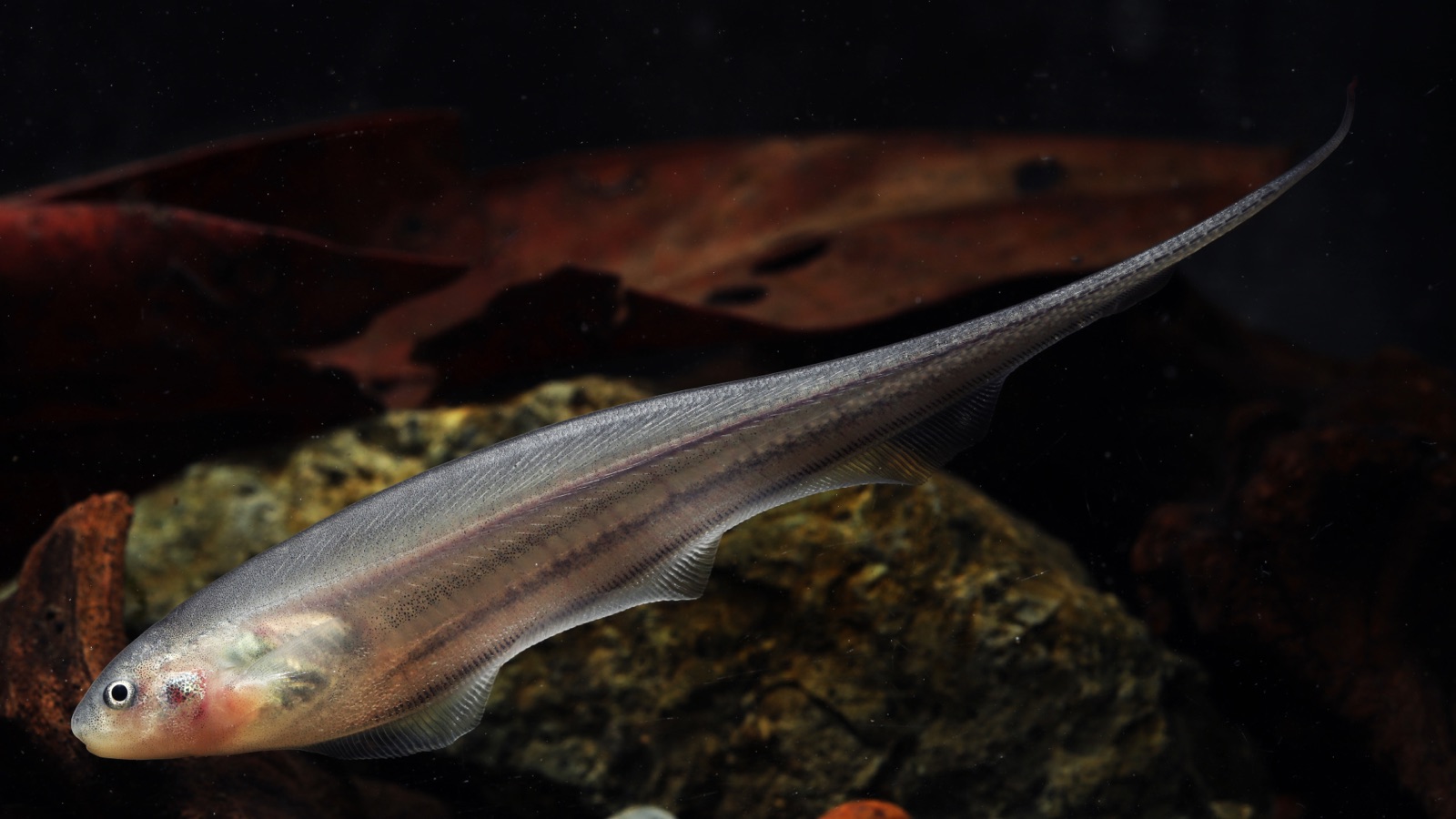
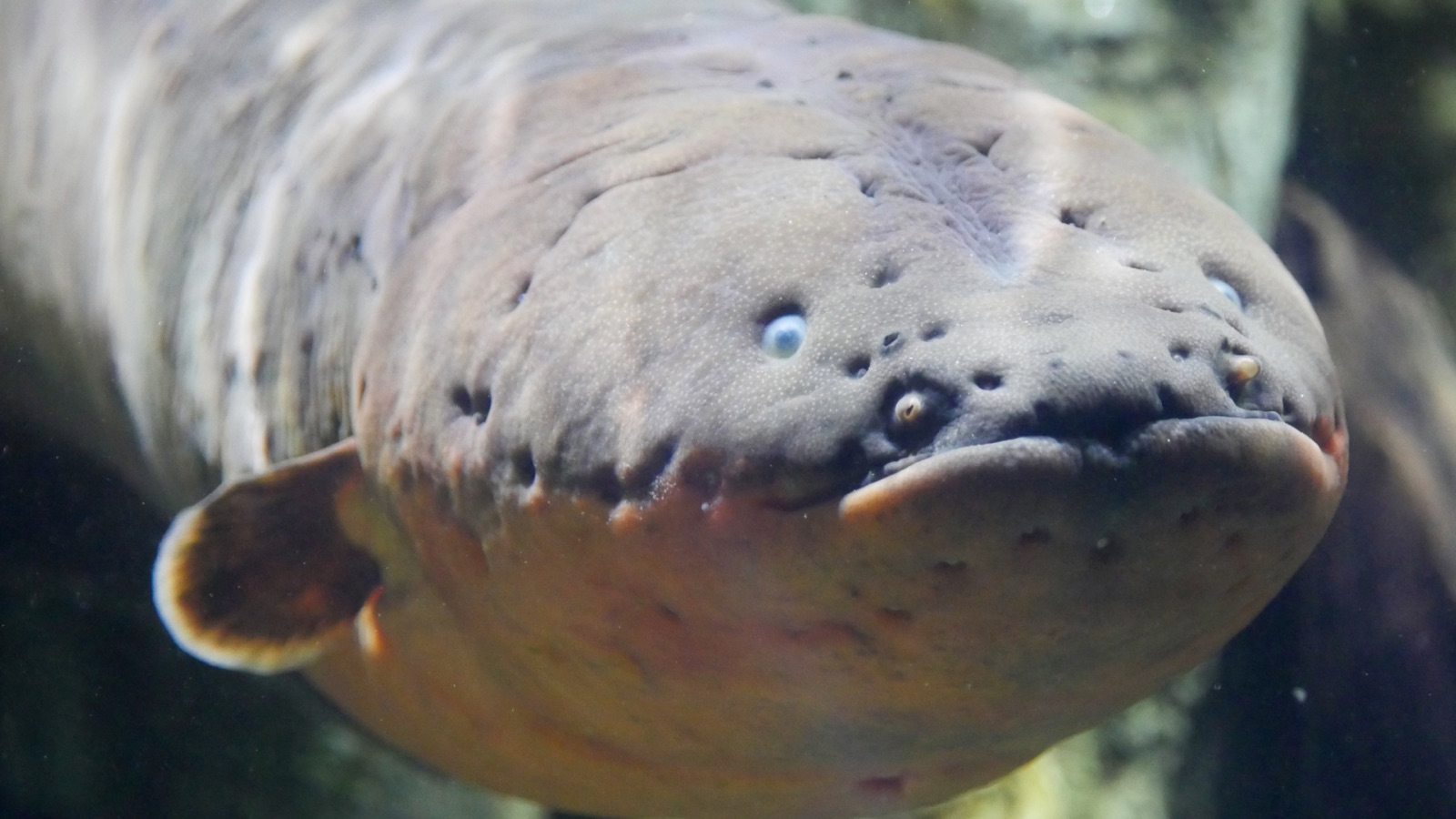
Photos © Adobe Stock
We cover the order Gymnotiformes — the New-World electric knifefishes — grouped by kind: the ghost knifefishes (Apteronotidae), the glass & rattail knifefishes (Sternopygidae), the banded knifefishes & the electric eel (Gymnotidae), and the bluntnose & sand knifefishes (Hypopomidae and Rhamphichthyidae). Sizes are given as total length. Following the Catalog of Fishes and FishBase, the valid set is being written up as each species is researched; the Asian featherback “knifefishes” are a different order and are left out.
Species
Ghost knifefishes · 105
Apteronotidae — Apteronotus, Sternarchella, Sternarchorhynchus and kin. Blade-bodied fish that glide by rippling one long anal fin, hunt at night, and carry the order's most refined electric sense — a fast, wave-type discharge from an organ built of modified nerve cells rather than muscle. The matte-black ghost (Apteronotus albifrons) and the brown ghost (A. leptorhynchus) are the aquarium stars; most of the ~90 species are deep-channel Amazonian fish rarely seen in the trade.
- Adontosternarchus balaenops · Marble knifefish
- Adontosternarchus clarkae
- Adontosternarchus devenanzii
- Adontosternarchus duartei
- Adontosternarchus nebulosus · Clouded ghost knifefish
- Adontosternarchus sachsi
- Apteronotus acidops
- Apteronotus aguaruna
- Apteronotus albertoi
- Apteronotus albifrons · Black ghost knifefish
- Apteronotus anu
- Apteronotus apurensis
- Apteronotus baniwa · Baniwa ghost knifefish
- Apteronotus brasiliensis · Brazilian ghost knifefish
- Apteronotus camposdapazi · Black ghost electric knifefish
- Apteronotus caudimaculosus
- Apteronotus cuchillejo
- Apteronotus cuchillo
- Apteronotus eschmeyeri
- Apteronotus ferrarisi
- Apteronotus galvisi · Galvis's ghost knifefish
- Apteronotus hasemani
- Apteronotus jurubidae
- Apteronotus leptorhynchus · Brown ghost knifefish
- Apteronotus lindalvae
- Apteronotus macrolepis · Large-scaled ghost knifefish
- Apteronotus macrostomus · Large-mouth ghost knifefish
- Apteronotus magdalenensis
- Apteronotus magoi · Mago's ghost knifefish
- Apteronotus mariae
- Apteronotus milesi
- Apteronotus pachamama
- Apteronotus paranaensis
- Apteronotus pemon
- Apteronotus quilombola
- Apteronotus rostratus · Brown ghost knifefish
- Apteronotus spurrellii
- Compsaraia compsa
- Compsaraia iara
- Compsaraia samueli
- Megadontognathus cuyuniensis
- Megadontognathus kaitukaensis
- Melanosternarchus amaru
- Orthosternarchus tamandua · Tamandua knifefish
- Pariosternarchus amazonensis
- Platyurosternarchus crypticus
- Platyurosternarchus macrostoma
- Porotergus bonapartii
- Porotergus duende
- Porotergus ellisi · Ellis's ghost knifefish
- Porotergus gimbeli
- Porotergus gymnotus
- Porotergus maroon
- Porotergus sambaibensis
- Sternarchella calhamazon
- Sternarchella curvioperculata
- Sternarchella duccis
- Sternarchella orinoco
- Sternarchella orthos
- Sternarchella patriciae
- Sternarchella raptor · Bulldog knifefish
- Sternarchella rex
- Sternarchella schotti
- Sternarchella sima
- Sternarchogiton labiatus
- Sternarchogiton nattereri
- Sternarchogiton porcinum
- Sternarchogiton zuanoni
- Sternarchorhamphus muelleri · Tubesnout knifefish
- Sternarchorhynchus axelrodi · Axelrod's tube-snouted ghost knifefish
- Sternarchorhynchus britskii
- Sternarchorhynchus caboclo
- Sternarchorhynchus chaoi
- Sternarchorhynchus cramptoni · Crampton's tube-snouted ghost knifefish
- Sternarchorhynchus curumim · Curumim tube-snouted ghost knifefish
- Sternarchorhynchus curvirostris
- Sternarchorhynchus freemani · Freeman's tube-snouted ghost knifefish
- Sternarchorhynchus galibi · Galibi tube-snouted ghost knifefish
- Sternarchorhynchus gnomus
- Sternarchorhynchus goeldii
- Sternarchorhynchus guayaberensis
- Sternarchorhynchus hagedornae
- Sternarchorhynchus higuchii
- Sternarchorhynchus inpai
- Sternarchorhynchus jaimei · Jamei's tube-snouted ghost knifefish
- Sternarchorhynchus kokraimoro · Kokraimoro tube-snouted ghost knifefish
- Sternarchorhynchus mareikeae
- Sternarchorhynchus marreroi · Marrero's tube-snouted ghost knifefish
- Sternarchorhynchus mendesi · Mendes' tube-snouted ghost knifefish
- Sternarchorhynchus mesensis · Tube-snouted ghost knifefish
- Sternarchorhynchus montanus · Montanus tube-snouted ghost knifefish
- Sternarchorhynchus mormyrus
- Sternarchorhynchus oxyrhynchus · Elephant-nose knifefish
- Sternarchorhynchus retzeri
- Sternarchorhynchus roseni
- Sternarchorhynchus schwassmanni · Schwassmann's tube-snouted ghost knifefish
- Sternarchorhynchus severii
- Sternarchorhynchus starksi
- Sternarchorhynchus stewarti
- Sternarchorhynchus taphorni · Taphorn's tube-snouted ghost knifefish
- Sternarchorhynchus villasboasi
- Sternarchorhynchus yepezi · Tube-snouted ghost knifefish
- Tembeassu marauna
- Tembeassu titanicus
- Tenebrosternarchus preto
Glass & rattail knifefishes · 61
Sternopygidae — Eigenmannia, Sternopygus, Rhabdolichops, Distocyclus. Slender, long-tailed fish of open, flowing water; the glass knifefish (Eigenmannia) is translucent enough to show its spine, while the rattail Sternopygus is among the largest gymnotiforms. Continuous 'hummers' whose electric organ discharge is a steady wave rather than a pulse.
- Archolaemus blax · Blax's longtail knifefish
- Archolaemus ferreirai
- Archolaemus janeae
- Archolaemus luciae
- Archolaemus orientalis
- Archolaemus santosi
- Distocyclus conirostris
- Eigenmannia antonioi
- Eigenmannia besouro · São Francisco knifefish
- Eigenmannia camposi
- Eigenmannia catira
- Eigenmannia correntes
- Eigenmannia desantanai
- Eigenmannia dutrai
- Eigenmannia guairaca
- Eigenmannia humboldtii
- Eigenmannia limbata · Glass knifefish
- Eigenmannia loretana
- Eigenmannia macrops · Glass knifefish
- Eigenmannia macuxi · Glass knifefish
- Eigenmannia magoi
- Eigenmannia matintapereira
- Eigenmannia meeki
- Eigenmannia microstoma
- Eigenmannia muirapinima
- Eigenmannia nigra
- Eigenmannia oradens
- Eigenmannia pavulagem
- Eigenmannia sayona
- Eigenmannia sirius · Glass knifefish
- Eigenmannia trilineata · Glass knifefish
- Eigenmannia vicentespelaea · Cave glass knifefish
- Eigenmannia virescens · Glass knifefish
- Eigenmannia waiwai
- Eigenmannia wazowskii
- Eigenmannia zenuensis
- Japigny kirschbaum
- Pararcholaemus guchereauae
- Rhabdolichops caviceps
- Rhabdolichops eastwardi
- Rhabdolichops electrogrammus
- Rhabdolichops jegui
- Rhabdolichops lundbergi
- Rhabdolichops navalha
- Rhabdolichops nigrimans
- Rhabdolichops stewarti
- Rhabdolichops troscheli
- Rhabdolichops zareti
- Rhinosternarchus goajira
- Sternopygus aequilabiatus · Rattail knifefish
- Sternopygus arenatus
- Sternopygus astrabes
- Sternopygus branco
- Sternopygus dariensis
- Sternopygus embera
- Sternopygus macrurus · Longtail knifefish
- Sternopygus obtusirostris
- Sternopygus pejeraton · Pejerraton knifefish
- Sternopygus sabaji
- Sternopygus sarae · Sara's longtail knifefish
- Sternopygus xingu
Banded knifefishes & electric eel · 49
Gymnotidae — the banded knifefishes (Gymnotus) and the electric eel (Electrophorus). Gymnotus are stout, boldly barred, air-breathing predators of swamps and floodplains across the Neotropics. The electric eel — not an eel at all but a giant knifefish — reaches about two metres and is the only member of the order that is strongly electric, discharging 600 volts and more to stun prey. Both are obligate air-breathers.
- Electrophorus electricus · Electric eel
- Electrophorus varii · Vari's electric eel
- Electrophorus voltai · Volta's electric eel
- Gymnotus anguillaris · Banded knifefish
- Gymnotus arapaima
- Gymnotus arapiuns
- Gymnotus ardilai
- Gymnotus aripuana
- Gymnotus bahianus
- Gymnotus capanema
- Gymnotus capitimaculatus
- Gymnotus carapo · Banded knifefish
- Gymnotus cataniapo · Banded knifefish
- Gymnotus chaviro · Chaviro banded knifefish
- Gymnotus chimarrao
- Gymnotus choco · Choco banded knifefish
- Gymnotus coatesi
- Gymnotus coropinae · Banded knifefish
- Gymnotus cuia
- Gymnotus curupira
- Gymnotus cylindricus · Banded knifefish
- Gymnotus darwini
- Gymnotus diamantinensis
- Gymnotus esmeraldas
- Gymnotus eyra · Banded knifefish
- Gymnotus henni · Mayupa
- Gymnotus inaequilabiatus · Tuvira
- Gymnotus interruptus
- Gymnotus javari · False tiger knifefish
- Gymnotus jonasi
- Gymnotus maculosus · Spotted knifefish
- Gymnotus mamiraua · Mamiraua banded knifefish
- Gymnotus melanopleura
- Gymnotus obscurus
- Gymnotus omarorum
- Gymnotus onca
- Gymnotus panamensis
- Gymnotus pantanal · Pantanal banded knifefish
- Gymnotus pantherinus · Panther knifefish
- Gymnotus paraguensis · Morenita
- Gymnotus pedanopterus · Zebra knifefish
- Gymnotus refugio
- Gymnotus riberalta
- Gymnotus stenoleucus
- Gymnotus sylvius
- Gymnotus tigre · Tiger knifefish
- Gymnotus tiquie
- Gymnotus ucamara
- Gymnotus varzea · Várzea banded knifefish
Bluntnose & sand knifefishes · 64
Hypopomidae & Rhamphichthyidae — the bluntnose knifefishes (Brachyhypopomus, Hypopomus) and the sand or tubesnout knifefishes (Rhamphichthys, Gymnorhamphichthys). Small, cryptic, nocturnal fish of leaf litter and sandy shallows; the sand knifefishes have a long, probing snout for sifting invertebrates from the substrate. Pulse-type electric fish, each species with its own signature discharge.
- Akawaio penak
- Brachyhypopomus alberti
- Brachyhypopomus arrayae
- Brachyhypopomus batesi
- Brachyhypopomus beebei
- Brachyhypopomus belindae
- Brachyhypopomus benjamini
- Brachyhypopomus bennetti
- Brachyhypopomus bombilla · Bombilla knifefish
- Brachyhypopomus brevirostris · Bluntnose knifefish
- Brachyhypopomus bullocki
- Brachyhypopomus cunia · Bluntnose knifefish
- Brachyhypopomus degy
- Brachyhypopomus diazi · Diaz's bluntnose knifefish
- Brachyhypopomus draco
- Brachyhypopomus flavipomus
- Brachyhypopomus gauderio
- Brachyhypopomus hamiltoni
- Brachyhypopomus hendersoni
- Brachyhypopomus janeiroensis
- Brachyhypopomus jureiae
- Brachyhypopomus menezesi
- Brachyhypopomus occidentalis · Bluntnose knifefish
- Brachyhypopomus palenque
- Brachyhypopomus pinnicaudatus
- Brachyhypopomus provenzanoi
- Brachyhypopomus regani
- Brachyhypopomus sullivani
- Brachyhypopomus verdii
- Brachyhypopomus walteri
- Gymnorhamphichthys bogardusi
- Gymnorhamphichthys britskii
- Gymnorhamphichthys hypostomus · Morse knifefish
- Gymnorhamphichthys rondoni · Mousetail knifefish
- Gymnorhamphichthys rosamariae · Sand knifefish
- Hypopomus artedi
- Hypopygus benoneae
- Hypopygus cryptogenes
- Hypopygus hoedemani
- Hypopygus isbruckeri
- Hypopygus lepturus
- Hypopygus minissimus
- Hypopygus neblinae · Marbled knifefish
- Hypopygus nijsseni · Nijssen's Hypopygus
- Hypopygus ortegai
- Hypopygus varii
- Iracema caiana · Dashed knifefish
- Microsternarchus bilineatus · Sarapó
- Microsternarchus brevis
- Microsternarchus javieri
- Microsternarchus longicaudatus
- Microsternarchus schonmanni
- Procerusternarchus pixuna
- Racenisia fimbriipinna
- Rhamphichthys apurensis · Sand knifefish
- Rhamphichthys drepanium
- Rhamphichthys hahni · Roundnose knifefish
- Rhamphichthys heleios
- Rhamphichthys lineatus · Lined sand knifefish
- Rhamphichthys pantherinus · Panther sand knifefish
- Rhamphichthys rostratus · Sand knifefish
- Steatogenys duidae · Centipede Knifefish
- Steatogenys elegans · Elegant knifefish
- Steatogenys ocellatus
What’s new
All updates →- Name change5 Knifefishes names updated to current Catalog of Fishes validity2026-09-04
- Updated275 Knifefishes articles refreshed2026-07-10
- Updated4 Knifefishes articles refreshed2026-07-09
- New speciesApteronotus aguaruna2026-06-10
- New speciesApteronotus pachamama2026-06-10