Taxonomy & naming
Chaetostoma dermorhynchus was formally described by the Belgian-British ichthyologist George Albert Boulenger in 1887, based on material collected from rivers draining the eastern slopes of the Andes in Ecuador and northern Peru. The species was placed in the genus Chaetostoma Tschudi, 1846, which now contains over 40 recognised species of small rubbernose or bulldog plecos distributed across Andean and sub-Andean river systems from Venezuela to Bolivia. The genus belongs to the tribe Chaetostomini within the subfamily Hypostominae. Chaetostoma has historically been taxonomically complex owing to variable colouration and body proportions across populations, and several species were described, synonymised, and later resurrected over the twentieth century. The validity of C. dermorhynchus has generally been upheld in modern revisions, including those informed by osteological and morphometric analyses. The species epithet refers to the textured, leathery appearance of the snout—from the Greek derma (skin) and rhynchus (snout)—a reference to the characteristic fleshy oral region shared by all chaetostomines but particularly pronounced in this species. Catalog of Fishes (Eschmeyer, CAS) lists C. dermorhynchus as a valid species.
This fish was long listed as Chaetostoma dermorhynchum; Eschmeyer's Catalog of Fishes places the species in Chaetostoma, and the current combination Chaetostoma dermorhynchus is followed here.
Morphology
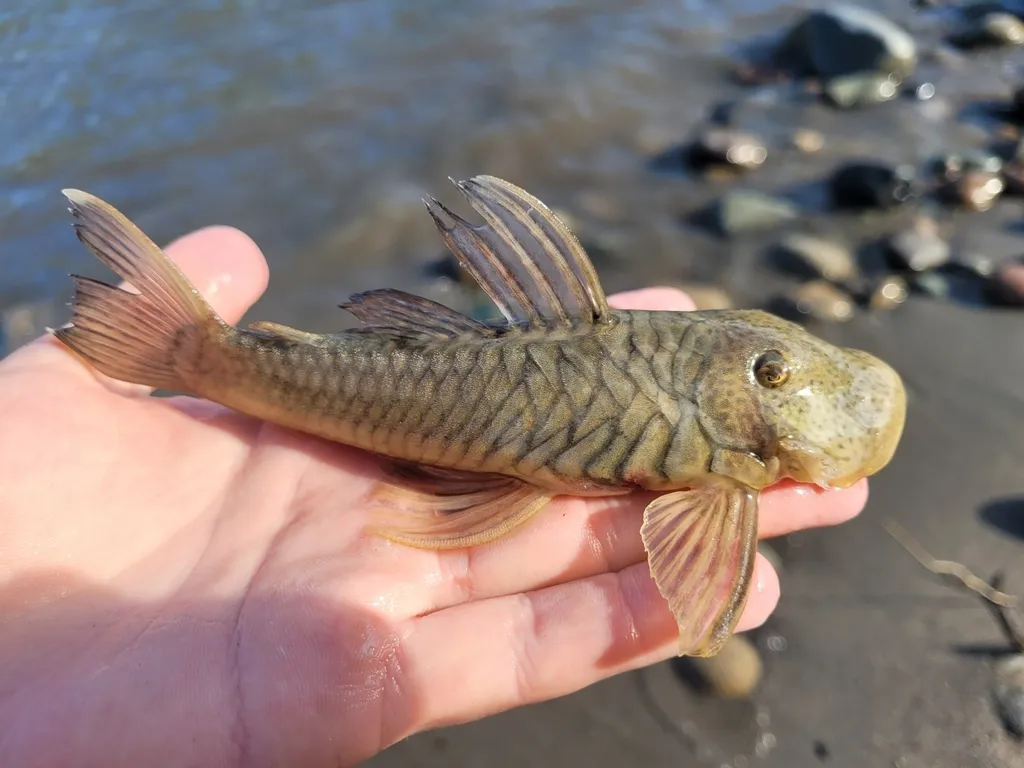
Chaetostoma dermorhynchus reaches approximately 4–5 in in standard length, making it a small to mid-sized representative of the genus. The body is depressed and broadly ovoid in dorsal view, tapering to a slender caudal peduncle. The head is wide and strongly flattened, with the mouth positioned ventrally as a broad, fleshy oral disc bearing numerous small teeth in both jaws—a rasping apparatus well suited for scraping periphyton and biofilm from smooth stones. The snout anterior to the nares is noticeably covered with fleshy integument giving it the rubbery texture implied by the common name. Odontodes (small, tooth-like projections of dermal bone) are well developed on the lateral plates and on the snout margins; in mature males these odontodes may be notably elongated and bristle-like, particularly along the snout edges. General body colouration in preserved material is brownish to grey-brown with irregular pale and dark mottling; live specimens often show a pattern of small pale spots or reticulations on a darker ground, though this varies considerably across localities and may fade in aquarium conditions. The dorsal fin is erect and moderately large, and the pectoral fins are broadly spread, anchoring the fish against current on exposed rock surfaces.
Habitat
This species inhabits clear, fast-flowing streams and small rivers in Andean piedmont and foothill zones of Ecuador and northern Peru, typically at elevations between roughly 300 and 3,937 ft above sea level. The preferred microhabitat consists of exposed bedrock outcrops, cobble runs, and boulder-strewn riffles where current velocity is high and the substrate is scoured clean of fine sediment. Such environments are characteristically cool, highly oxygenated, and low in dissolved nutrients; the water is generally soft and slightly acidic to near-neutral in pH. Water temperatures at these altitudes range from roughly 61–75 °F depending on season and elevation. Chaetostoma dermorhynchus uses its strongly depressed body and broad pectoral fins to hug the substrate in turbulent flow, while the ventral oral disc provides suction purchase on wet rock. It is most frequently found in the shallow riffle zones but can occupy moderate depths where large rocks provide shelter. Riparian forest cover plays an important role in maintaining the cool temperatures and low nutrient inputs characteristic of these streams.
Feeding
Chaetostoma dermorhynchus is a periphyton grazer. The ventral oral disc is equipped with numerous small, spoon-tipped teeth in both premaxilla and dentary that efficiently scrape biofilm—composed of diatoms, cyanobacteria, green algae, and associated organic detritus—from smooth and rough rock surfaces. Gut-content studies on closely related Chaetostoma species consistently document a diet dominated by algal material and fine particulate organic matter, with negligible quantities of animal material. In the wild, C. dermorhynchus forages actively across exposed rock surfaces in fast-flowing riffles, where periphyton growth is stimulated by high light penetration and moving water. Like other rheophilic plecos, it likely supplements algal grazing with incidental invertebrate material (midge larvae, micro-crustaceans) entrapped in biofilm mats. Feeding activity may be crepuscular or nocturnal, reducing exposure to visual predators in the open riffle habitat. In captivity the species accepts a broad range of vegetable foods including spirulina wafers, blanched courgette, and commercial algae-based sinking pellets.
Mating
Specific observations of mating behaviour in Chaetostoma dermorhynchus are not well documented in the published literature. Sexual dimorphism in the genus is generally subtle and often requires close inspection: males typically develop conspicuously elongated odontodes along the snout margins and sometimes on the first pectoral-fin ray during the breeding season, which appear to function in male–male competition and possibly in tactile courtship. Females may appear slightly broader in the abdominal region when gravid. Based on observations of related species and general Chaetostoma breeding ecology, courtship is likely brief, with males guarding sheltered cavities—crevices beneath submerged boulders or undercut rock ledges—into which females deposit adhesive eggs. The current strength and substrate type of their home streams suggest that spawning sites must provide firm, clean substrate and shelter from direct current. Data specific to this species are lacking and field studies would be needed to characterise mating behaviour fully.
Breeding
Captive breeding of Chaetostoma dermorhynchus has been reported only sporadically in the hobby, and detailed protocols remain sparse compared to more popular loricariid species. What is known from related Chaetostoma follows a general pattern consistent with cave-spawning Hypostominae: the male selects or defends a suitable spawning cavity, the female is coaxed inside, and a clutch of relatively large, adhesive eggs is deposited on a hard surface. The male then guards and fans the eggs, which hatch in approximately 5–7 days depending on water temperature. Larvae are large at hatching relative to adult size and carry a substantial yolk sac. Fry become free-swimming within days and immediately begin rasping algae and biofilm. In an aquarium context, providing cool, highly oxygenated water (61–72 °F), strong current, and suitable cave structures (clay caves, smooth pebbles) is considered essential. Breeding success improves when the fish are conditioned on a varied diet rich in vegetable matter. Clutch sizes in the genus typically range from a few dozen to perhaps 100+ eggs depending on female size.
In the aquarium
Chaetostoma dermorhynchus is an undemanding but somewhat exacting pleco once its environmental requirements are understood. The critical factor is water flow: this species originates from high-gradient Andean streams and must have strong current, excellent oxygenation, and clean, cool water to thrive long-term. A tank of at least 21 US gal is appropriate for a single specimen or a pair; a power head or circulation pump directing flow across a bed of smooth rocks and pebbles will replicate natural conditions. Temperature should be maintained at 64–75 °F—the lower end of this range is preferable and standard tropical aquarium temperatures above 79 °F will cause chronic stress. Water should be soft to moderately hard (2–12 dGH) and slightly acidic to neutral (pH 6.5–7.5). Diet is predominantly vegetarian: algae wafers, spirulina tablets, blanched vegetables (courgette, cucumber, spinach), and sinking pellets with a high vegetable content. Occasional protein (frozen bloodworm, small shrimp) can be offered as a supplement. Tankmates should be peaceful species tolerant of the same cool, well-oxygenated conditions—hillstream loaches, small tetras, and similar Andean catfish are suitable. Multiple males may be territorial and should be kept with ample visual barriers. The species is not commonly available and is usually obtained from specialist pleco breeders or importers.
Conservation
Chaetostoma dermorhynchus has not been formally assessed on the IUCN Red List, and its status is listed as Not Evaluated (NE). The species is endemic to foothill and piedmont streams of the eastern Andes in Ecuador and northern Peru—a region experiencing significant pressure from agricultural expansion, cattle ranching, deforestation, and small-scale gold mining in some sectors. These activities cause elevated sedimentation, which represents a critical threat to biofilm-dependent, substrate-associated species: fine sediment smothers the rock surfaces on which Chaetostoma feeds and spawns, and can degrade dissolved oxygen in the riffles these fish depend upon. Hydropower construction in Andean river valleys also fragments populations and alters flow regimes. On the other hand, many Andean foothill streams in Ecuador and Peru remain relatively intact in the upper catchment, and the species likely persists across multiple river systems. Without a dedicated range-wide assessment, population trends remain unknown. Conservation of riparian forest buffers and limitation of upland erosion represent the most effective protections for this and related Andean stream specialists.