These are not bony fish. The Potamotrygonidae are elasmobranchs — cartilaginous fish of the order Myliobatiformes, sharing the sharks’ skeleton of cartilage, their electro-sensory ampullae of Lorenzini, and internal fertilisation by the males’ paired claspers. They are viviparous: a female carries a small litter of two to a dozen pups, nourished inside her by a uterine “milk,” and gives birth to fully-formed miniature rays — there are no eggs and no parental care. We cover only the true South American river stingrays here, and leave out the Old-World freshwater whiprays and the freshwater sawfish, which are different families. Three things define keeping them: a huge, wide-footprint tank (they grow large and live on the floor, not in the water column);pristine water (they are exquisitely sensitive to ammonia and nitrate, and take no salt); and respect for the venomous sting, which can deliver an agonising, medically-serious wound. Read each account before you buy — and check your local law, because several are protected and many jurisdictions restrict their keeping.
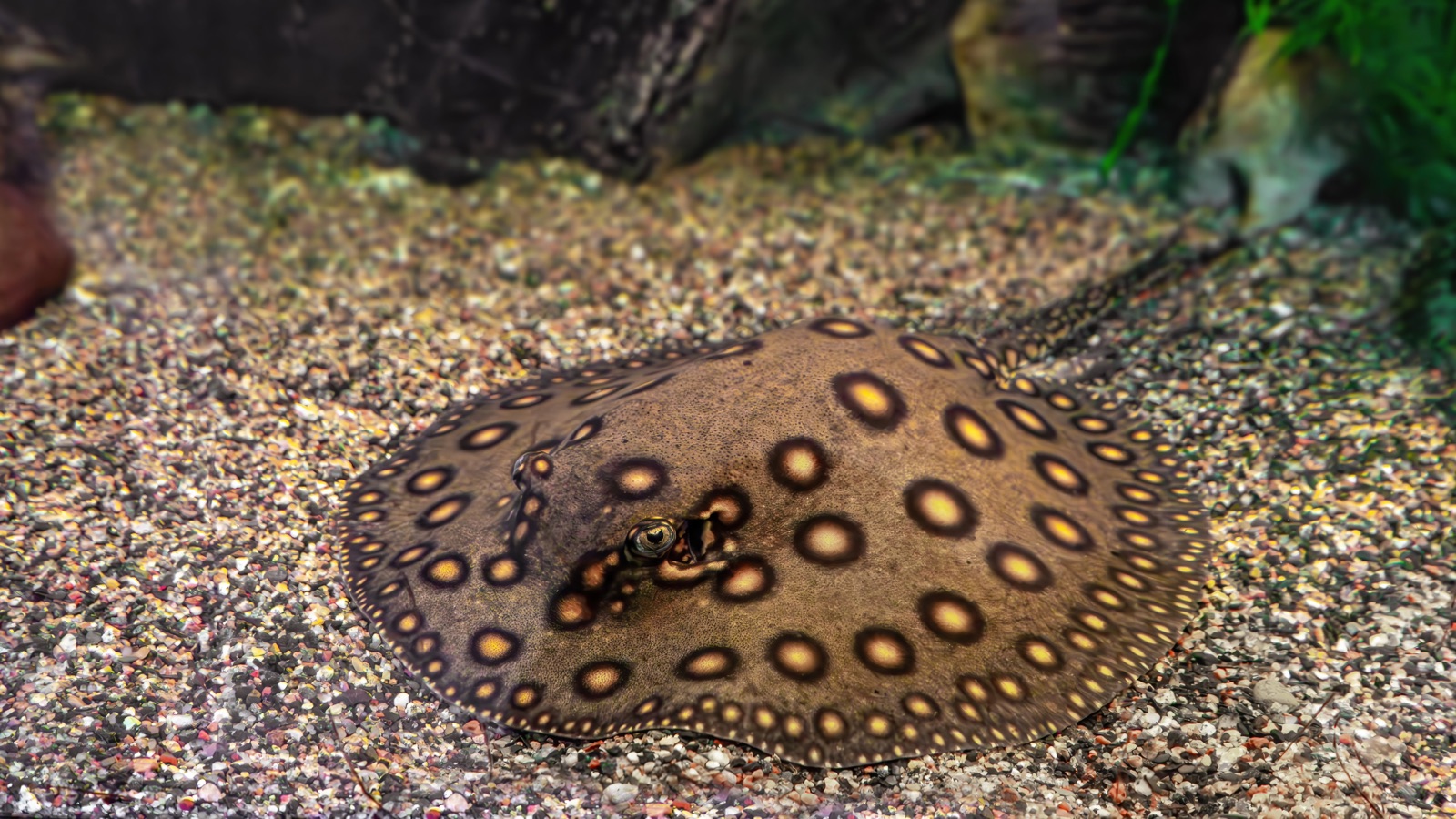
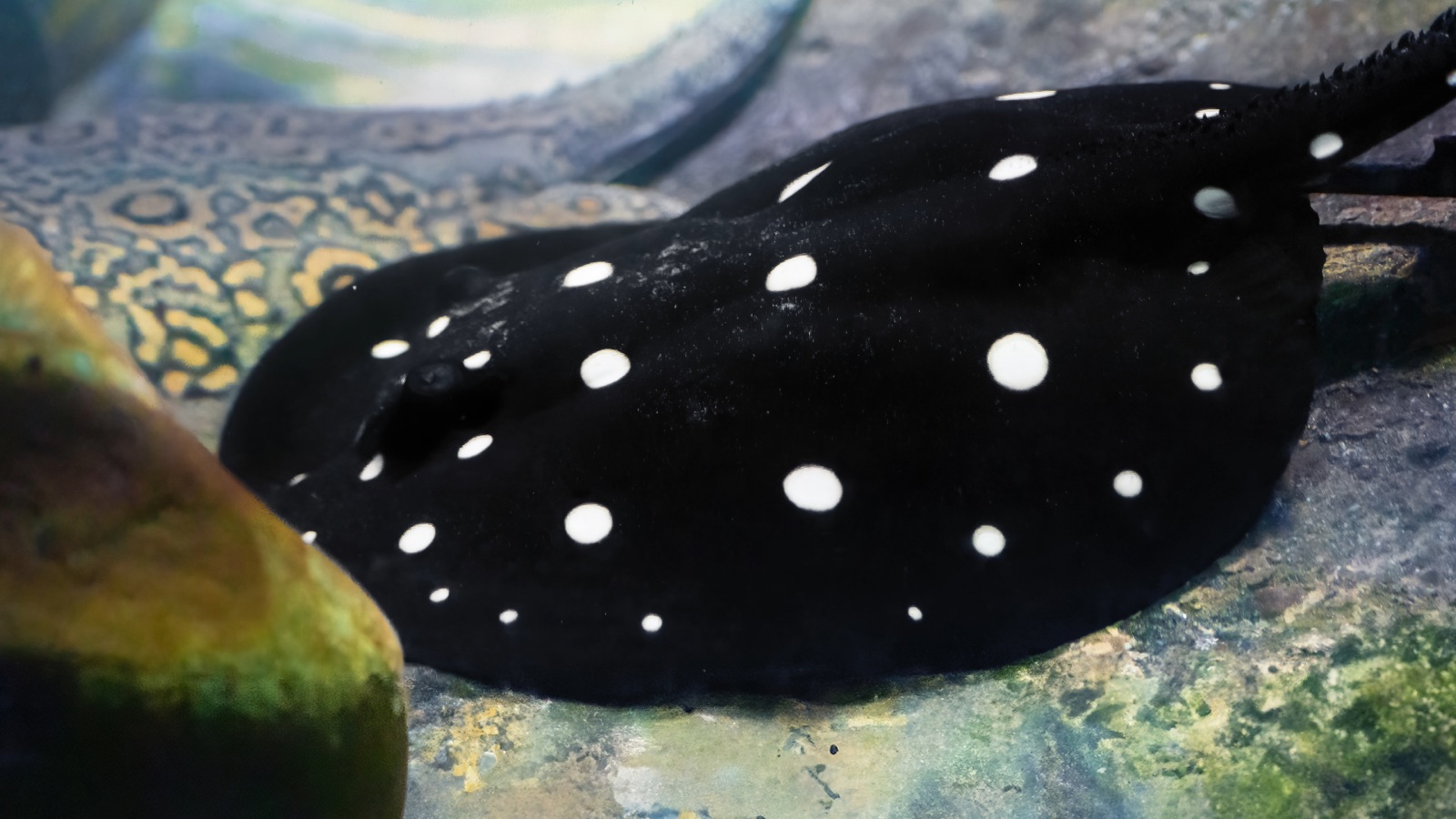
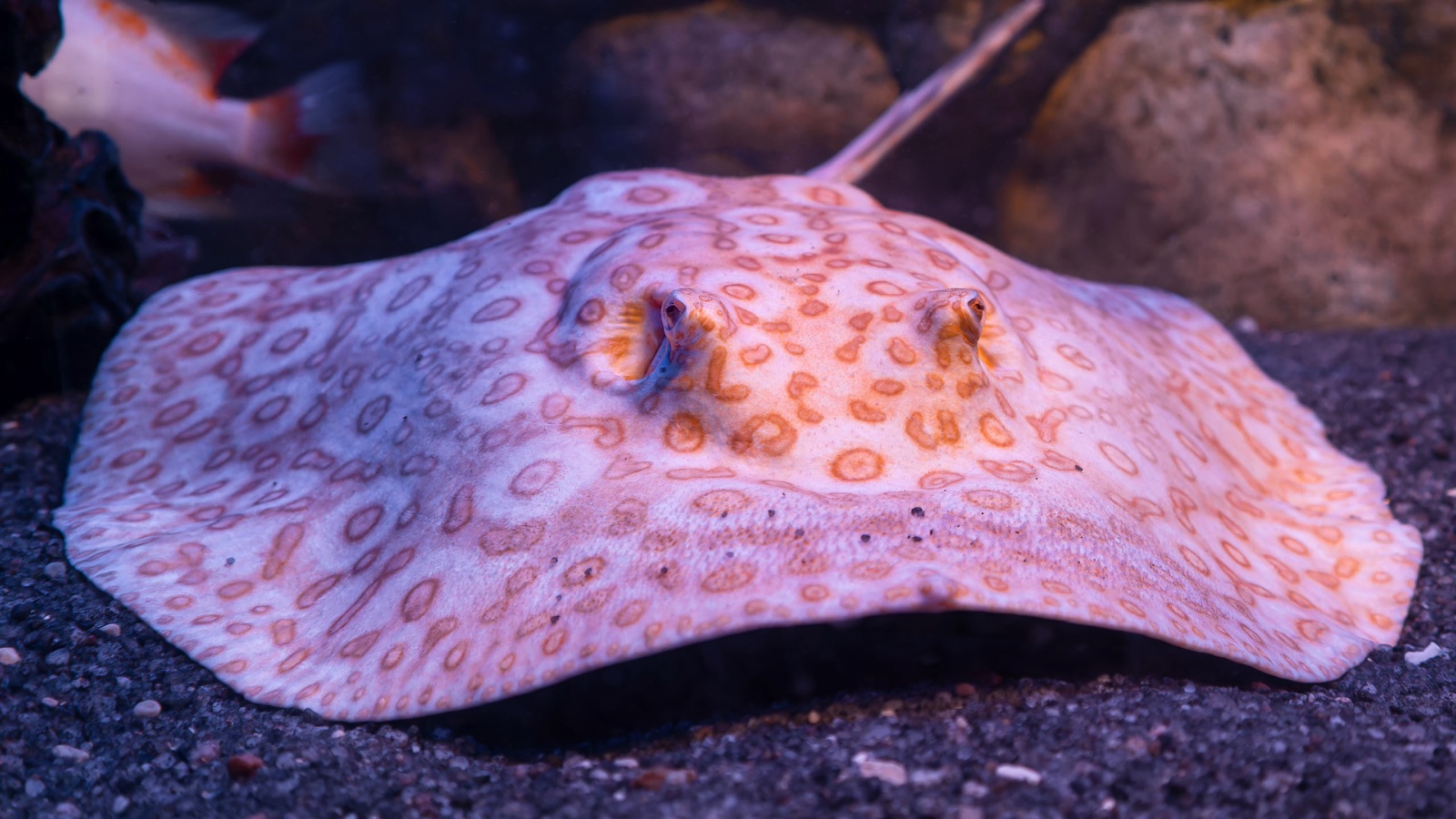
Photos © Adobe Stock
We cover the family Potamotrygonidae — the South American river stingrays — grouped by genus: the large, familiar Potamotrygon, the giant Paratrygon ceja rays, the long-tailed Plesiotrygon, and the round Heliotrygon. Sizes are given as disc width, the standard measure for a ray. Following the Catalog of Fishes and FishBase, the valid set is being written up as each species is researched; the Old-World freshwater whiprays and the sawfish are deliberately left out.
Species
Potamotrygon · 32
The large core genus — the river stingrays of the whole of tropical South America, and almost everything the hobby keeps: the ocellate motoro (P. motoro), the black-diamond Xingu ray (P. leopoldi) and its relative P. henlei, the porcupine, reticulated and china rays. Round-disced, boldly patterned bottom-dwellers of sand and silt, ranging from teacup-sized to nearly a metre across.
- Potamotrygon adamastor
- Potamotrygon albimaculata · Tapajós river stingray
- Potamotrygon amandae · Amanda's river stingray
- Potamotrygon amazona
- Potamotrygon boesemani · Boeseman's stingray
- Potamotrygon brachyura · Short-tailed river stingray
- Potamotrygon constellata · Thorny river stingray
- Potamotrygon falkneri · Largespot river stingray
- Potamotrygon garmani
- Potamotrygon henlei · Bigtooth river stingray
- Potamotrygon histrix · Porcupine river stingray
- Potamotrygon humerosa
- Potamotrygon jabuti · Jabuti stingray
- Potamotrygon leopoldi · Black-diamond stingray
- Potamotrygon limai
- Potamotrygon magdalenae · Magdalena river stingray
- Potamotrygon marinae
- Potamotrygon marquesi
- Potamotrygon motoro · Ocellate river stingray
- Potamotrygon ocellata · Red-blotched river stingray
- Potamotrygon orbignyi · Smooth back river stingray
- Potamotrygon pantanensis · Pantanal river stingray
- Potamotrygon rex · King river stingray
- Potamotrygon schroederi · Flower ray
- Potamotrygon schuhmacheri
- Potamotrygon scobina · Mosaic stingray
- Potamotrygon signata · Parnaiba river stingray
- Potamotrygon siponinmorok
- Potamotrygon tatianae · Otorongo ray
- Potamotrygon tigrina · Tiger river stingray
- Potamotrygon wallacei · Cururu stingray
- Potamotrygon yepezi · Maracaibo river stingray
Paratrygon · 7
The ceja or discus rays — very large, near-circular rays with a long, fragile, whip-thin tail and a translucent disc margin, of the deeper channels and lakes of the Amazon and Orinoco. Demanding and rarely kept; among the largest of the freshwater rays.
Plesiotrygon · 2
The long-tailed river rays (antenna or 'scubadiver' rays) — slender-disced Amazonian rays with an extraordinarily long, thread-like tail far exceeding the body. Specialists of soft river-bed sediment in the western Amazon.
- Plesiotrygon iwamae · Antenna ray
- Plesiotrygon nana · Dwarf antenna ray
Heliotrygon · 2
The round rays — recently-described, almost perfectly circular, flattened rays of the western Amazon with a short tail and reduced sting. Cryptic, little-known and not in the trade.
- Heliotrygon gomesi · Disc ray
- Heliotrygon rosai · Rosa's round ray
What’s new
All updates →- Updated5 Stingrays articles refreshed2026-09-03
- New speciesParatrygon araguaia2026-05-19
- New speciesParatrygon lucindai2026-05-19
- New speciesParatrygon munduruku2026-05-19
- New speciesParatrygon raonii2026-05-19