Taxonomy & naming
Holoshesthes pequira was originally described by Franz Steindachner in 1882. The valid name, governed by the Catalog of Fishes (Eschmeyer, CAS), is Holoshesthes pequira (Steindachner, 1882), with the authority in parentheses indicating the species was originally placed in a different genus before being transferred to Odontostilbe.
Odontostilbe is a genus of small characids in the family Characidae, broadly distributed across the main river systems of tropical and subtropical South America. The genus belongs to the Cheirodontinae, a subfamily of miniature characids characterised by their small size, distinct dentition, and tendency toward omnivory including lepidophagy (scale-eating). H. pequira is among the better-known members of the genus due to its abundance in Paraguay basin studies.
This fish was long listed as Odontostilbe pequira; Eschmeyer's Catalog of Fishes places the species in Holoshesthes, and the current combination Holoshesthes pequira is followed here.
Morphology
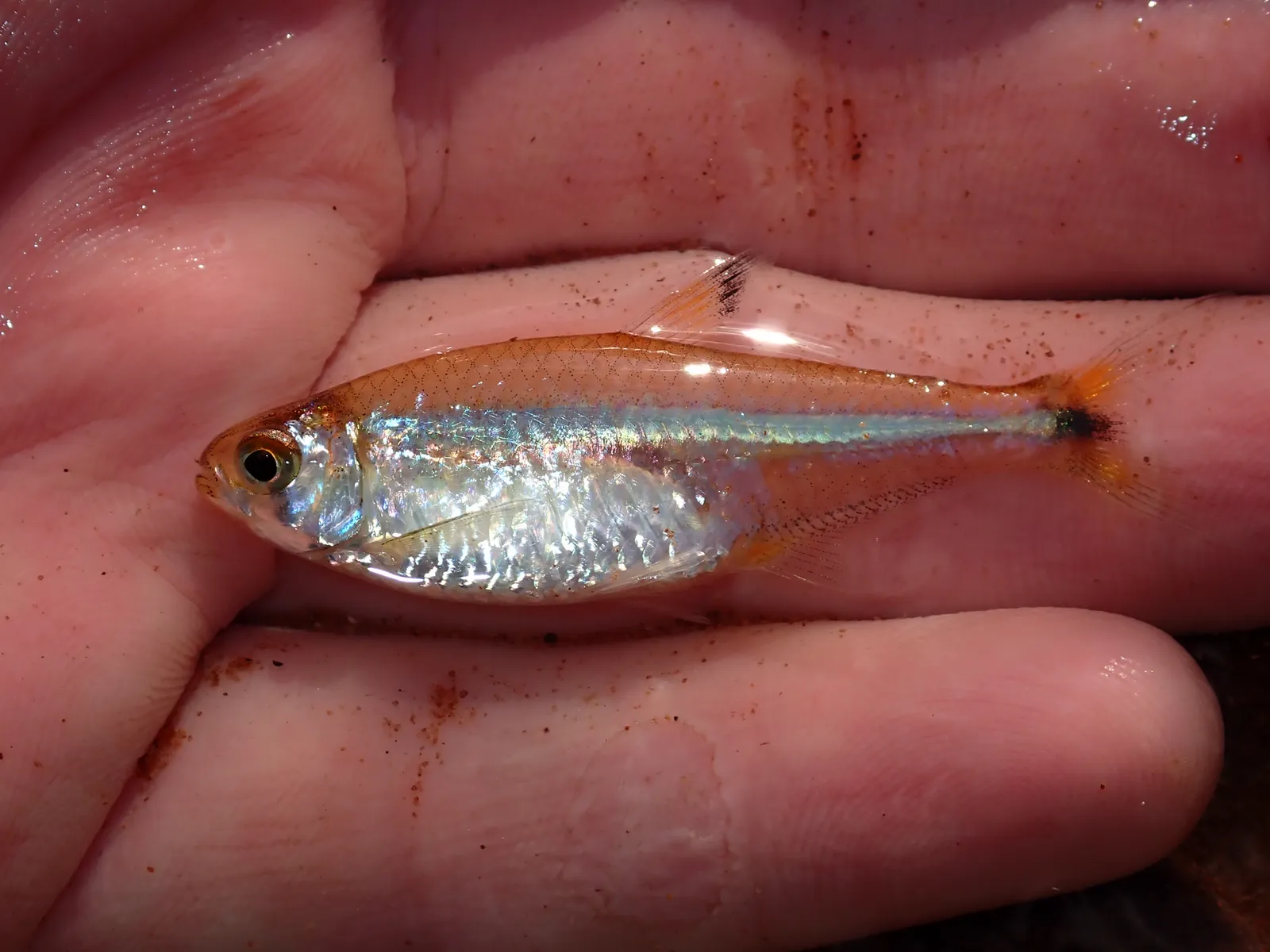
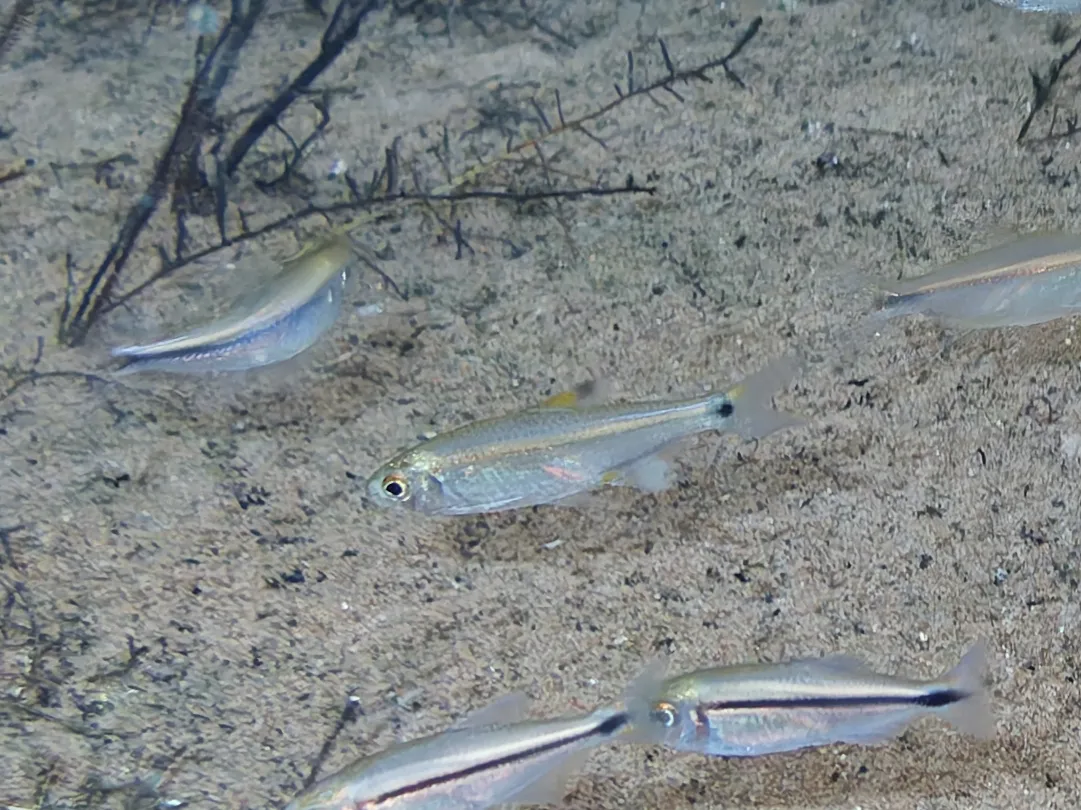
Holoshesthes pequira is a slender, laterally compressed characid reaching a maximum of 2 in standard length. The body is predominantly silvery with the typical translucent appearance of small cheirodontine tetras, and the flanks may show a faint lateral stripe or iridescent sheen depending on lighting and condition. Fins are clear to lightly pigmented.
As in other Odontostilbe, the dentition is distinctive — the genus name references the tooth structure — with multicuspid teeth adapted to a diverse diet including lepidophagy. Males mature at a smaller size than females, reaching maturity at approximately 1 in SL versus 1 in SL in females, a pattern consistent with the energetic demands of egg production in female characids.
Habitat
Holoshesthes pequira is distributed through the Paraguay and lower Paraná River basins, with notable populations recorded in the southern Pantanal floodplain of the Paraguay River. This is one of the world's largest tropical wetland systems, characterised by extreme seasonal flooding that inundates vast areas of the Paraguayan and Brazilian lowlands each year.
The species inhabits benthopelagic zones in relatively soft, warm water. FishBase records temperature preferences of 72–79 °F and pH 6.2–7.5, with hardness up to approximately 20 dH. Like many Pantanal fishes, H. pequira has evolved in intimate association with the flood pulse — the seasonal alternation of inundation and recession that drives food availability, spawning cues, and habitat connectivity across the floodplain.
Feeding
Holoshesthes pequira is an omnivore with a notably broad diet for a fish of its size. FishBase records its feeding on plant material, fish scales, and fish mucus. The scale- and mucus-feeding behaviour — lepidophagy and mucivory — is characteristic of the Cheirodontinae and gives Odontostilbe its tooth specialisations. In the Pantanal, food availability fluctuates seasonally with flood levels, and this dietary flexibility likely allows the species to exploit whatever resources are most abundant.
In captivity, H. pequira will accept standard small-tetra fare: quality flake foods, micro-pellets, and small live or frozen foods such as brine shrimp nauplii, Daphnia, and Cyclops. The scale-eating habit is generally not a concern in aquarium settings provided the fish are adequately fed, though it is worth noting for tanks with larger, slow-moving tankmates.
Mating
Holoshesthes pequira is an egg-scattering open spawner typical of small characids. Spawning is triggered and sustained by the seasonal flood cycle of the Paraguay River basin — an extended reproductive season lasting approximately ten months has been documented in the southern Pantanal, one of the longest known for a South American tetra-sized fish.
Males mature at a smaller size and presumably earlier than females, and courtship follows the open-water egg-scattering pattern common to the Cheirodontinae: males pursue gravid females among fine-leaved vegetation or in open water, releasing sperm over scattered eggs. No parental care is offered. The flood-pulse timing aligns spawning with periods of elevated food availability and habitat connectivity, maximising larval survival.
Breeding
Documented fecundity in wild females is approximately 181 oocytes per individual, a relatively modest clutch consistent with the strategy of repeated spawning bouts over an extended season rather than single large clutches. Females reach maturity at roughly 1 in SL, which is small even by small-tetra standards, reflecting the selective pressure of a high-productivity but seasonally variable environment.
In aquarium breeding, H. pequira can be expected to behave like other small Cheirodontinae: eggs are adhesive and scattered among fine-leaved plants or spawning mops, adults show no parental care and will consume eggs if not removed, and fry are tiny at hatching, requiring infusoria or commercial liquid fry foods before advancing to newly hatched brine shrimp. Warm, soft-to-moderately-hard water in the 72–79 °F range replicates natural conditions.
In the aquarium
Holoshesthes pequira is not commonly encountered in the mainstream aquarium trade but occasionally appears in specialist shipments from South America. Its care requirements are typical of small Cheirodontinae tetras: a peaceful, active schooling fish that does best in groups of eight or more in a planted aquarium with gentle filtration and soft to moderately hard, slightly acidic to neutral water (pH 6.2–7.5, 72–79 °F).
A darkened substrate, floating plants, and subdued lighting bring out the natural behaviour and reduce stress-related pallor. The scale-eating dietary tendency is worth bearing in mind: well-fed specimens in groups of their own kind are unlikely to cause problems, but keeping them with sluggish, large-scaled fish in a tank where feeding competition is high is not ideal. They coexist well with other similarly sized peaceful characids, small rasboras, and calm corydoras. A biotope-style setup evoking the Pantanal floodplain — tannin-stained water, leaf litter, driftwood — suits the species aesthetically and biologically.
Conservation
Holoshesthes pequira is assessed as Least Concern (LC) on the IUCN Red List, with the assessment dated 4 March 2021. The species is broadly distributed across the Paraguay and lower Paraná river basins and is associated with the Pantanal, one of the largest and most ecologically intact floodplain wetland systems in the world, which provides substantial habitat across a wide geographic area.
While the species faces no immediate threat of extinction, the Pantanal as a whole is subject to growing pressure from agricultural expansion, upstream impoundment of rivers that disrupt flood pulses, and water pollution. Since H. pequira's reproductive ecology is closely tied to the seasonal flood cycle, any significant alteration to that cycle — through dam construction or catchment modification — has the potential to affect population dynamics over the longer term.