Taxonomy & naming
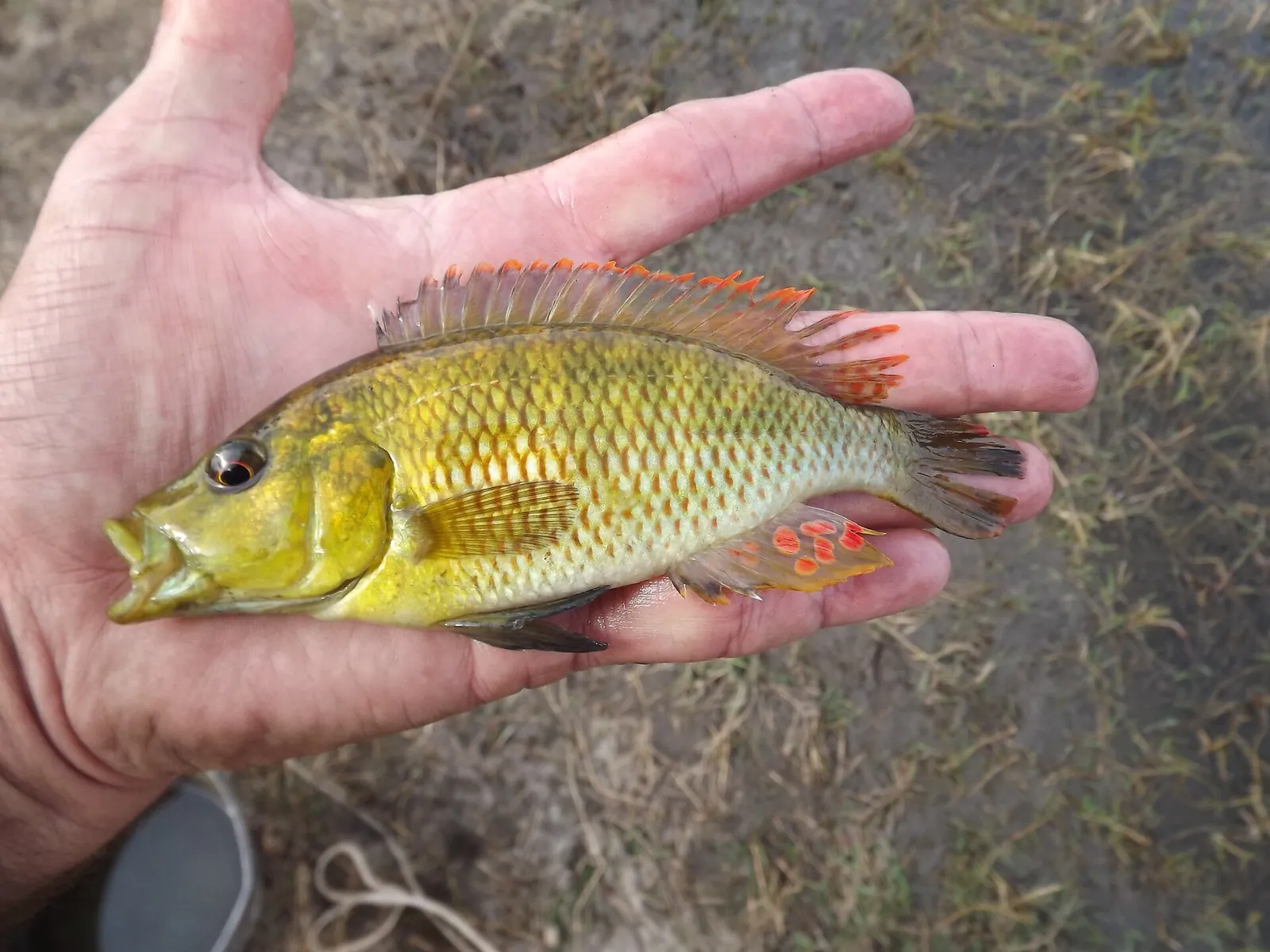
Chetia brevis was described in 1968 by Rodney Alan Jubb, the South African ichthyologist best known for his 1967 reference work Freshwater Fishes of Southern Africa, as the second recognized species in the genus Chetia — a small genus he and earlier authors placed alongside the region's other tilapiine-like and haplochromine cichlids in the subfamily Pseudocrenilabrinae. The genus's type species and only other member, Chetia flaviventris (the canary kurper), had been described decades earlier from the Limpopo system, and Jubb's description of brevis established that the genus was not monotypic. The specific epithet, Latin brevis ('short, brief'), is the standard way a second species in a genus is distinguished from its more robust or elongate relative, and almost certainly references a comparatively compact body or fin proportion relative to C. flaviventris, though the precise character singled out by Jubb is not confirmed in the sources available for this article.
Morphology
A verified maximum length and detailed morphometric account specific to Chetia brevis are not confirmed in the sources available here — data sparse. By genus, Chetia are deep-bodied, moderately compressed predatory cichlids with a large mouth suited to taking sizeable invertebrate and fish prey, generally smaller and more streamlined than the region's large Serranochromis and Sargochromis predators. As in its congener C. flaviventris, breeding males are expected to show brighter, more saturated colouration than females, with anal-fin egg-spot ocelli typical of mouthbrooding cichlids, but a species-specific colour description for brevis cannot be responsibly given without a verified source.
Habitat
Chetia brevis is a riverine cichlid of a south-eastern African drainage distinct from the Limpopo system occupied by C. flaviventris; the precise river system is not confirmed in the sources available for this article and is not asserted here. Congeneric Chetia occupy slow-flowing river reaches, backwaters and vegetated margins in warm, generally neutral-to-slightly-alkaline water, and C. brevis is presumed to occupy a broadly similar niche, but specific temperature, pH or depth figures for this species are not available and are left unspecified rather than inferred.
Feeding
No species-specific feeding study for Chetia brevis is confirmed here. By genus, Chetia are opportunistic predators, taking aquatic invertebrates and small fish in addition to some plant material — a diet broadly similar to that documented for C. flaviventris. This is presented as genus-typical inference rather than a directly sourced finding for C. brevis.
Mating
No courtship behaviour has been documented specifically for Chetia brevis. Its congener C. flaviventris is territorial around spawning, with males defending sites and displaying breeding colour to attract females; C. brevis is presumed to follow a broadly similar pattern typical of maternal-mouthbrooding African cichlids, but this is inference from the genus rather than direct observation of the species.
Breeding
Chetia, as a genus, are maternal mouthbrooders, and C. brevis is presumed to share this reproductive mode with C. flaviventris — the female takes the fertilised eggs into her mouth and incubates them alone until the fry are free-swimming, with no male parental care. No clutch size, incubation period, or aquarium-breeding record specific to C. brevis is confirmed in the sources available here — data sparse.
In the aquarium
Chetia brevis has no documented, established history in the ornamental aquarium trade, in contrast to its congener C. flaviventris, which is occasionally kept by African-cichlid specialists. No species-specific husbandry guidance can be responsibly given for C. brevis without better-sourced information, and prospective keepers should not assume it is available in the hobby or extrapolate detailed care parameters from its congener without verification.
Conservation
The CARES Preservation Program lists Chetia brevis as Endangered. A specific IUCN Red List assessment for this species is not independently confirmed in the sources available for this article. As with several other narrow-range southern and south-eastern African riverine cichlids on the CARES list, the underlying pressures are likely to include habitat degradation, water abstraction and the generally sparse research and monitoring attention such species receive compared with the much better-studied cichlid faunas of Lakes Victoria, Malawi and Tanganyika. A documented captive population under the CARES program serves as insurance against exactly that gap in knowledge and protection.