This section covers the freshwater and brackish pufferfish of the family Tetraodontidae — the ones kept in aquaria — and deliberately leaves out the far larger set of purely marine puffers, as well as the porcupinefish and boxfish. The taxonomy is in active flux: the old worldwide genus Tetraodon has been split, so that Tetraodon now holds only the African species, while the Asian ones moved to Dichotomyctere, Pao and Leiodon. We follow the Catalog of Fishes for valid names, so a fish you know as a “Tetraodon” may appear here under its current genus.
Puffers are not a generic small-fish family, and we do not write them as one. Their breeding is not uniform — some scatter eggs and walk away, but many, including the dwarf puffers, several Pao, and Leiodon, have the male guard the eggs. Their care is genuinely distinctive: a beak of four fused teeth that never stops growing and must be worn down on hard-shelled food (snails, shellfish); a temperament that is mostly aggressive and predatory, so many are best kept alone; a need for brackish water in the green spotted and figure-eight puffers; no scales and no true gill covers, which makes them acutely sensitive to medication (never copper); the famous inflation defence; and the tetrodotoxin in their tissues. We lean into all of it.
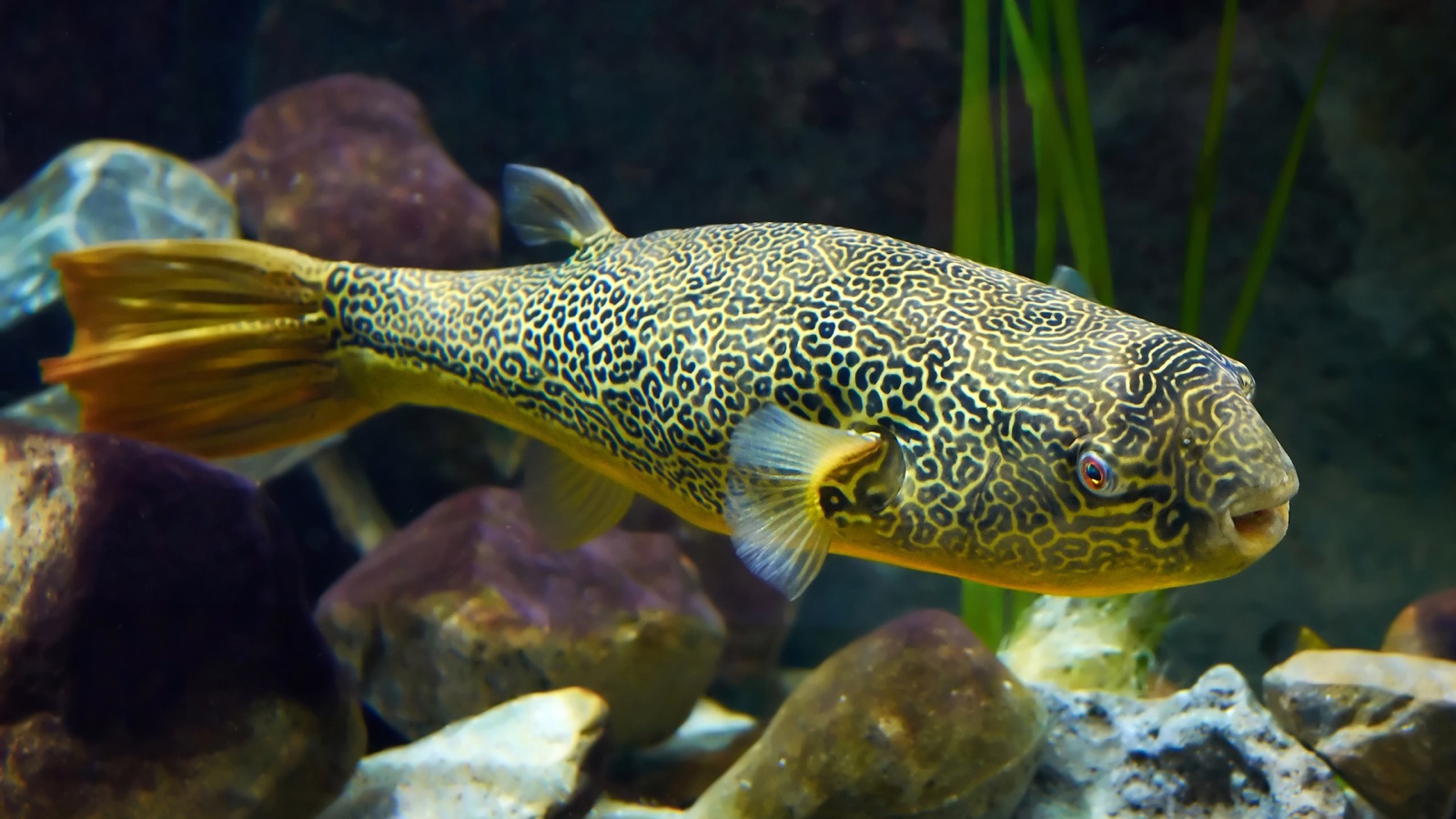
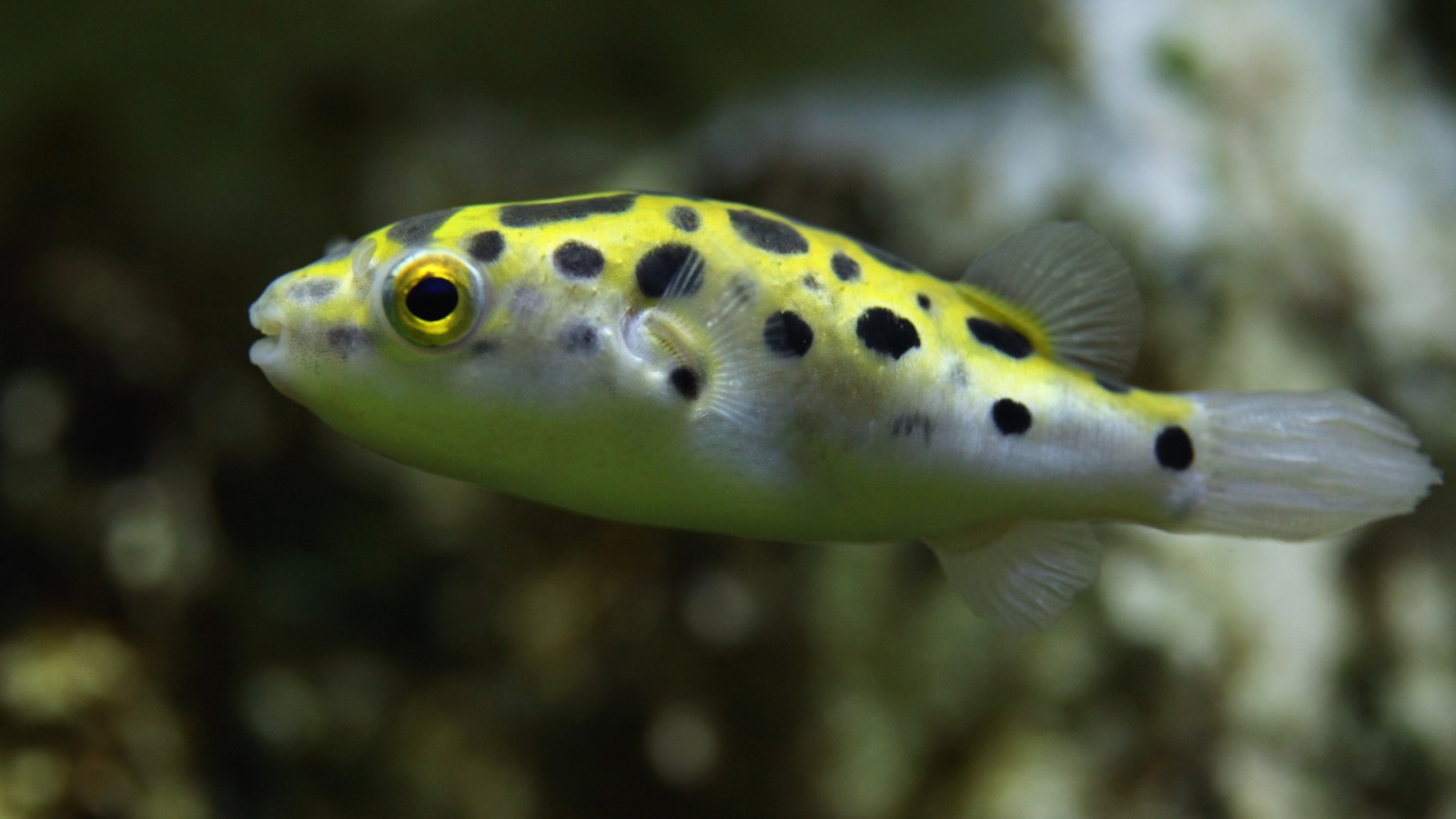
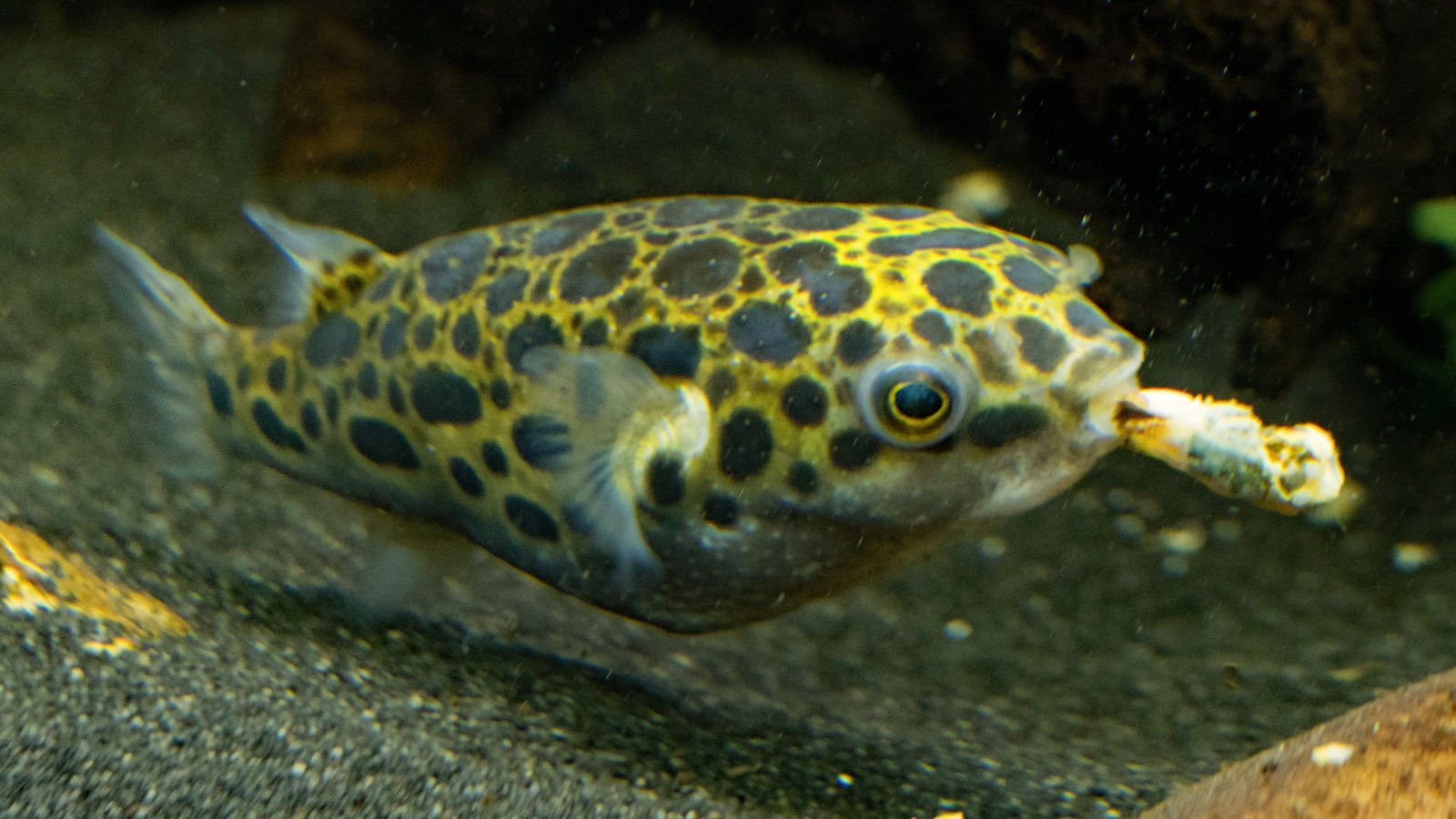
Photos © Adobe Stock
We cover the freshwater and brackish puffers kept in the hobby, grouped here by a friendly region-and-kind axis — the dwarf puffers, the Southeast Asian river puffers, the brackish estuary puffers, the African puffers and the South American puffers — rather than by raw genus. Marine puffers, porcupinefish and boxfish are out of scope. Following the Catalog of Fishes and FishBase, accounts are added as they are researched.
Species
Dwarf puffers · 6
The dwarf or pea puffers (Carinotetraodon) — the smallest of all puffers, from the pea puffer of the Western Ghats to the red-eye dwarfs of Sundaland. Pure-freshwater nano fish and the only puffers regularly kept in a group, though still snail-hunters armed with the family's beak. Several are strikingly dimorphic, and the male guards the eggs among plants.
- Carinotetraodon borneensis · Bornean dwarf puffer
- Carinotetraodon imitator · Dwarf Malabar puffer
- Carinotetraodon irrubesco · Red-bellied dwarf puffer
- Carinotetraodon lorteti · Redeye puffer
- Carinotetraodon salivator · Striped redeye puffer
- Carinotetraodon travancoricus · Pea puffer
SE Asian puffers · 11
The river puffers of the Mekong and mainland Asia (Pao, plus the ocellated Leiodon cutcutia) — freshwater ambush predators of Indochina's rivers and floodplains, from the dragon and hairy puffers to the arrowhead. Mostly solitary, predatory, and best kept alone; the males of several species guard the eggs on the bottom.
- Leiodon cutcutia · Ocellated puffer
- Pao abei · Abe's puffer
- Pao baileyi · Hairy puffer
- Pao cambodgiensis · Cambodian puffer
- Pao cochinchinensis · Cochinchina puffer
- Pao fangi · Fang's puffer
- Pao leiurus · Brackish puffer
- Pao palembangensis · Dragon puffer
- Pao suvattii · Arrowhead puffer
- Pao turgidus · Target puffer
- Pao wesleywongi
Brackish puffers · 7
The brackish estuary puffers (Dichotomyctere — the green spotted 'GSP' and the figure-eight — and the golden Auriglobus) of Southeast Asian mangroves and tidal rivers. These need salt: the GSP drifts toward near-marine water as it grows. Aggressive, fin-nipping fish, best kept alone or with great care.
- Auriglobus eurhynchus
- Auriglobus modestus · Golden puffer
- Auriglobus nefastus · Bronze puffer
- Auriglobus silus · Elongated golden puffer
- Dichotomyctere fluviatilis · Topaz puffer
- Dichotomyctere nigroviridis · Green spotted puffer
- Dichotomyctere ocellatus · Figure-eight puffer
African puffers · 6
The African puffers (Tetraodon, now an African-only genus after the old global Tetraodon was split up). The Fahaka of the Nile, the giant Mbu of the Congo — among the largest freshwater puffers at three-quarters of a metre — and the spotted Congo puffers. Powerful, intelligent and aggressive; the big species need very large tanks.
- Tetraodon duboisi · Dubois's puffer
- Tetraodon lineatus · Fahaka puffer
- Tetraodon mbu · Mbu puffer
- Tetraodon miurus · Potato puffer
- Tetraodon pustulatus · Cross River puffer
- Tetraodon schoutedeni · Congo puffer
South American puffers · 3
The South American puffers (Colomesus) — the lively, shoaling Amazon puffer, the only true-freshwater puffer of the New World, and its brackish estuary relatives. Busy and active, but incorrigible fin-nippers that test even an experienced keeper's stocking plan.
- Colomesus psittacus · Banded puffer
- Colomesus tocantinensis · Tocantins puffer
- Sphoeroides asellus · Amazon puffer
What’s new
All updates →- Name changeA Pufferfish name updated to current Catalog of Fishes validity2026-09-04
- UpdatedPao wesleywongi2026-09-03
- New speciesPao wesleywongi2026-08-13