We cover the catfish (order Siluriformes) as a whole — every family the hobby meets — with two exceptions that already have their own sections: the plecos (Loricariidae) and the Corydoras-group cories. The non-cory armoured callichthyids (Hoplosternum, Megalechis, Dianema, Callichthys) do belong here. Following the Catalog of Fishes for valid names, we group the order by a friendly family-and-ecology axis rather than by clade, because the science is large and still moving. Four honest warnings run through every account. The size trap: many catfish are sold as charming juveniles and grow into pond- or public-aquarium fish that eat their tankmates — the adult size is stated plainly. Scaleless skin: most are naked or bony-plated, so they are sensitive to copper and full-dose medications. Spines: many lock their fin spines and several are genuinely venomous (the stinging catfish above all). And breeding is per-family — bubble-nesters, internal fertilisers, cuckoo parasites and farm-bred giants — never a default “egg-scatterer.” Read each account before you buy.
Photos © Adobe Stock
Grouped by a friendly family-and-ecology axis — the squeakers, the long-whiskered cats, the glass & sheatfish cats, the thorny talking cats, the driftwood, banjo and bagrid cats, the air-breathing walking cats, the shark catfishes, the armoured callichthyids, the North American catfish and the order’s oddballs — rather than by the shifting family boundaries, though each account names its current family and authority. Siluriformes is one of the largest orders of fish; following the Catalog of Fishes and FishBase, the roster is vast and still being written up, and new accounts are added as they are researched.
Species
Squeakers & upside-down cats · 57
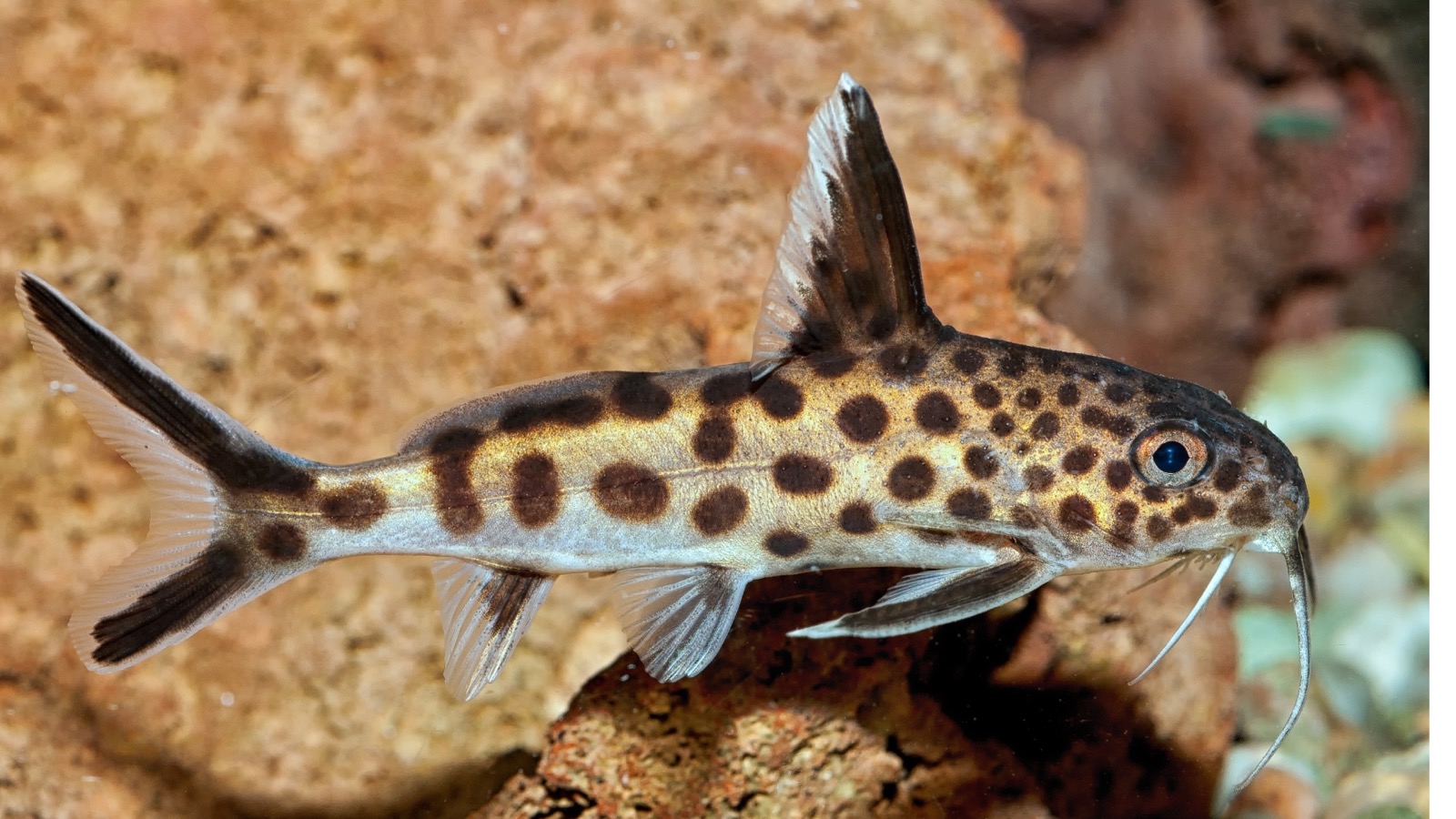
Family Mochokidae — the African squeakers (Synodontis) and their kin (Chiloglanis, Microsynodontis, Mochokus). They lock and rasp their pectoral spines to 'squeak', several swim and feed upside-down at the surface, and one, the cuckoo catfish Synodontis multipunctatus, brood-parasitises the mouthbrooding cichlids of Lake Tanganyika — its eggs are picked up and raised by the host. Mostly hardy, omnivorous and nocturnal; sizes run from 6 cm to well over 30 cm, so match the species to the tank.
- Chiloglanis angolensis
- Chiloglanis anoterus · Pennant-tailed suckermouth
- Chiloglanis asymetricaudalis
- Chiloglanis batesii
- Chiloglanis benuensis · Benue suckermouth catfish
- Chiloglanis bifurcus · Incomati rock catlet
- Chiloglanis brevibarbis · Short-barbelled suckermouth
- Chiloglanis camarabounyi
- Chiloglanis cameronensis
- Chiloglanis carnosus
- Chiloglanis congicus · Congo suckermouth catfish
- Chiloglanis deckenii · Pangani suckermouth
- Chiloglanis devosi
- Chiloglanis dialloi
- Chiloglanis disneyi
- Chiloglanis elisabethianus
- Chiloglanis emarginatus · Phongolo suckermouth
- Chiloglanis fasciatus · Okavango suckermouth
- Chiloglanis harbinger
- Chiloglanis igamba
- Chiloglanis kabaensis · Kaba suckermouth catfish
- Chiloglanis kalambo
- Chiloglanis kazumbei
- Chiloglanis kerioensis
- Chiloglanis kolente
- Chiloglanis lamottei
- Chiloglanis loffabrevum
- Chiloglanis longibarbis
- Chiloglanis lufirae
- Chiloglanis lukugae
- Chiloglanis macropterus
- Chiloglanis marlieri
- Chiloglanis mbozi
- Chiloglanis micropogon
- Chiloglanis microps
- Chiloglanis modjensis
- Chiloglanis mongoensis
- Chiloglanis neumanni · Neumann's suckermouth catfish
- Chiloglanis niger
- Chiloglanis niloticus
- Synodontis alberti · Albert's squeaker
- Synodontis angelicus · Angel squeaker
- Synodontis brichardi · Brichard's squeaker
- Synodontis budgetti · Budgett's synodontis
- Synodontis contractus · Bugeye squeaker
- Synodontis decorus · Clown catfish
- Synodontis eupterus · Featherfin squeaker
- Synodontis flavitaeniatus · Orangestriped squeaker
- Synodontis lucipinnis · Dwarf petricola catfish
- Synodontis multipunctatus · Cuckoo catfish
- Synodontis nigriventris · Upside-down catfish
- Synodontis njassae · Malawi squeaker
- Synodontis notatus · One-spot squeaker
- Synodontis ocellifer · Ocellated squeaker
- Synodontis petricola · Dwarf Lake Synodontis
- Synodontis robbianus · Dwarf squeaker catfish
- Synodontis schoutedeni · Yellow marbled synodontis
Long-whiskered cats · 64
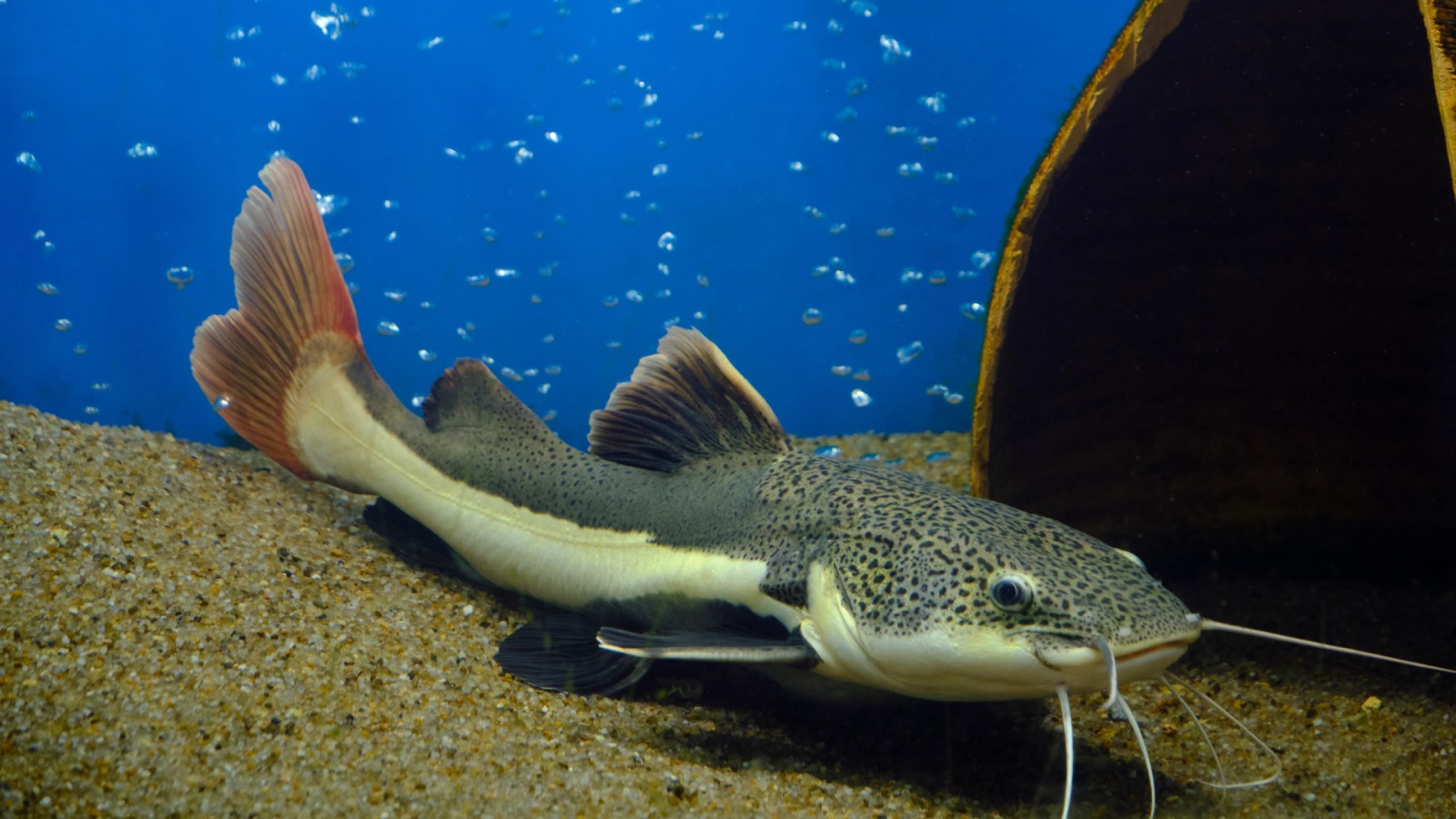
Pimelodidae plus the related Heptapteridae and Pseudopimelodidae — the long-whiskered catfish of the Neotropics. This group holds the classic SIZE TRAP: the pretty pictus (Pimelodus) stays modest, but the redtail (Phractocephalus, 1 m+) and the shovelnoses (Sorubim, Pseudoplatystoma, sailfin/tiger shovelnose) are sold as cute juveniles and grow into pond- or public-aquarium fish that eat any tankmate they can swallow. Scaleless and nocturnal; the smaller Rhamdia, Pimelodella and bumblebee Microglanis are the tank-suitable ones.
- Batrochoglanis acanthochiroides
- Batrochoglanis castaneus
- Batrochoglanis melanurus
- Batrochoglanis raninus · Bumblebee catfish
- Batrochoglanis transmontanus
- Batrochoglanis villosus
- Brachyplatystoma capapretum · Dark caped goliath catfish
- Brachyplatystoma filamentosum · Piraíba
- Brachyplatystoma juruense · Zebra catfish
- Brachyplatystoma platynema · Slobbering catfish
- Brachyplatystoma rousseauxii · Dorado catfish
- Brachyplatystoma tigrinum · Tigrinus catfish
- Brachyplatystoma vaillantii · Laulao catfish
- Cephalosilurus fowleri · Oremon catfish
- Goeldiella eques · Fox Face Catfish
- Imparfinis melanopterus
- Imparfinis nigropunctatus
- Imparfinis tessellatus
- Leiarius arekaima · Tiger Pimelodus
- Leiarius longibarbis · Longbarb catfish
- Leiarius marmoratus · Marbled shovelnose catfish
- Leiarius pictus · Sailfin pim
- Leptorhamdia kamilai
- Lophiosilurus albomarginatus
- Lophiosilurus apurensis · Apure jelly catfish
- Lophiosilurus nigricauda
- Microglanis ater
- Microglanis berbixae
- Microglanis carlae
- Microglanis cibelae
- Microglanis cottoides · Southern bumblebee catfish
- Microglanis eurystoma
- Microglanis garavelloi
- Microglanis iheringi · Bumblebee catfish
- Microglanis leniceae
- Microglanis leptostriatus · Bumblebee catfish
- Microglanis lundbergi
- Microglanis maculatus
- Microglanis malabarbai · Dwarf marbled catfish
- Microglanis minutus
- Microglanis nigripinnis · Dwarf bumblebee catfish
- Microglanis nigrolineatus
- Microglanis oliveirai
- Microglanis parahybae
- Microglanis pataxo
- Microglanis pellopterygius
- Microglanis pleriqueater
- Microglanis poecilus · Dwarf marbled catfish
- Perrunichthys perruno
- Phenacorhamdia bermejo
- Phractocephalus hemioliopterus · Redtail catfish
- Pimelodella cristata
- Pimelodella gracilis · Graceful pimelodella
- Pimelodus blochii · Four-line Pictus
- Pimelodus ornatus · Ornate pimelodus
- Pimelodus pictus · Pictus catfish
- Pinirampus pirinampu · Flat-whiskered catfish
- Platynematichthys notatus · Lince catfish
- Pseudoplatystoma corruscans · Spotted sorubim
- Pseudoplatystoma fasciatum · Barred sorubim
- Pseudoplatystoma reticulatum · Reticulated sorubim
- Rhamdia quelen · South American catfish
- Sorubim lima · Lima shovelnose catfish
- Zungaro zungaro · Redtail catfish
Glass & sheatfish cats · 53
Siluridae (the glass catfish Kryptopterus, Ompok, and the giant sheatfish Wallago and Silurus) plus the African Schilbeidae. The transparent glass catfish is a shoaling, skittish fish that must be kept in groups of six or more and refuses to thrive alone; the sheatfish and Wallago are the size trap of Asia (Wallago and the wels Silurus glanis exceed 1.5 m). Scaleless, nocturnal, largely piscivorous — the big ones are for ponds, not living-room tanks.
- Ailia coila · Gang tengra
- Belodontichthys dinema · Dinema catfish
- Belodontichthys truncatus · Dracula sheatfish
- Cranoglanis bouderius · Helmet catfish
- Cranoglanis caolangensis
- Cranoglanis henrici
- Cranoglanis multiradiata
- Cranoglanis songhongensis
- Kryptopterus baramensis
- Kryptopterus bicirrhis · Glass catfish
- Kryptopterus cryptopterus · Blue glass catfish
- Kryptopterus dissitus · Indochinese sheatfish
- Kryptopterus geminus · Glass catfish
- Kryptopterus hesperius · Maeklong glass catfish
- Kryptopterus lais · Glass catfish
- Kryptopterus limpok · Limpok glass catfish
- Kryptopterus lumholtzi
- Kryptopterus macrocephalus · Big-headed glass catfish
- Kryptopterus minor · Glass catfish
- Kryptopterus mononema · Glass catfish
- Kryptopterus palembangensis
- Kryptopterus paraschilbeides
- Kryptopterus piperatus
- Kryptopterus schilbeides
- Kryptopterus vitreolus · Glass catfish
- Micronema cheveyi
- Ompok argestes · Wetzone butter catfish
- Ompok bimaculatus · Two-spot glass catfish
- Ompok binotatus
- Ompok borneensis · Borneo river catfish
- Ompok brevirictus
- Ompok canio · Glass catfish
- Ompok ceylonensis · Dryzone butter catfish
- Ompok eugeneiatus · Borneo glass catfish
- Ompok fumidus
- Ompok hypophthalmus · Selais
- Ompok javanensis
- Ompok jaynei
- Ompok karunkodu
- Ompok leiacanthus
- Ompok malabaricus · Malabar butter catfish
- Ompok miostoma
- Ompok pabda · Pabda catfish
- Ompok pabo · Pabo catfish
- Ompok pinnatus · Longfin glass catfish
- Ompok platyrhynchus
- Ompok sabanus · Sabah glass catfish
- Parailia pellucida · Glass schilbeid
- Pareutropius buffei · Glass catfish
- Pterocryptis cochinchinensis
- Silurus asotus · Amur catfish
- Silurus glanis · Wels catfish
- Wallago attu · Wallago
Thorny & talking cats · 53
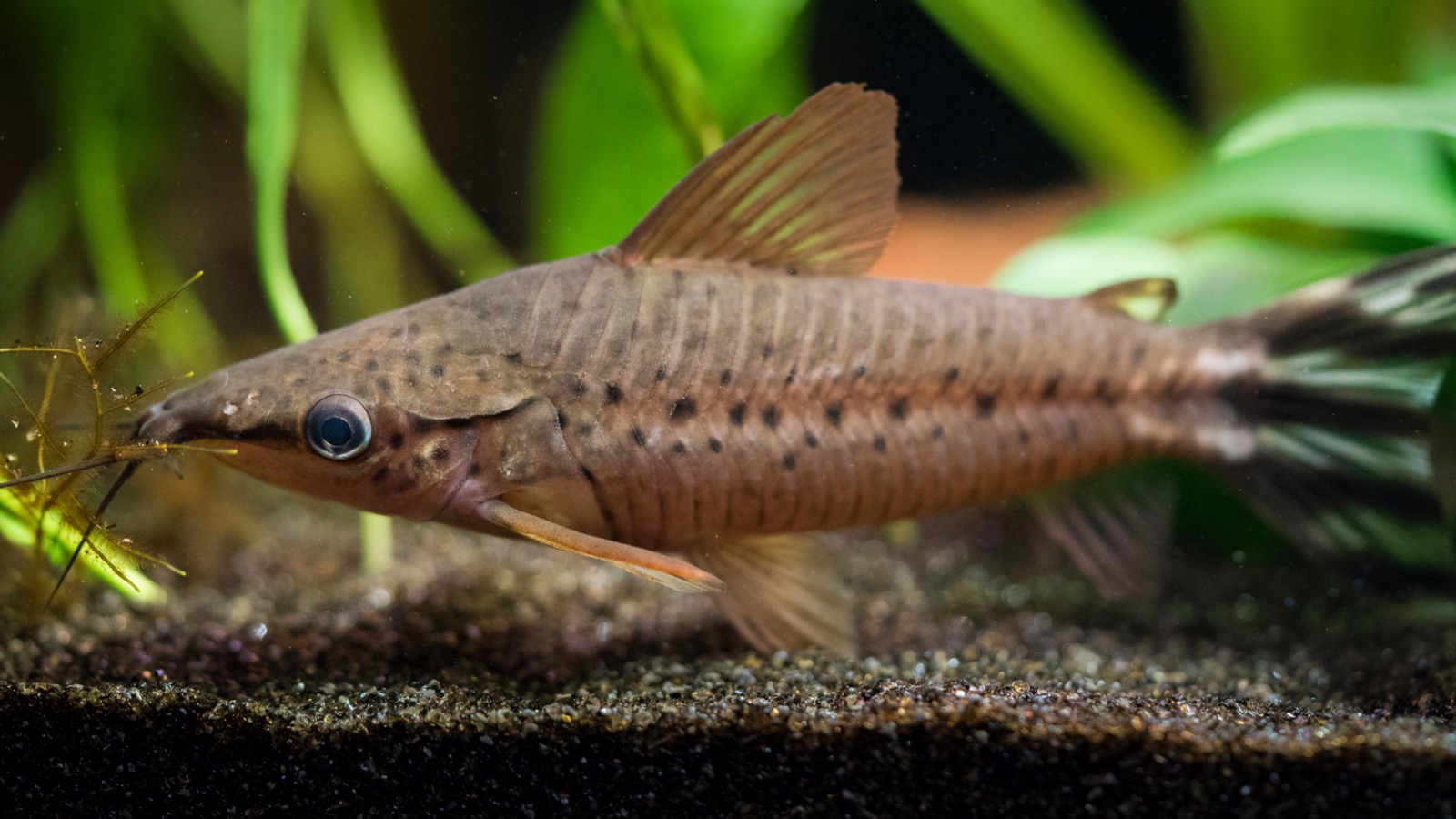
Family Doradidae — the thorny or talking catfish (raphael Platydoras, Agamyxis, Megalodoras, Oxydoras). A row of bony, hooked scutes armours the flank, they 'talk' with audible clicks, and they lock rigid, barbed pectoral spines that tangle in a net — handle by hand, never net. Peaceful toward anything too big to eat but hoover up small tankmates at night. Some stay small; Megalodoras and Oxydoras become giants.
- Acanthodoras cataphractus · Chocolate Raphael
- Acanthodoras depressus · Flatbodied thorny catfish
- Acanthodoras spinosissimus · Spiny talking catfish
- Agamyxis albomaculatus · Thorny Catfish
- Agamyxis pectinifrons · Spotted raphael catfish
- Amblydoras affinis
- Amblydoras gonzalezi
- Amblydoras monitor · Monitor thorny catfish
- Amblydoras nauticus · Nauta thorny catfish
- Amblydoras truncatus
- Anadoras grypus
- Anadoras insculptus · Talking catfish
- Anadoras regani
- Anadoras weddellii · Talking catfish
- Anduzedoras oxyrhynchus
- Astrodoras asterifrons
- Cataphractus volans
- Hassar affinis
- Hassar gabiru
- Hassar orestis · Hassar catfish
- Hassar shewellkeimi
- Hassar wilderi · Botinho
- Hemidoras morrisi
- Hemidoras stenopeltis
- Leptodoras acipenserinus · Peruvian sturgeon catfish
- Leptodoras cataniai
- Leptodoras copei
- Leptodoras hasemani
- Leptodoras juruensis
- Leptodoras linnelli
- Leptodoras marki
- Leptodoras myersi
- Leptodoras nelsoni
- Leptodoras oyakawai
- Leptodoras praelongus
- Leptodoras rogersae
- Megalodoras guayoensis
- Megalodoras uranoscopus · Mother of snails catfish
- Oxydoras kneri · Kner's thorny catfish
- Oxydoras niger · Black doradid
- Oxydoras sifontesi · Sifontes's talking catfish
- Physopyxis ananas
- Physopyxis cristata
- Physopyxis lyra · Lightning catfish
- Platydoras armatulus · Striped Raphael catfish
- Platydoras birindellii · Striped Raphael catfish (Xingu)
- Platydoras brachylecis
- Platydoras costatus · Striped talking catfish
- Platydoras hancockii · Blue-eye catfish
- Pterodoras granulosus · Granulated catfish
- Pterodoras rivasi · Rivas's thorny catfish
- Scorpiodoras bolivarensis
- Scorpiodoras heckelii · Heckell's thorny catfish
Driftwood cats · 54
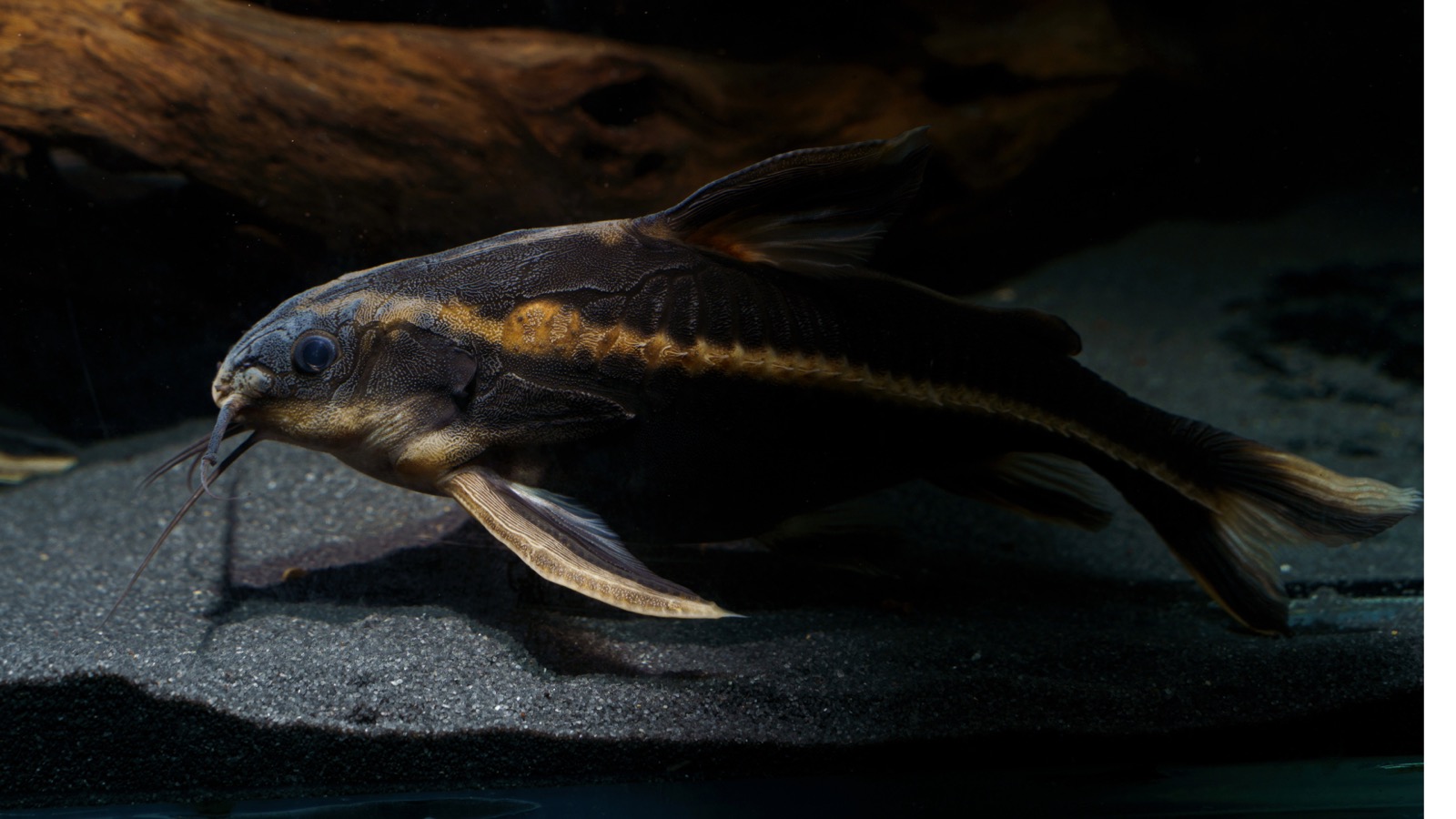
Family Auchenipteridae — the driftwood catfish (Tatia, Centromochlus, Auchenipterus, Trachelyopterus). Nocturnal wood-dwellers with a remarkable trick: they use INTERNAL FERTILISATION — the male's anal fin is modified into an intromittent organ and the female stores sperm to spawn later, which is rare among catfish. Many are small, peaceful micro-predators that hide by day and hunt the water column after dark.
- Auchenipterichthys coracoideus · Zamora woodcat
- Auchenipterichthys longimanus · Zebra driftwood catfish
- Auchenipterichthys punctatus · Zamora woodcat
- Auchenipterichthys thoracatus · Zamora catfish
- Auchenipterus ambyiacus
- Auchenipterus brachyurus
- Auchenipterus brevior
- Auchenipterus britskii
- Auchenipterus demerarae · Demerara woodcat
- Auchenipterus dentatus
- Auchenipterus fordicei
- Auchenipterus menezesi
- Auchenipterus nigripinnis · Paraguay shark-cat
- Auchenipterus nuchalis · Barbudo
- Auchenipterus osteomystax
- Centromochlus akwe
- Centromochlus altae
- Centromochlus britskii
- Centromochlus existimatus
- Centromochlus heckelii · Heckel's driftwood catfish
- Centromochlus macracanthus
- Centromochlus megalops
- Centromochlus meridionalis
- Centromochlus orca · Orca catfish
- Centromochlus perugiae · Honeycomb tatia
- Centromochlus schultzi · Schultz's driftwood catfish
- Duringlanis romani
- Duringlanis simplex
- Liosomadoras morrowi · Morrow's driftwood catfish
- Liosomadoras oncinus · Jaguar catfish
- Tatia akroa
- Tatia aulopygia
- Tatia boemia
- Tatia brunnea · Ninja woodcat
- Tatia carolae
- Tatia caudosignata
- Tatia caxiuanensis
- Tatia concolor
- Tatia dunni
- Tatia galaxias
- Tatia gyrinus · Dwarf driftwood catfish
- Tatia intermedia · Driftwood catfish
- Tatia jaracatia · Bagre-sapo
- Tatia marthae
- Tatia musaica · Ninja catfish
- Tatia punctata · Spotted driftwood catfish
- Tatia reticulata · Violet Spotted Woodcat
- Trachelyichthys displicatus
- Trachelyichthys epachrus
- Trachelyichthys exilis · Pygmy driftwood catfish
- Trachelyichthys gaiophanes
- Trachelyichthys varii
- Trachelyopterus galeatus · Driftwood catfish
- Tympanopleura personata
Banjo cats · 43
Family Aspredinidae — the banjo catfish (Bunocephalus and kin), named for the flat, broad head and thin tail that make the fish look like the instrument. Cryptic, slow, harmless bottom-sitters that bury in sand and mimic a dead leaf; some brackish species carry their eggs on the belly. Peaceful and easily bullied or outcompeted at feeding time — a specialist's oddball, not a community centrepiece.
- Acanthobunocephalus nicoi
- Acanthobunocephalus scruggsi · Banjo catfish
- Amaralia hypsiura · Banjo catfish
- Amaralia oviraptor · Southern banjo catfish
- Bunocephalus aleuropsis · Banjo catfish
- Bunocephalus aloikae · Banjo catfish
- Bunocephalus amaurus · Camouflaged catfish
- Bunocephalus chamaizelus · Banjo catfish
- Bunocephalus colombianus · Colombian banjo catfish
- Bunocephalus coracoideus · Banjo catfish
- Bunocephalus doriae · Banjo catfish
- Bunocephalus erondinae
- Bunocephalus hartti · Banjo catfish
- Bunocephalus hertzi · Banjo catfish
- Bunocephalus knerii · Kneri banjo catfish
- Bunocephalus larai · Banjo catfish
- Bunocephalus minerim
- Bunocephalus verrucosus · Craggy banjo catfish
- Dupouyichthys sapito
- Ernstichthys anduzei
- Ernstichthys intonsus
- Ernstichthys megistus · Dwarf banjo catfish
- Ernstichthys taquari
- Hoplomyzon atrizona
- Hoplomyzon cardosoi
- Hoplomyzon papillatus
- Hoplomyzon sexpapilostoma
- Micromyzon akamai · Eyeless banjo catfish
- Pseudobunocephalus amazonicus · Amazon banjo catfish
- Pseudobunocephalus bifidus · Banjo catfish
- Pseudobunocephalus iheringii
- Pseudobunocephalus lundbergi
- Pseudobunocephalus quadriradiatus
- Pseudobunocephalus rugosus · Banjo catfish
- Pseudobunocephalus timbira
- Pterobunocephalus carvalhoi
- Xyliphius anachoretes
- Xyliphius barbatus · Bearded banjo catfish
- Xyliphius kryptos
- Xyliphius lepturus · Shark banjo catfish
- Xyliphius magdalenae
- Xyliphius melanopterus
- Xyliphius sofiae
Bagrid cats · 53
Family Bagridae — the Asian bagrid catfish (Mystus, Hemibagrus, Bagrichthys, Sperata, Bagrus in Africa). Another size trap: the small Mystus are fine community fish, but Hemibagrus wyckioides and Sperata reach a metre and are predators. Scaleless, nocturnal, with sharp locking pectoral spines that deliver a painful jab. Match the species to the tank and expect any fish small enough to fit the mouth to vanish.
- Auchenoglanis biscutatus · Yellow giraffe catfish
- Auchenoglanis occidentalis · Giraffe Catfish
- Bagrichthys hypselopterus · Blacklancer Catfish
- Bagrichthys macracanthus · Black lancer catfish
- Bagrichthys macropterus · Longfin bagrid
- Bagrichthys majusculus
- Bagrichthys micranodus
- Bagrichthys obscurus
- Bagrichthys vaillantii
- Bagroides hirsutus
- Bagroides melapterus · Harlequin lancer catfish
- Bagrus affinis
- Bagrus agricolus
- Bagrus anisurus
- Bagrus aorinus · Long-whiskered catfish
- Bagrus bajad · Bajad catfish
- Bagrus birmannus
- Bagrus caeruleus
- Bagrus chinta
- Bagrus degeni
- Bagrus docmak · Semutundu
- Bagrus filamentosus
- Bagrus flavus · Javanese catfish
- Bagrus heterurus
- Bagrus lubosicus
- Bagrus melas
- Bagrus meridionalis · Kampango
- Bagrus orientalis
- Bagrus punctulatus
- Bagrus rhodopterygius
- Bagrus sinensis · Chinese bagrid catfish
- Bagrus tucumanus
- Batasio batasio
- Hemibagrus nemurus · Asian redtail catfish
- Hemibagrus wyckioides · Asian redtail catfish
- Leiocassis poeciloptera
- Mystus bimaculatus · Two-spot catfish
- Mystus mysticetus
- Mystus tengara · Tengara catfish
- Mystus vittatus · Striped catfish
- Olyra longicaudata
- Pseudomystus siamensis · Asian bumblebee catfish
- Sperata seenghala · Giant river catfish
- Tachysurus analimaculatus · Anal-spot bagrid
- Tachysurus bailongensis · Bailong bagrid
- Tachysurus fulvidraco · Yellow catfish
- Tachysurus furcatus · Forked-stripe bagrid
- Tachysurus heterofasciatus · Constricted-stripe bagrid
- Tachysurus platystomus · Broad-mouth bagrid
- Tachysurus pseudovirgatus
- Tachysurus qiongzhouensis
- Tachysurus sinovietnamensis
- Tachysurus trimaculatus
Airbreathing & walking cats · 44
Clariidae (the walking catfish Clarias, Heterobranchus) and Heteropneustidae (the stinging catfish Heteropneustes). They breathe air with an accessory organ, survive foul water, and Clarias can wriggle overland — which has made it a notorious invasive. Heteropneustes is genuinely VENOMOUS: its pectoral sting causes intense pain, so it is handled with great care. Large, greedy, aggressive and long-lived; most outgrow a community tank.
- Channallabes alvarezi
- Channallabes apus · Eel catfish
- Channallabes longicaudatus
- Channallabes ogooensis
- Channallabes sanghaensis
- Channallabes teugelsi
- Clarias abbreviatus
- Clarias agboyiensis
- Clarias albopunctatus
- Clarias alluaudi · Alluaud's walking catfish
- Clarias anfractus
- Clarias angolensis · Angola walking catfish
- Clarias anguillaris · Mudfish
- Clarias batrachus · Walking catfish
- Clarias batu
- Clarias brachysoma · Sri Lankan walking catfish
- Clarias buettikoferi · Buettikofer's walking catfish
- Clarias buthupogon
- Clarias camerunensis
- Clarias cavernicola · Cave catfish
- Clarias dayi
- Clarias dhonti
- Clarias dumerilii
- Clarias dussumieri · Dussumier's catfish
- Clarias ebriensis
- Clarias engelseni
- Clarias fuscus · Hong Kong catfish
- Clarias gabonensis · Gaboon walking catfish
- Clarias gariepinus · African sharptooth catfish
- Clarias gracilentus · Phu Quoc walking catfish
- Clarias hilli
- Clarias insolitus
- Clarias intermedius
- Clarias jaensis
- Clarias kapuasensis
- Clarias laeviceps
- Clarias lamottei
- Clarias leiacanthus
- Clarias liocephalus
- Clarias longior
- Clarias macrocephalus · Bighead catfish
- Heteropneustes fossilis · Stinging catfish
- Neosilurus manjandi
- Tandanus tandanus · Freshwater catfish
Shark catfishes · 31
Pangasiidae — the freshwater shark catfish of South and Southeast Asia, including the iridescent 'shark' (Pangasianodon hypophthalmus) and the critically endangered Mekong giant catfish. The iridescent shark is the definitive size trap: sold at 8 cm, it grows past a metre, panics and injures itself in tanks, and belongs only in a pond or public aquarium. Most are farm- or hormone-bred rather than home-bred; state the adult size bluntly. (The marine sea catfishes, family Ariidae, are excluded — this atlas covers freshwater and brackish fish only.)
- Helicophagus leptorhynchus
- Helicophagus typus · Helicophagus shark catfish
- Helicophagus waandersii · Patin Muncung
- Pangasianodon gigas · Mekong giant catfish
- Pangasianodon hypophthalmus · Iridescent shark
- Pangasius bocourti · Bocourt's catfish
- Pangasius conchophilus · Snail-eating pangasius
- Pangasius delicatissimus
- Pangasius djambal · Djambal catfish
- Pangasius elongatus · Elongate pangasius
- Pangasius hoeksi
- Pangasius humeralis
- Pangasius kinabatanganensis · Kinabatangan shark catfish
- Pangasius krempfi · Krempf's catfish
- Pangasius kunyit · Kunyit shark catfish
- Pangasius larnaudii · Sutchi catfish
- Pangasius lithostoma
- Pangasius macronema · Bocourti's shark catfish
- Pangasius mahakamensis
- Pangasius mekongensis · Mekong pangasius
- Pangasius myanmar · Myanmar pangasius
- Pangasius nasutus · Asian shark catfish
- Pangasius nieuwenhuisii
- Pangasius pangasius · Pangas catfish
- Pangasius polyuranodon · Pangasius shark catfish
- Pangasius rheophilus
- Pangasius sabahensis · Sabah shark catfish
- Pangasius sanitwongsei · Giant pangasius
- Pangasius silasi
- Pseudolais micronemus · Shortbarbel Pangasius
- Pseudolais pleurotaenia · Shortbarbel shark catfish
Armored callichthyids · 19
Subfamily Callichthyinae — the non-Corydoras armored catfish (Hoplosternum, Megalechis, Dianema, Callichthys, Lepthoplosternum). Two rows of bony plates armour the body, they gulp air at the surface, and they breed by building a FLOATING BUBBLE-NEST that the male guards — one of the few genuinely home-breedable catfish here. Peaceful, hardy, mid-sized. (Their small cousins the Corydoras have their own section.)
- Callichthys callichthys · Cascarudo
- Callichthys fabricioi
- Callichthys oibaensis · Oibita catfish
- Callichthys serralabium
- Callichthys thoracatus · Cachorro catfish
- Dianema longibarbis · Porthole catfish
- Dianema urostriatum · Flagtail catfish
- Hoplosternum dukei
- Hoplosternum littorale · Cascudo
- Hoplosternum magdalenae · Striped hoplo
- Hoplosternum punctatum · Spotted hoplo
- Lepthoplosternum altamazonicum
- Lepthoplosternum beni · Tambopata catfish
- Lepthoplosternum pectorale · Tamboatá
- Lepthoplosternum stellatum
- Lepthoplosternum tordilho · Lagoon catfish
- Lepthoplosternum ucamara
- Megalechis picta · Spotted armored catfish
- Megalechis thoracata · Spotted hoplo
North American catfish · 43
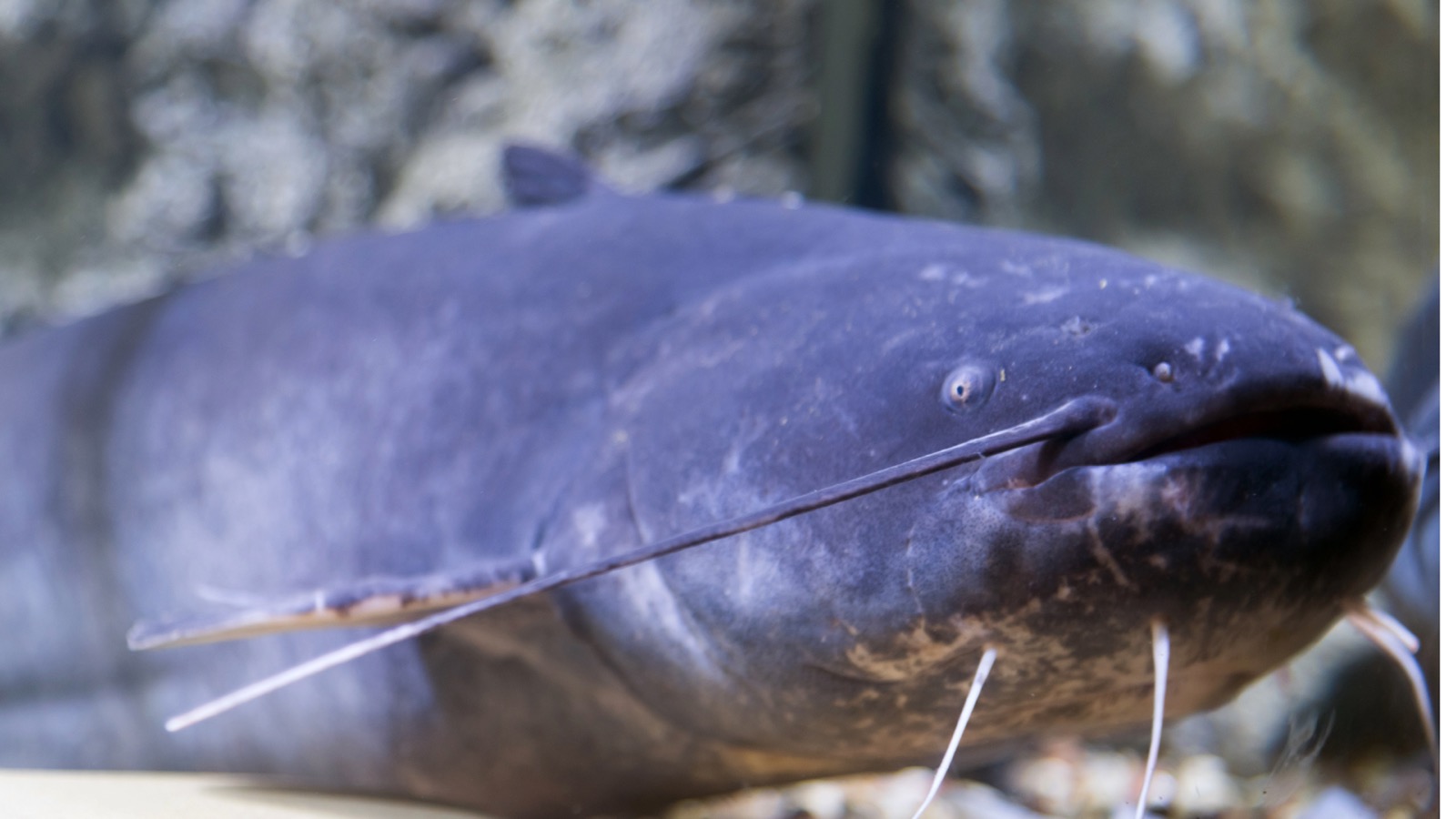
Family Ictaluridae — the bullheads, the channel and blue catfish, the flathead, and the tiny madtoms (Noturus). The bullheads and channel cats are cold-hardy pond fish that grow large and are illegal to release in many places; the madtoms are small, secretive stream fish, several with a mild venom gland at the pectoral spine. Nocturnal, scaleless, omnivorous — a temperate group, not tropical.
- Ameiurus brunneus · Snail bullhead
- Ameiurus cancellatus
- Ameiurus catus · White catfish
- Ameiurus maconnellii
- Ameiurus melas · Black bullhead
- Ameiurus natalis · Yellow bullhead
- Ameiurus nebulosus · Brown bullhead
- Ameiurus platycephalus · Flat bullhead
- Ameiurus serracanthus · Spotted Bullhead
- Ictalurus australis · Pánuco catfish
- Ictalurus balsanus · Balsas catfish
- Ictalurus dugesii · Lerma catfish
- Ictalurus furcatus · Blue catfish
- Ictalurus lacustris · Channel catfish
- Ictalurus lavetti · Bullhead catfish
- Ictalurus lupus · Headwater catfish
- Ictalurus meridionalis · Grijalva catfish
- Ictalurus mexicanus · Rio Verde catfish
- Ictalurus ochoterenai · Chapala catfish
- Ictalurus pricei · Yaqui catfish
- Ictalurus punctatus · Channel catfish
- Ictalurus spodius
- Noturus albater · Ozark madtom
- Noturus baileyi · Smoky madtom
- Noturus crypticus · Chucky madtom
- Noturus elegans · Elegant madtom
- Noturus eleutherus · Mountain madtom
- Noturus exilis · Slender madtom
- Noturus fasciatus · Saddled madtom
- Noturus flavater · Checkered madtom
- Noturus flavipinnis · Yellowfin madtom
- Noturus flavus · Stonecat
- Noturus funebris · Black madtom
- Noturus furiosus · Carolina madtom
- Noturus gilberti · Orangefin madtom
- Noturus gladiator · Piebald madtom
- Noturus gyrinus · Tadpole madtom
- Noturus hildebrandi · Least madtom
- Noturus insignis · Margined madtom
- Noturus lachneri · Ouachita madtom
- Noturus latifrons · Broadhead madtom
- Noturus leptacanthus · Speckled madtom
- Pylodictis olivaris · Flathead catfish
Other & oddball cats · 62
The rest of the order's aquarium oddities: the electric catfish (Malapteruridae, Malapterurus — a real electric discharge), the frogmouth catfish (Chacidae, Chaca — a leaf-mimic ambush predator), the Asian hillstream Sisoridae (Glyptothorax) and Akysidae, the African loach catfishes (Amphiliidae), the whale catfishes (Cetopsidae), and the notorious candiru (Trichomycteridae) — kept and covered for honesty and curiosity, not as easy community fish.
- Akysis bilustris
- Akysis brachybarbatus
- Akysis clavulus
- Akysis clinatus
- Akysis ephippifer
- Akysis fontaneus
- Akysis fuliginatus
- Akysis galeatus
- Akysis hendricksoni
- Akysis heterurus
- Akysis longifilis
- Akysis maculipinnis
- Akysis manipurensis
- Akysis microps
- Akysis pictus · Pictus stream catfish
- Akysis poecilurus
- Akysis portellus · Rautenflecken-Zwergwels
- Akysis prashadi · Indawgyi stream catfish
- Akysis pulvinatus · Kra Stream Catfish
- Akysis recavus
- Akysis scorteus
- Akysis variegatus
- Akysis varius · Variable stream catfish
- Akysis vespa · Wasp catfish
- Akysis vespertinus
- Amblyceps vayavy
- Amphilius atesuensis
- Amphilius athiensis
- Amphilius brevis
- Amphilius caudosignatus
- Amphilius chalei
- Amphilius crassus
- Amphilius cryptobullatus
- Amphilius dimonikensis
- Amphilius engelbrechti
- Amphilius frieli
- Amphilius grandis
- Amphilius jacksonii · Marbled mountain catfish
- Amphilius kakrimensis
- Amphilius kivuensis
- Arhinoglanis relictus
- Bagarius bagarius · Giant devil catfish
- Cetopsis coecutiens · Whale catfish
- Chaca chaca · Frogmouth catfish
- Erethistes pusillus · Giant moth catfish
- Gagata cenia · Torrent catfish
- Glyptothorax intonsus
- Glyptothorax lampris
- Glyptothorax pulcher
- Glyptothorax sentimereni
- Glyptothorax trilineatus · Three-lined torrent catfish
- Malapterurus electricus · Electric catfish
- Microcambeva caissara
- Paracanthopoma jiparanaensis
- Paracanthopoma ventuarensis
- Pseudecheneis likimroensis
- Pseudolaguvia khairii
- Tremeuchiloglanis baishuiensis
- Tremeuchiloglanis chishuiensis
- Trichomycterus pinedai
- Tridensimilis magnus
- Vandellia cirrhosa · Candiru
What’s new
All updates →- Name change23 Catfish names updated to current Catalog of Fishes validity2026-09-04
- UpdatedBagarius bagarius2026-09-04
- UpdatedErethistes pusillus2026-09-04
- Updated36 Catfish articles refreshed2026-09-03
- New speciesPseudolaguvia khairii2026-08-13