Bichirs are living fossils that breathe air. Behind the gills sits a pair of primitive lungs, and a bichir that cannot reach the surface to gulp can actually drown — so a tank needs an air gap above the water and a fish that is never sealed under. Two things define keeping them. First, a tight, gap-free lid: these are determined escape artists — the ropefish above all — and a bichir on the floor is the single most common keeper tragedy. Second, respect the predator: they hunt by smell in the dark and will swallow any tankmate small enough to fit, though they are otherwise peaceful with fish of similar size. Their ganoid armour makes them hardy — the opposite of the medication-sensitive scaleless catfishes — but most are wild-caught, and only a few (the Senegal bichir chief among them) are farm-bred. Watch the adult size: most reach 30–40 cm, but the giant Congo bichir approaches a metre. They are rarely bredin aquaria — external fertilisation, eggs scattered on plants, no parental care.
Photos © Adobe Stock
We cover the whole family Polypteridae — the African bichirs and the reedfish — grouped into the bichirs (genus Polypterus) and the eel-like ropefish (Erpetoichthys calabaricus). Sizes are given as total length. Following the Catalog of Fishes, the valid set is written up as each species is researched; long-synonymised names such as lapradei, katangae, buettikoferi and lowei are folded into their current species rather than listed separately.
Species
Bichirs · 13
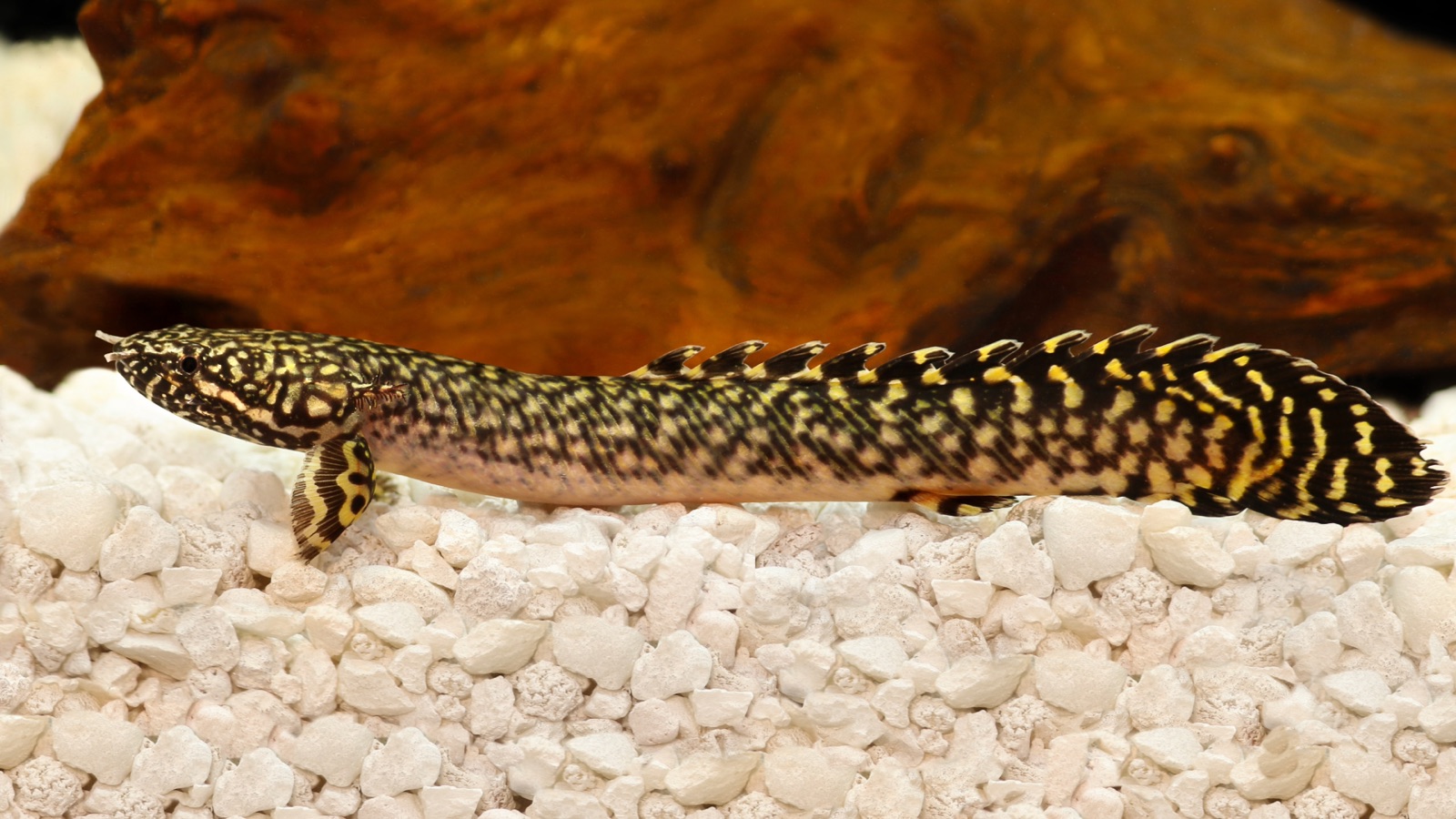
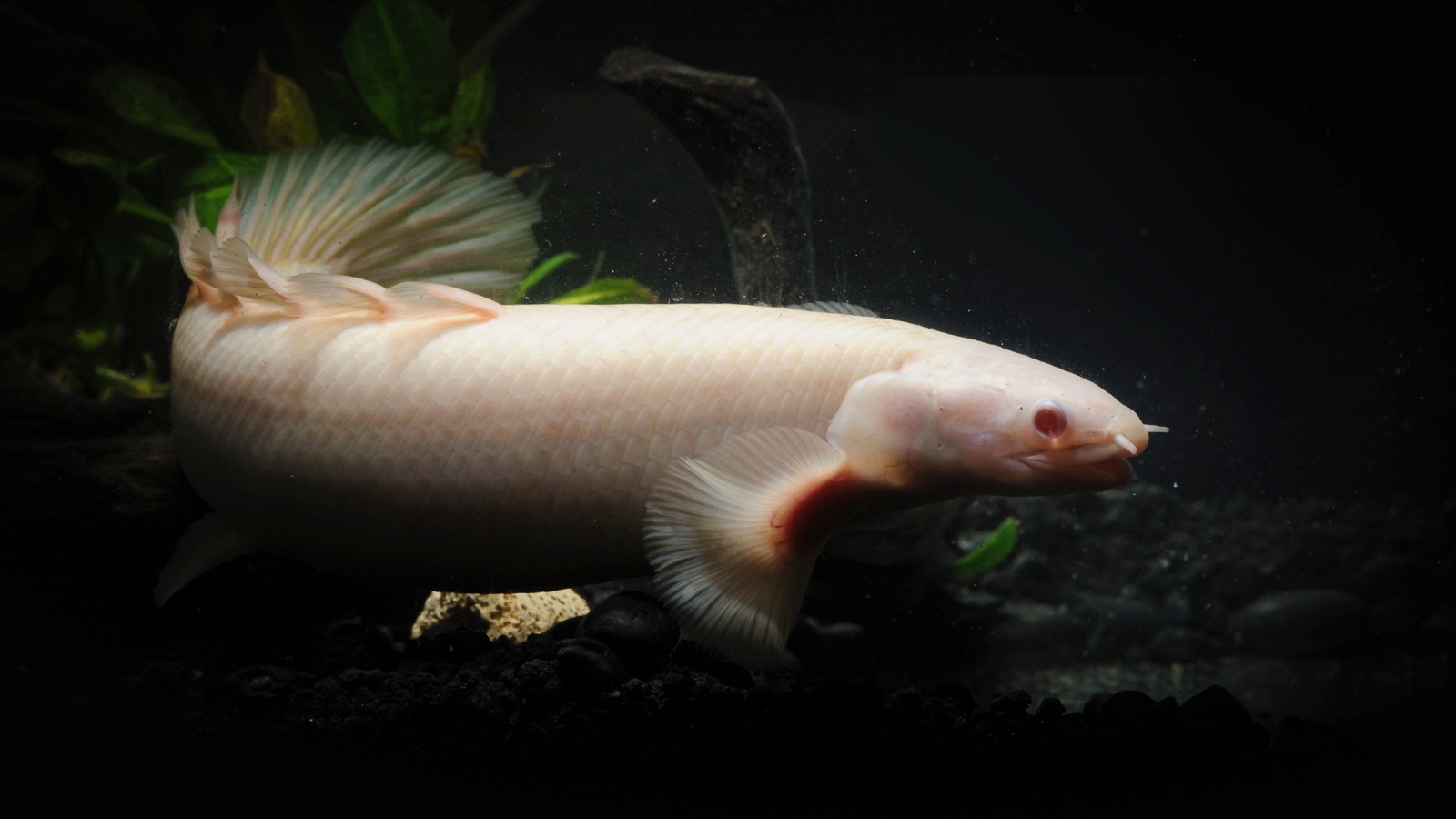
The bichirs — genus Polypterus — are the cylindrical, armoured predators of African fresh waters, from the foot-long Senegal or 'dinosaur' bichir (P. senegalus) to the metre-class giant Congo bichir (P. congicus). All share the family's lobed, limb-like pectoral fins, a saw-tooth row of dorsal finlets, heavy interlocking ganoid-scale armour, and a pair of primitive lungs for gulping air at the surface. Nocturnal, scent-hunting bottom-dwellers that will swallow any tankmate small enough to fit.
- Polypterus ansorgii · Guinean bichir
- Polypterus bichir · Nile bichir
- Polypterus congicus · Giant bichir
- Polypterus delhezi · Barred bichir
- Polypterus endlicherii · Saddled bichir
- Polypterus mokelembembe · Mokele-mbembe bichir
- Polypterus ornatipinnis · Ornate bichir
- Polypterus palmas · Marbled bichir
- Polypterus polli · Poll's bichir
- Polypterus retropinnis · West African bichir
- Polypterus senegalus · Senegal bichir
- Polypterus teugelsi · Cross River bichir
- Polypterus weeksii · Mottled bichir
Ropefish · 1
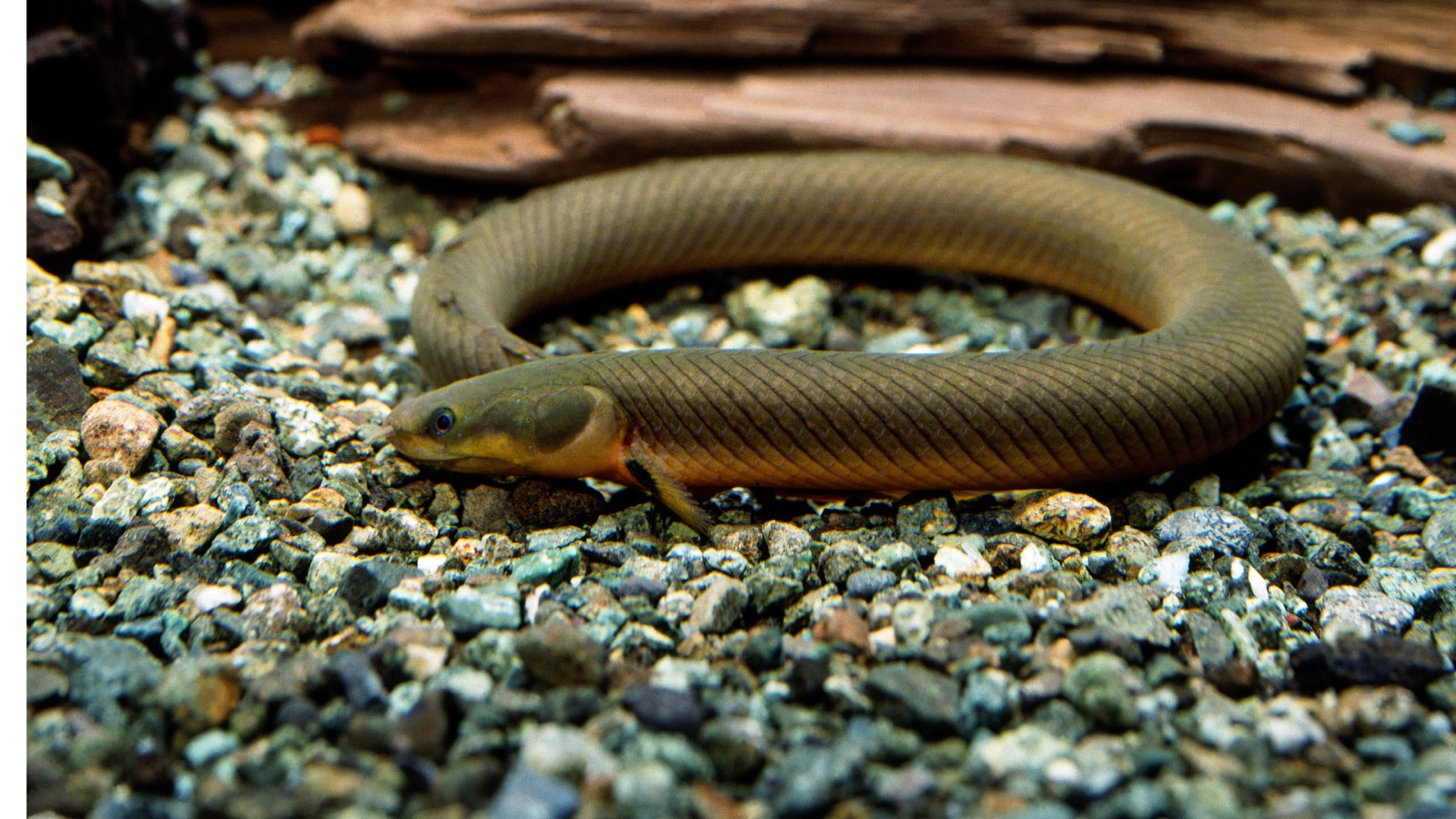
The reedfish or ropefish — Erpetoichthys calabaricus, the single species of its genus — is the eel-like outlier: a long, slender, snake-bodied bichir of West and Central African coastal swamps that has lost its pelvic fins entirely. It breathes air, hunts by scent at night, and is a notorious escape artist that will slip through the smallest gap in a lid.
- Erpetoichthys calabaricus · Reedfish