We cover the gobies you can actually keep — the freshwater and brackish species — and, because the hobby does, the sleepers and gudgeons (family Eleotridae) that look and behave like gobies but are a separate lineage: the giveaway is that a true goby’s pelvic fins are fused into a cup-shaped sucker disc, while a gudgeon’s stay separate. We leave out the purely marine gobies, the unrelated “goby cichlids” of Lake Tanganyika (covered under cichlids), and the invasive round and tubenose gobies that are not aquarium fish. Following the Catalog of Fishes for valid names, the Gobioidei are split across several families — Gobiidae, Gobionellidae, Oxudercidae, Eleotridae — and big genera like Rhinogobius and Stiphodon gain species often, so a fish you bought under one name may have moved. Two honest warnings run through every account: the amphidromous species (most Stiphodon, Sicyopterus, Lentipes, many Awaous) breed in fresh water but their larvae drift to sea, so they are wild-collected and effectively impossible to breed at home, while the resident species (peacock gudgeon, Brachygobius, Rhinogobius, Mogurnda) are cave or substrate spawners whose male guards the eggs. Diet is the other failure point — read each account before you buy.
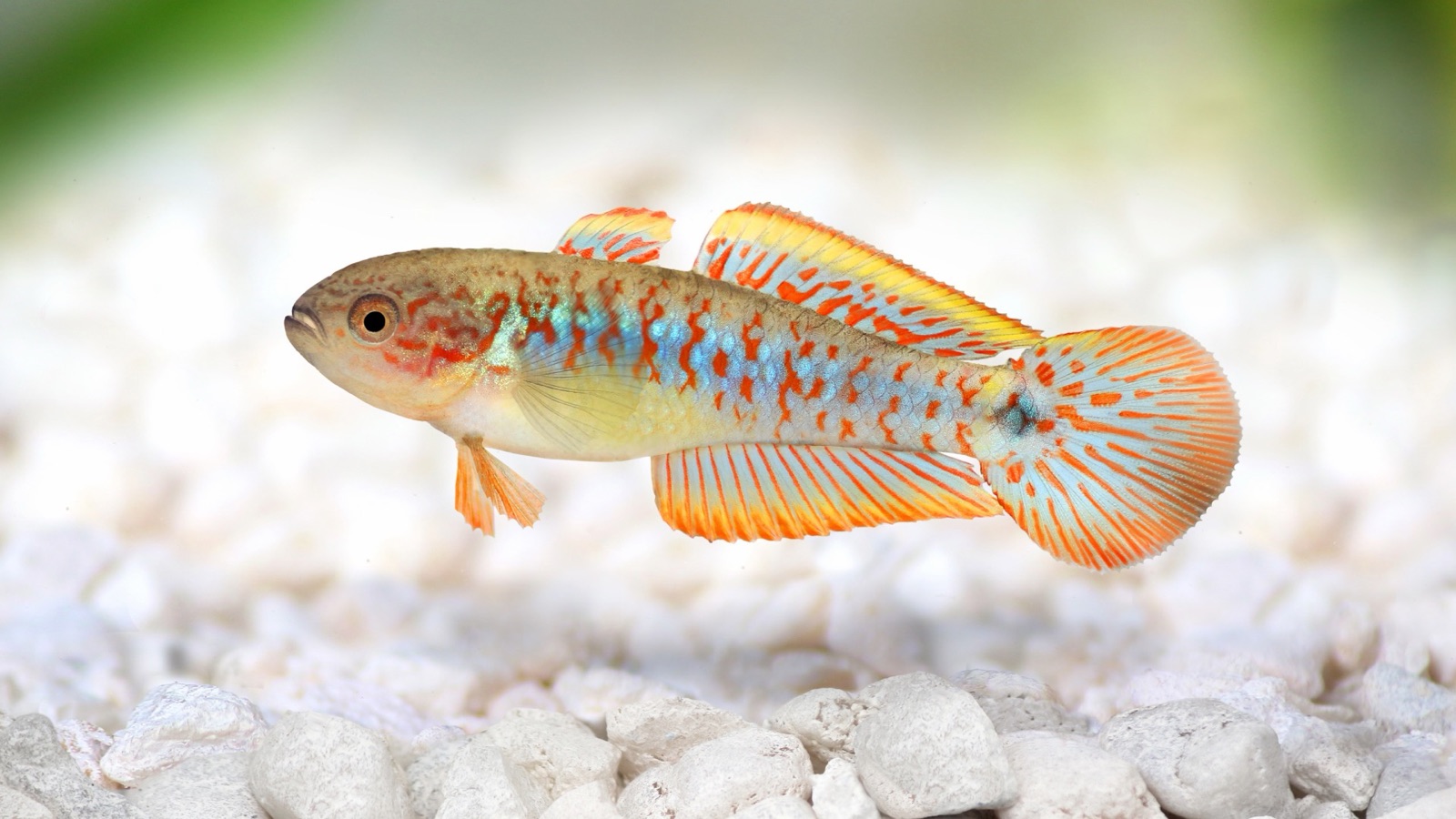
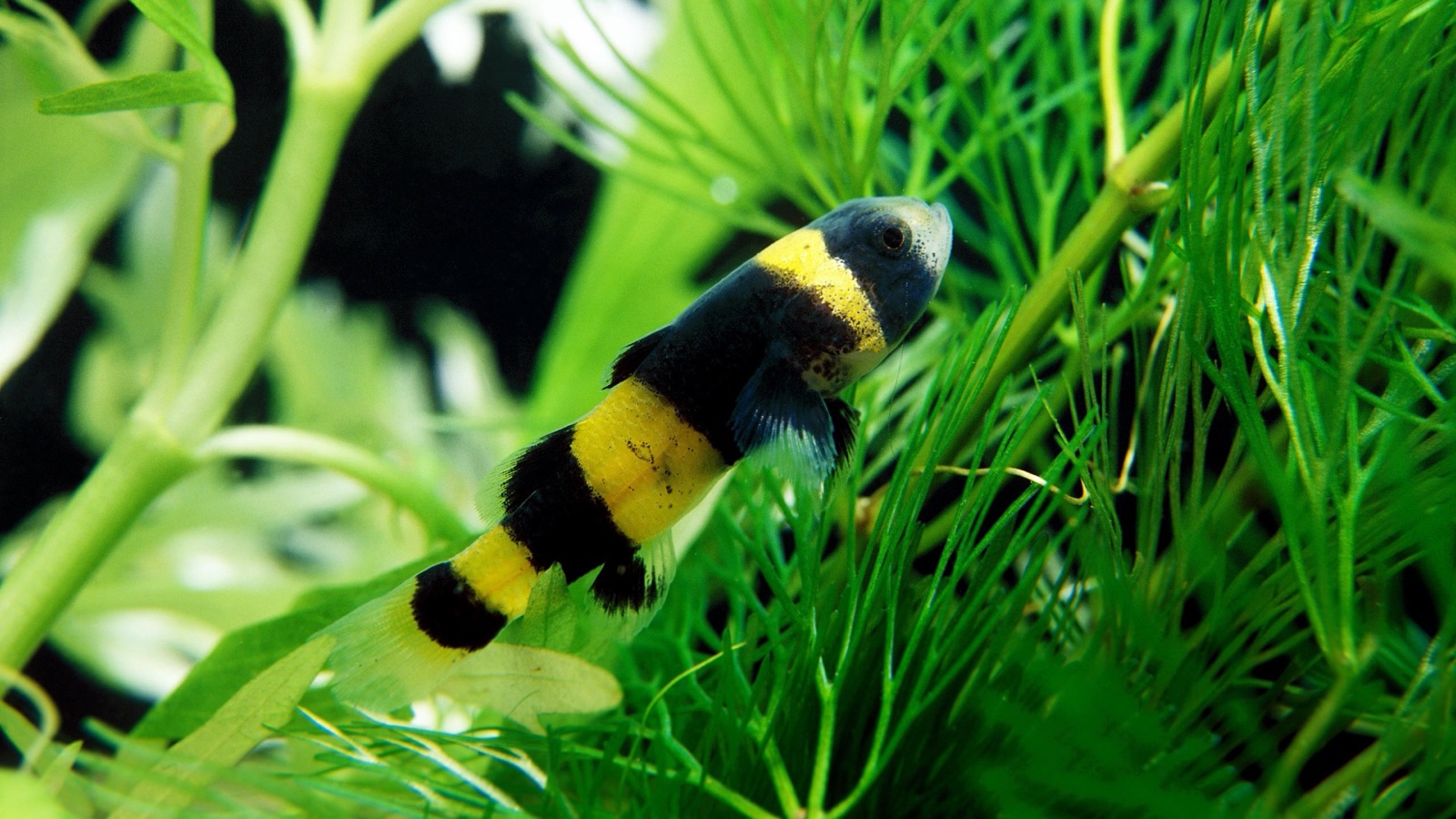
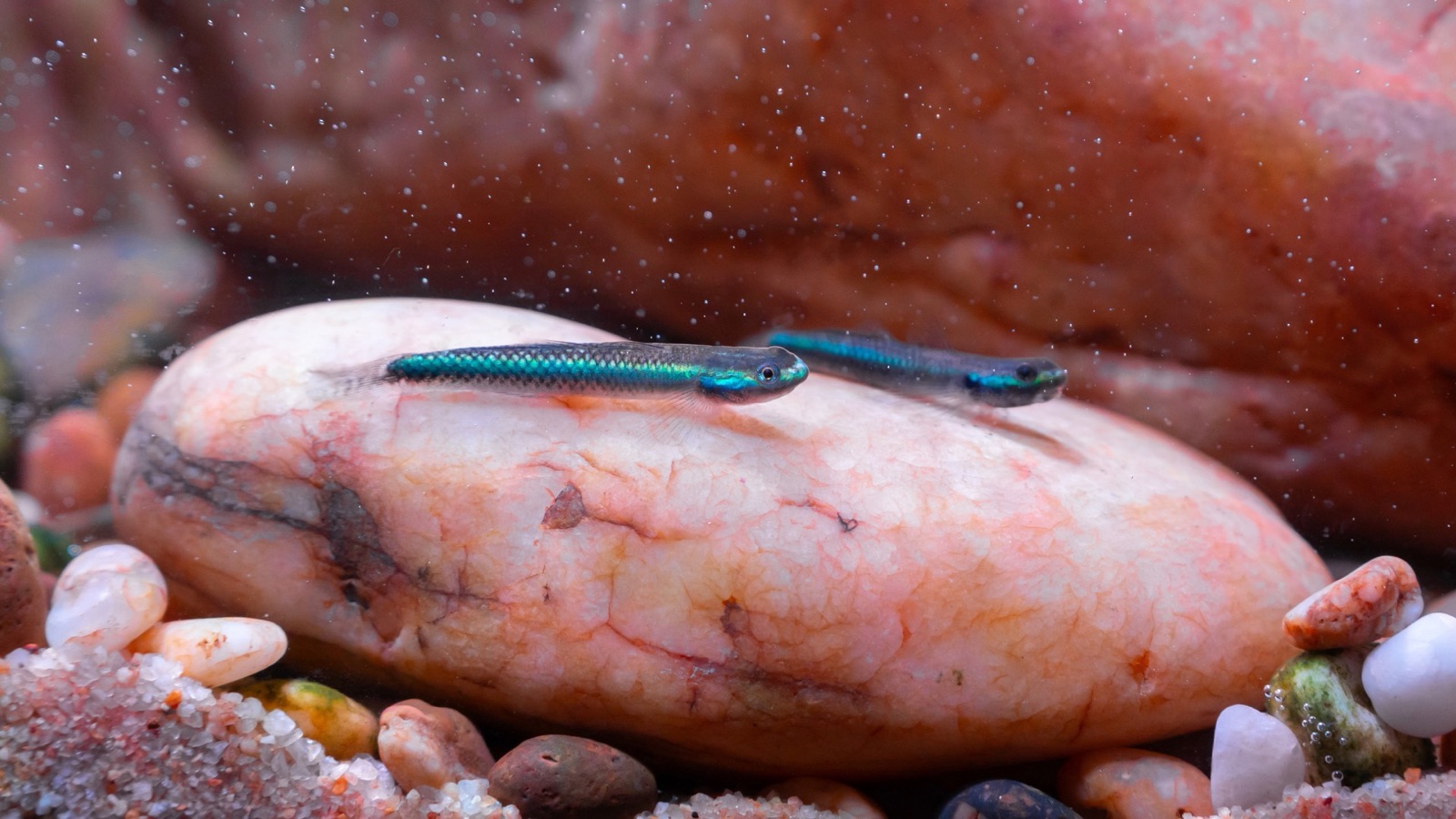
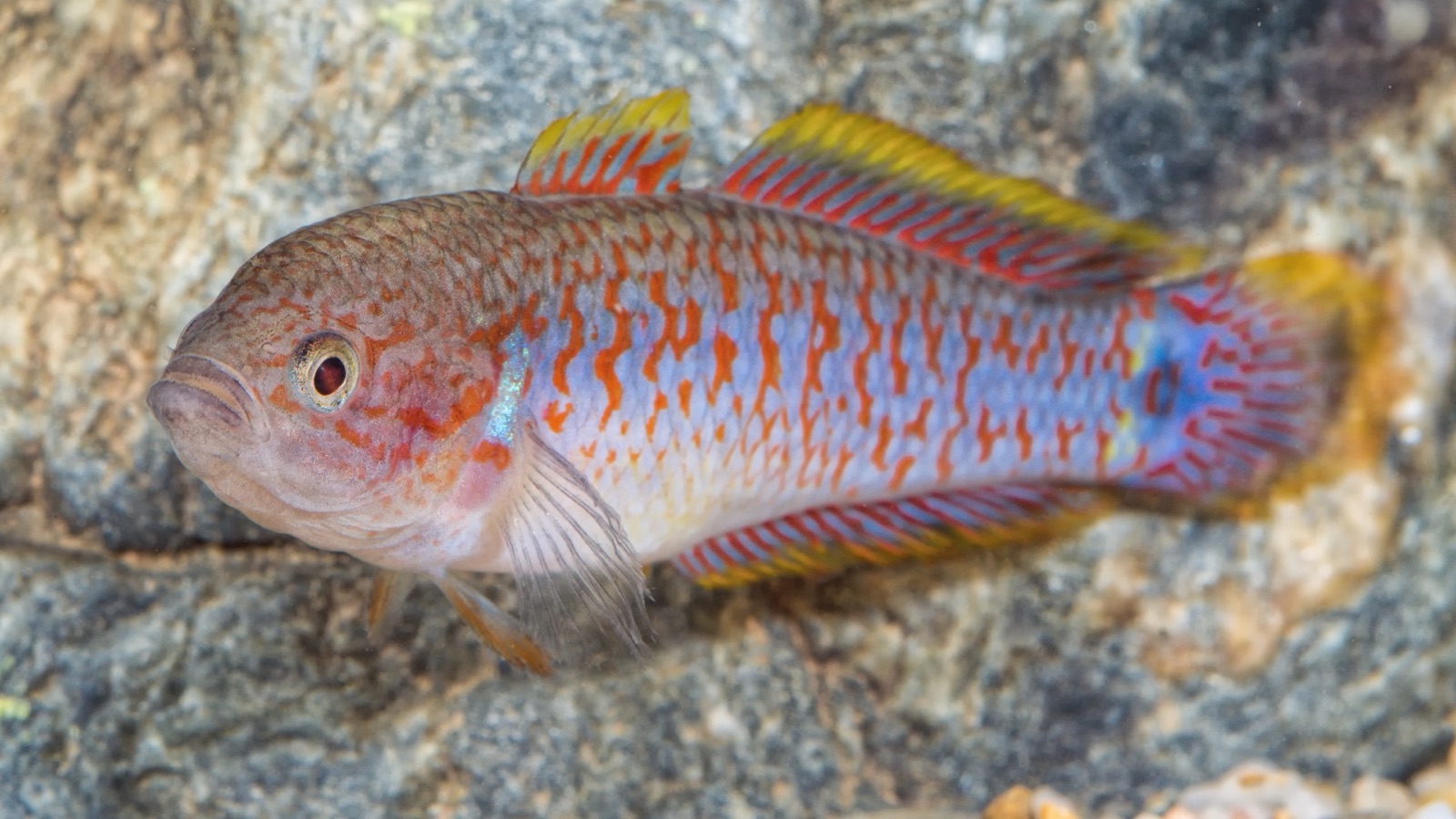
Photos © Adobe Stock
Grouped by a friendly ecology-and-region axis — bumblebee gobies, neon & algae gobies, Asian river gobies, brackish gobies, desert gobies, the sleeper gobies (gudgeons) and the mudskippers — rather than by the shifting family boundaries, though each account names its current family and authority. Following the Catalog of Fishes and FishBase, the freshwater/brackish set is large and still being written up; new accounts are added as they are researched.
Species
Bumblebee gobies · 8
Genus Brachygobius (Gobiidae) — tiny wasp-banded micro-predators of brackish and fresh estuaries from India to Borneo. Several look-alike species are sold under one trade name. Most do best in slightly brackish water; they refuse flake and need live or frozen food. Cave-spawners — the male guards the eggs — so they can be bred with care.
- Brachygobius aggregatus · Schooling bumblebee goby
- Brachygobius doriae · Bumblebee goby
- Brachygobius kabiliensis · Kabili bumblebee goby
- Brachygobius mekongensis · Mekong bumblebee goby
- Brachygobius nunus · Bumblebee fish
- Brachygobius sabanus · Sabah bumblebee goby
- Brachygobius sua · Bumblebee goby
- Brachygobius xanthozona · Goldenbanded goby
Neon & algae gobies · 31
Subfamily Sicydiinae (Stiphodon, Sicyopterus, Sicyopus, Lentipes and kin, Gobiidae) — the jewel-coloured cling-gobies of fast, clear island and coastal streams across the Indo-Pacific. They are AMPHIDROMOUS: adults breed in fresh water but the larvae develop at sea, so they are wild-collected and effectively cannot be bred at home. Aufwuchs grazers — they rasp biofilm off rock and starve in a bare tank.
- Akihito futuna
- Cotylopus acutipinnis
- Lentipes concolor · Hawaiian stream goby
- Lentipes whittenorum
- Sicyopterus griseus
- Sicyopterus japonicus · Japanese sleeper goby
- Sicyopterus lagocephalus · Bichique
- Sicyopterus microcephalus
- Sicyopterus pugnans
- Sicyopus auxilimentus
- Sicyopus cebuensis
- Sicyopus exallisquamulus
- Sicyopus rubicundus
- Sicyopus zosterophorus · Banded rockskipper goby
- Smilosicyopus fehlmanni
- Stiphodon atratus
- Stiphodon atropurpureus · Blue neon goby
- Stiphodon auratus · Aurora goby
- Stiphodon aureofuscus
- Stiphodon caeruleus · Blue neon goby
- Stiphodon discotorquatus
- Stiphodon elegans · Green riffle goby
- Stiphodon maculidorsalis · Orange-fin stiphodon
- Stiphodon martenstyni · Sri Lanka cling goby
- Stiphodon multisquamus
- Stiphodon ornatus · Ornate cling goby
- Stiphodon palawanensis
- Stiphodon pelewensis · Palauan Riffle Dwarf Goby
- Stiphodon percnopterygionus · Blackfin cling goby
- Stiphodon semoni · Semon's goby
- Stiphodon surrufus · Bird Song Goby
Asian river gobies · 55
Rhinogobius, Mugilogobius, Glossogobius, Schismatogobius and kin — the resident gobies of streams, rivers and rice country across South, Southeast and East Asia. Rhinogobius is a large, fast-growing genus with many undescribed trade forms. Most are bold, bottom-dwelling micro-predators; many are cave/substrate spawners with a guarding male, and several are temperate (not tropical) fish.
- Eugnathogobius mindora · Stripe-face Calamiana
- Glossogobius aureus · Golden tank goby
- Glossogobius bicirrhosus
- Glossogobius callidus · River goby
- Glossogobius celebius · Celebes goby
- Glossogobius giuris · Tank goby
- Glossogobius intermedius
- Mugilogobius amadi · Lake Poso goby
- Mugilogobius cavifrons · Mangrove Goby
- Mugilogobius chulae · Yellowstripe goby
- Mugilogobius hitam
- Mugilogobius latifrons
- Mugilogobius mertoni · Kanu goby
- Mugilogobius sarasinorum · Sulawesi goby
- Mugilogobius tagala
- Mugilogobius tigrinus · Tiger dwarf goby
- Pseudogobiopsis oligactis
- Pseudogobiopsis tigrellus
- Redigobius balteatus · Girdled goby
- Redigobius bikolanus · Speckled goby
- Redigobius chrysosoma · Spotfin goby
- Redigobius deccaensis
- Rhinogobius biwaensis · Lake Biwa goby
- Rhinogobius brunneus · Amur goby
- Rhinogobius candidianus · Taiwan brook goby
- Rhinogobius cliffordpopei · Clifford Pope's goby
- Rhinogobius davidi
- Rhinogobius duospilus · Hong Kong goby
- Rhinogobius filamentosus
- Rhinogobius flumineus · River goby
- Rhinogobius formosanus · Formosa goby
- Rhinogobius giurinus · Lizard goby
- Rhinogobius immaculatus
- Rhinogobius koreensis
- Rhinogobius kurodai · Japanese driftwood goby
- Rhinogobius leavelli · Leavell's goby
- Rhinogobius lindbergi · Amur goby
- Rhinogobius maculafasciatus
- Rhinogobius mengyangensis
- Rhinogobius mizunoi
- Rhinogobius montanus
- Rhinogobius nagoyae · Nagoya goby
- Rhinogobius retrofrenis
- Rhinogobius rubromaculatus · Red-spotted goby
- Rhinogobius shennongensis · Blue Fin Goby
- Rhinogobius similis
- Rhinogobius szechuanensis · Sichuan goby
- Rhinogobius wangchuanensis
- Rhinogobius xianshuiensis
- Rhinogobius zhoui
- Schismatogobius ampluvinculus · Taiwanese Dwarf Dragon Goby
- Schismatogobius fuligimentus
- Schismatogobius marmoratus · Marbled goby
- Schismatogobius roxasi
- Tukugobius philippinus
Brackish gobies · 32
The knight goby Stigmatogobius sadanundio plus Awaous, Stenogobius, Pseudogobius and kin — gobies of estuaries, mangroves and tidal rivers that want measurable salt. The salinity is the usual reason they fail in a plain freshwater tank. Diet is largely small live and frozen foods; some grow larger than the typical aquarium goby.
- Acentrogobius janthinopterus · Pupilspot goby
- Acentrogobius pflaumii · Striped sandgoby
- Acentrogobius viridipunctatus · Spotted green goby
- Awaous banana · River goby
- Awaous dayi
- Awaous grammepomus · Scribbled goby
- Awaous guamensis · Oopu nakea
- Awaous keralaensis
- Awaous maculatus
- Awaous melanocephalus · Largesnout goby
- Awaous myanmarensis
- Awaous ocellaris · Ocellated river goby
- Awaous tajasica · Sand fish
- Bathygobius cotticeps · Cheekscaled frill-goby
- Bathygobius fuscus · Dusky frillgoby
- Economidichthys mornosensis
- Favonigobius gymnauchen
- Favonigobius reichei · Indo-Pacific tropical sand goby
- Gobiopterus chuno · Glass goby
- Gobiopterus stellatus · Dwarf freshwater goby
- Oligolepis acutipennis · Sharptail goby
- Oligolepis goni · Teardrop goby
- Oligolepis stomias
- Proterorhinus scythicus
- Pseudogobius javanicus · Java goby
- Pseudogobius masago
- Pseudogobius youtabae
- Stenogobius genivittatus · Cheeklined goby
- Stenogobius gymnopomus
- Stenogobius squamosus
- Stigmatogobius pleurostigma
- Stigmatogobius sadanundio · Knight goby
Desert gobies · 6
Genus Chlamydogobius — the hardy desert gobies of Australia's arid-zone springs, bores and salt lakes (the famous Lake Eyre desert goby C. eremius and its relatives). They tolerate extremes of temperature and salinity, breed readily as cave-spawners with a guarding male, and are among the easiest fish in this section.
- Chlamydogobius eremius · Desert goby
- Chlamydogobius gloveri · Dalhousie goby
- Chlamydogobius japalpa · Finke goby
- Chlamydogobius micropterus · Elizabeth Springs goby
- Chlamydogobius ranunculus · Tadpole goby
- Chlamydogobius squamigenus · Edgbaston goby
Sleeper gobies (gudgeons) · 75
Family Eleotridae / Butidae — the sleepers and gudgeons, a sister lineage to the true gobies with SEPARATE pelvic fins (not the fused sucker disc). The hobby sells them as gobies. Includes the most popular fish here, the peacock gudgeon (Tateurndina ocellicauda), plus Mogurnda, Dormitator, Oxyeleotris and Hypseleotris. Mostly resident cave/substrate spawners with male egg-guarding; some sleepers reach a large, predatory size.
- Belobranchus belobranchus · Throatspine sleeper
- Bostrychus sinensis · Four-eyed sleeper
- Bostrychus zonatus · Sunset gudgeon
- Butis amboinensis · Olive flathead-gudgeon
- Butis bargabhimae
- Butis butis · Duckbill sleeper
- Butis koilomatodon · Pitted sleeper
- Butis melanostigma · Black-spotted sleeper
- Dormitator latifrons · Pacific fat sleeper
- Dormitator lebretonis · African fat sleeper
- Dormitator maculatus · Fat sleeper
- Eleotris acanthopomus · Asian sleeper
- Eleotris amblyopsis · Large-scaled spinycheek sleeper
- Eleotris fusca · Dusky sleeper
- Eleotris melanosoma · Broadhead sleeper
- Eleotris oxycephala · Sharphead sleeper
- Eleotris picta · Spotted sleeper
- Eleotris pisonis · Spinycheek sleeper
- Eleotris sandwicensis · Hawaiian sleeper
- Erotelis smaragdus · Emerald sleeper
- Giuris margaritaceus · Snakehead gudgeon
- Gobiomorphus australis · Striped gudgeon
- Gobiomorphus basalis · Cran's bully
- Gobiomorphus breviceps · Upland bully
- Gobiomorphus cotidianus · Common bully
- Gobiomorphus gobioides · Giant bully
- Gobiomorphus hubbsi · Bluegill bully
- Gobiomorphus huttoni · Redfin bully
- Guavina guavina · Guavina
- Hypseleotris aurea · Golden carp gudgeon
- Hypseleotris barrawayi · Barraway's fish
- Hypseleotris compressa · Empire gudgeon
- Hypseleotris cyprinoides · Tropical carp-gudgeon
- Hypseleotris ejuncida · Slender carp gudgeon
- Hypseleotris galii · Firetail gudgeon
- Hypseleotris guentheri
- Hypseleotris kimberleyensis · Kimberley gudgeon
- Hypseleotris klunzingeri · Western carp gudgeon
- Hypseleotris leuciscus
- Hypseleotris moolooboolaensis · Mary carp gudgeon
- Hypseleotris regalis · Prince Regent gudgeon
- Mogurnda adspersa · Southern purplespotted gudgeon
- Mogurnda aiwasoensis
- Mogurnda aurifodinae · Goldfields gudgeon
- Mogurnda cingulata · Banded mogurnda
- Mogurnda clivicola · Flinders Ranges gudgeon
- Mogurnda furva · Black mogurnda
- Mogurnda kaifayama
- Mogurnda kutubuensis · Lake Kutubu mogurnda
- Mogurnda larapintae · Desert gudgeon
- Mogurnda lineata · Kokoda mogurnda
- Mogurnda maccuneae
- Mogurnda magna · Large mogurnda
- Mogurnda malsmithi
- Mogurnda mbuta
- Mogurnda mogurnda · Northern trout gudgeon
- Mogurnda mosa
- Mogurnda oligolepis · Kimberley Mogurnda
- Mogurnda orientalis · Eastern mogurnda
- Mogurnda pardalis · Spotted mogurnda
- Mogurnda pulchra · Beautiful mogurnda
- Mogurnda spilota · Filamentous gudgeon
- Mogurnda thermophila · Dalhousie mogurnda
- Mogurnda variegata · Variegated gudgeon
- Mogurnda vitta · Stripe-faced gudgeon
- Mogurnda wapoga
- Ophiocara porocephalum · Northern mud sleeper
- Oxyeleotris lineolata · Lined sleeper
- Oxyeleotris marmorata · Marble goby
- Oxyeleotris nullipora
- Oxyeleotris selheimi · Blackbanded gudgeon
- Oxyeleotris urophthalmoides
- Philypnodon grandiceps · Flathead gudgeon
- Philypnodon macrostomus · Dwarf flathead gudgeon
- Tateurndina ocellicauda · Peacock gudgeon
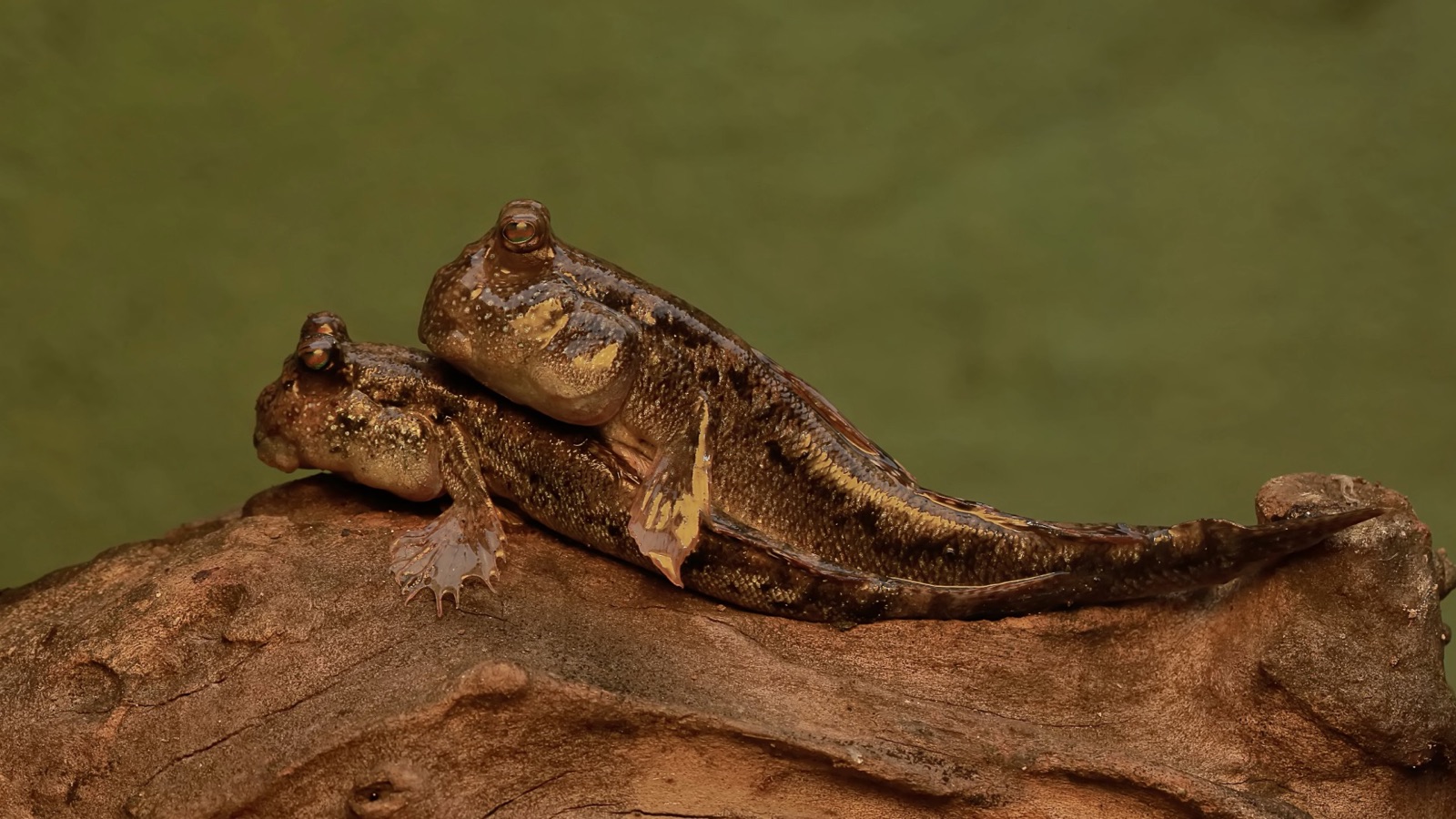
Mudskippers · 19
Subfamily Oxudercinae (Periophthalmus, Boleophthalmus, Periophthalmodon, Scartelaos) — the amphibious brackish gobies of tropical mudflats and mangroves. They breathe air, walk on their pectoral fins and need a PALUDARIUM with land, warm brackish water and high humidity, not an ordinary aquarium. The most specialised keeper's fish in this section.
- Boleophthalmus boddarti · Boddart's goggle-eyed goby
- Boleophthalmus caeruleomaculatus · Blue-spotted mudskipper
- Boleophthalmus dussumieri · Indian mudskipper
- Boleophthalmus pectinirostris · Great blue-spotted mudskipper
- Periophthalmodon schlosseri · Giant mudskipper
- Periophthalmodon septemradiatus · Freshwater mudskipper
- Periophthalmus argentilineatus · Barred mudskipper
- Periophthalmus barbarus · Atlantic mudskipper
- Periophthalmus cantonensis · Cantonese mudskipper
- Periophthalmus chrysospilos · Gold-spotted mudskipper
- Periophthalmus gracilis · Graceful mudskipper
- Periophthalmus kalolo · Common mudskipper
- Periophthalmus modestus · Shuttles hoppfish
- Periophthalmus novemradiatus · Small mudskipper
- Periophthalmus pusing
- Periophthalmus variabilis
- Periophthalmus waltoni · Walton's mudskipper
- Scartelaos histophorus · Walking goby
- Scartelaos tenuis · Slender mudskipper
What’s new
All updates →- Name change5 Gobies & Gudgeons names updated to current Catalog of Fishes validity2026-09-04
- UpdatedScartelaos histophorus2026-09-04
- Updated11 Gobies & Gudgeons articles refreshed2026-09-03
- New speciesProterorhinus scythicus2026-06-10
- New speciesPseudogobius youtabae2026-06-10