Taxonomy & naming
Nimbochromis linni belongs to a genus of large, robustly built predatory haplochromine cichlids endemic to Lake Malawi, distinguished by a mottled, blotched colour pattern that functions as camouflage against sand and rubble substrates. The genus Nimbochromis was erected to separate these ambush-hunting cichlids from other large Malawi haps, and it currently holds a handful of species including the well-known N. venustus, N. livingstonii, N. polystigma and N. fuscotaeniatus alongside N. linni. The precise describing authority and date of publication for N. linni are not confidently available here; readers should consult Eschmeyer's Catalog of Fishes, the standing authority for valid cichlid names, for the definitive citation. What is well established is the genus's ecological identity: these are sit-and-wait piscivores adapted to hunt over open substrate rather than pursue prey through rock cover, a niche distinct from the algae-grazing mbuna that dominate much of the lake's rocky shoreline.
Morphology
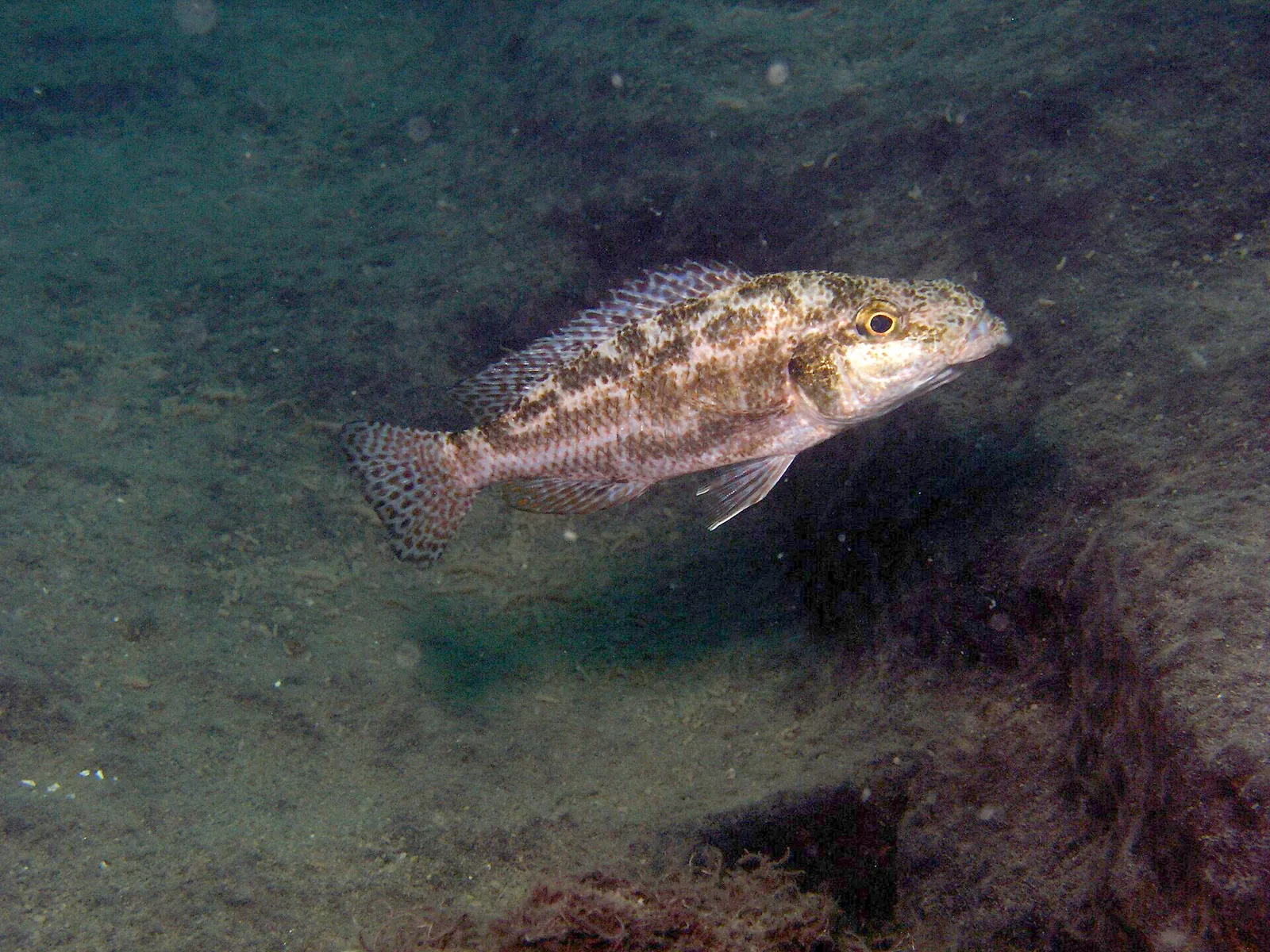
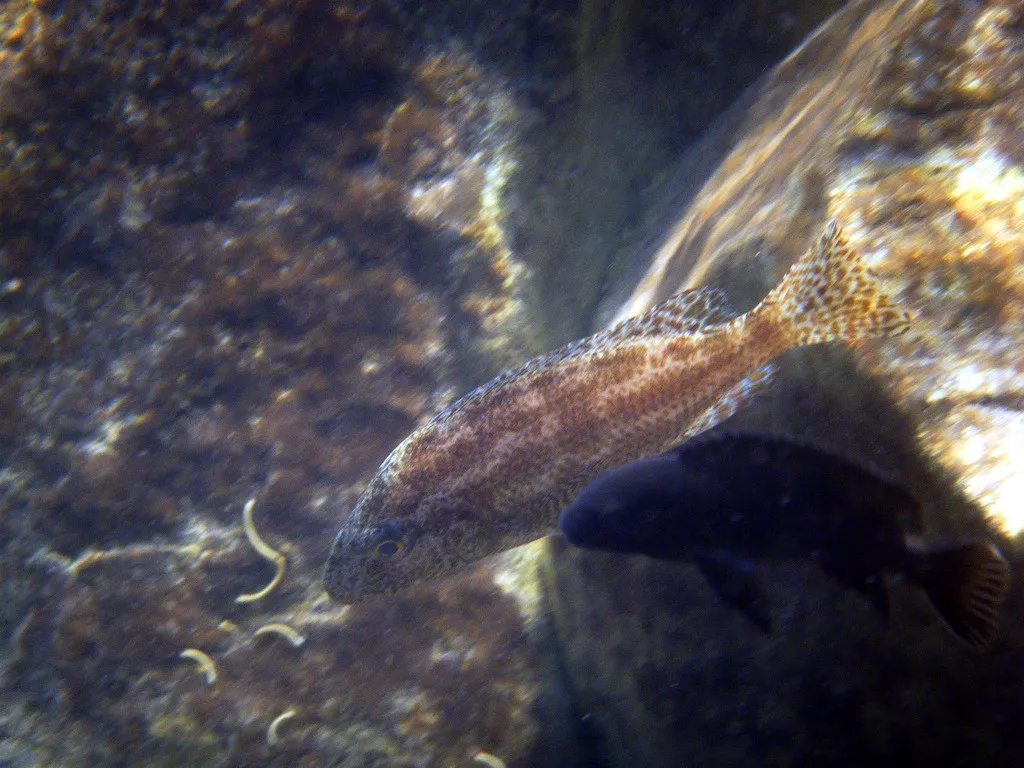
Nimbochromis species share an elongated, moderately deep-bodied predatory build with a large mouth adapted for engulfing whole prey fish, and most carry the genus's characteristic mottled, marbled blotch pattern across a pale ground colour — a disruptive camouflage suited to lying motionless on sand or lurking near rubble. Members of this genus reach substantial size for Malawi cichlids, with several well-documented species running from roughly 7–10 in; a species-specific maximum for N. linni is not confirmed here, so this figure should be read as a genus-typical estimate rather than a measured value. Sexual dichromatism is expected, as breeding males across the genus typically intensify their pattern and develop stronger contrast than females, though the specific colour presentation of N. linni has not been separately documented.
Habitat
This species is documented from a widely scattered set of localities spanning much of Lake Malawi's length, from Chizumulu Island in the north down through Nkhata Bay, Magunga, Mbenji Island, Nakantenga Island and Namalenje Island, to Gome and Boadzulu Island in the south — a distribution pattern consistent with a wide-ranging predatory species rather than a narrow rock-reef endemic. Like other Nimbochromis, it is expected to favour the sand and intermediate rock-sand transition zones typical of ambush hunters in this genus, rather than dense rock cover. The water across this range is Lake Malawi's characteristic alkaline medium, warm and well-buffered.
Feeding
Nimbochromis is a genus of piscivorous ambush predators, and N. linni is expected to share this feeding ecology: hunting primarily small fish, taken by a sudden lunge from cover or open ground rather than by sustained pursuit. Several well-studied relatives in the genus, notably N. livingstonii, are documented lying on their sides on the substrate in a posture that resembles a dead or dying fish, luring scavenging or curious small fish close enough to strike — a behaviour sometimes called thanatosis or death-feigning. Whether N. linni specifically employs this tactic has not been documented in the sources available for this article, and it should not be asserted as confirmed for this species; it is noted here only as a genus-wide behaviour relevant to understanding how Nimbochromis feed.
Mating
As in other large predatory Malawi haps, adult male Nimbochromis are expected to establish and defend a spawning territory, typically a sand pit or a site near cover, from which they display to females and drive off rival males. The mating system across the genus is understood to be polygynous, without pair bonding. A ripe female approaches a displaying male, and courtship follows the standard haplochromine pattern of lateral display and quivering leading to spawning. No species-specific courtship details have been separately documented for N. linni.
Breeding
Nimbochromis linni is a maternal mouthbrooder, as is every member of its genus. Following spawning, the female takes the fertilised eggs into her mouth, drawn in part to the egg-spot markings on the male's anal fin that prompt her to mouth at them and take in fertilising sperm. She broods the eggs and larvae alone, typically for around three to four weeks in cichlids of this size class, before releasing free-swimming fry; there is no male or biparental care. Clutch size has not been documented specifically for this species, but given the substantial size reached by Nimbochromis generally, it is expected to run larger than the modest clutches typical of small mbuna — likely several dozen to over a hundred eggs by comparison with related large predatory haps, though this figure is an estimate rather than a documented count.
In the aquarium
Nimbochromis linni is uncommon in the aquarium trade, and detailed captive husbandry information specific to this species is not available. Where kept, its needs would follow the general template for a large predatory Malawi hap: a spacious aquarium of at least 71 in given the size these fish can reach, with a sand substrate suited to their sand-associated hunting habits and enough rockwork or cover to break sightlines without crowding the floor space this genus needs to patrol. Water chemistry should match the lake — alkaline and well-buffered, pH roughly 7.7 to 8.6, temperature in the mid-20s Celsius. As a piscivore, its diet should include appropriately sized meaty foods, and because of its predatory size and temperament it should only be housed with tankmates too large to be regarded as prey. Given the limited documentation available for this specific species, prospective keepers should treat any care regimen as provisional and based on genus-level analogy rather than confirmed data for N. linni.
Conservation
Nimbochromis linni has not been assessed by the IUCN Red List, so no formal conservation status can be reported here. Its documented range spans a wide scatter of localities across much of Lake Malawi, from the far north to the southern arm, which suggests a broader distribution than the many narrow-range rock-reef mbuna endemic to single stretches of coastline, though this is an inference from locality records rather than a formal range assessment. Like other Lake Malawi cichlids it faces the pressures common across the basin: fishing pressure, including bycatch in the small-mesh nets used for subsistence fishing, habitat disturbance from shoreline development and sedimentation, and the broader stresses of nutrient loading and climate-driven changes to the lake's mixing and productivity.