Taxonomy & naming
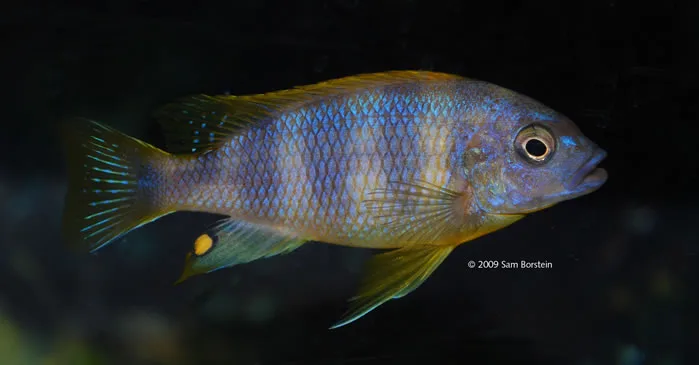
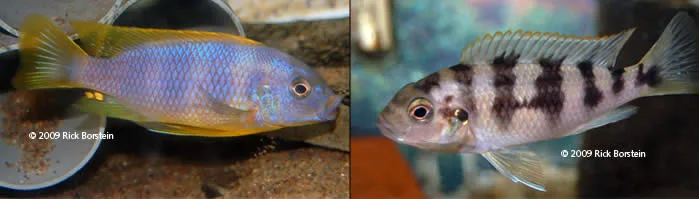
Petrotilapia sp. "Chitimba" has no describing author, no publication date, and no entry under a validated name in Eschmeyer's Catalog of Fishes. Its name is a straightforward locality tag: the genus, plus "Chitimba," for Chitimba Bay on the northern Malawian shore where it is recorded. The genus Petrotilapia — from Greek petros, "rock," combined with a Tswana-derived root for "fish" shared with Tilapia — comprises the lake's dedicated rock-dwelling algae scrapers, a group notorious for producing multiple distinct male colour morphs at a single site, which has left the great majority of named forms undescribed and species boundaries within the genus unusually difficult to establish. Whether this Chitimba Bay population represents a distinct species or a colour morph within a wider Petrotilapia population sharing these reefs has not been resolved by any published study.
Morphology
Detailed morphometrics specific to this population have not been published. The body should follow the genus-typical robust build shared by all Petrotilapia — a thick-set head and strong, closely packed comb-like teeth adapted for scraping tough algal turf from wave-washed rock, larger and heavier than most other mbuna. Genus-typical size runs to roughly 4.5–6 in total length, with males somewhat larger than females. As in other Petrotilapia, breeding males are expected to show a distinctly darker, more contrasting colour than females, which — as across the genus generally — tend to look far more similar to one another across different populations than the males do, making female-only identification unreliable even where males are readily told apart.
Habitat
The form is recorded from Chitimba Bay, a stretch of the northern Malawian shore below the Livingstonia escarpment that mixes sandy beach with scattered rocky outcrops. Petrotilapia are specialists of wave-exposed, high-energy rocky shoreline, where strong surf keeps algal turf short, and this form is expected to occupy the rocky patches within and around the bay rather than the open sand, generally within the shallow-to-moderate depths typical of the genus. Water in this part of the lake follows the general Malawi profile: warm, alkaline, and well-buffered.
Feeding
Petrotilapia are the lake's rock-scraping algae specialists, using broad, closely packed teeth to tear and scrape tough, wave-hardened algal turf from exposed rock, a niche their robust jaws are particularly well suited to compared with the more delicately toothed grazing mbuna. Petrotilapia sp. "Chitimba" is presumed to feed in this genus-typical manner, defending a feeding territory on exposed rock, though no feeding study specific to this population has been published.
Mating
Mature males are expected to hold and defend a feeding-and-breeding territory on exposed rock within Chitimba Bay, displaying their breeding colour to attract passing females, consistent with other Petrotilapia populations elsewhere in the lake. Petrotilapia territorial defence is generally more intense than in many other mbuna genera, given the value of well-exposed, algae-rich rock. Given the genus's tendency to produce multiple coexisting male colour morphs at a single site, other Petrotilapia colour forms may share these reefs, though this has not been documented specifically for Chitimba Bay.
Breeding
As in all Lake Malawi haplochromines, reproduction is by maternal mouthbrooding: the female collects the fertilised eggs into her mouth after spawning and carries them, without normal feeding, for several weeks until the fry are ready for independent release, with the male taking no further role. Clutch sizes in Petrotilapia tend toward the larger end for mbuna given the genus's larger adult body size, though exact figures for this Chitimba Bay population have not been documented.
In the aquarium
Petrotilapia sp. "Chitimba" would be kept as a robust rock-grazing mbuna: substantial rockwork offering exposed grazing surfaces and retreats, a sand substrate, and good water movement suit its natural high-energy habitat. Water chemistry should match Lake Malawi's rocky zone — alkaline and well-buffered, pH roughly 7.7 to 8.6, temperature 75–82 °F. As with other Petrotilapia, expect pronounced aggression, generally more intense than typical mbuna, so a generously sized tank, careful stocking, and one male to several females (or a very large, densely decorated mixed-mbuna system) help manage conflict. Diet should be strongly vegetable-based — spirulina flake or pellet, algae wafers welcome — with fatty, protein-heavy foods minimised given the group's susceptibility to digestive bloat.
Conservation
Petrotilapia sp. "Chitimba" has not been evaluated by the IUCN and, as an undescribed form, has no Red List status. Chitimba Bay is a reasonably accessible and visited part of the northern Malawian shore, but no dedicated population assessment has been published for this specific form. The general caution applied to narrow-range Malawi mbuna forms — vulnerability to concentrated collection or localised habitat change — applies here in the absence of any formal assessment.