We cover the bonytongue fishes (order Osteoglossiformes) as a whole — the arowanas and arapaima (Osteoglossidae and Arapaimidae), the African butterflyfish (Pantodontidae), the featherback knifefishes (Notopteridae), and the elephantnoses, mormyrids and the aba (Mormyridae and Gymnarchidae). The Old-World featherbacks live here, not with the New-World electric knifefishes (the Gymnotiformes), which they only resemble by convergence. Following the Catalog of Fishes for valid names, we group the order by a friendly ecology axis rather than by clade. A few honest themes run through the accounts. The size trap: the arapaima and clown knife are sold small and grow into pond- or public-aquarium fish. Jumping & air-breathing: arowanas and the butterflyfish leap, and the arapaima, Heterotis and Gymnarchus must breathe air — a tight lid and surface access matter. Weak electricity: the mormyrids and Gymnarchus electrolocate, need soft water and groups, and are sensitive to medication. And the Asian arowana is listed on CITES Appendix I — we state that plainly and give no trade or legal advice. Read each account before you buy.
Photos © Adobe Stock
Grouped by a friendly ecology axis — the arowanas & arapaima, the African butterflyfish, the featherback knifefishes, and the elephantnoses & mormyrids — rather than by the shifting family boundaries, though each account names its current family and authority. Osteoglossiformes is a small order in famous fish but a large one in obscure African mormyrids; following the Catalog of Fishes and FishBase, the roster runs from a handful of aquarium legends to some two hundred little-collected single-river species, and new accounts are added as they are researched.
Species
Arowanas & arapaima · 11
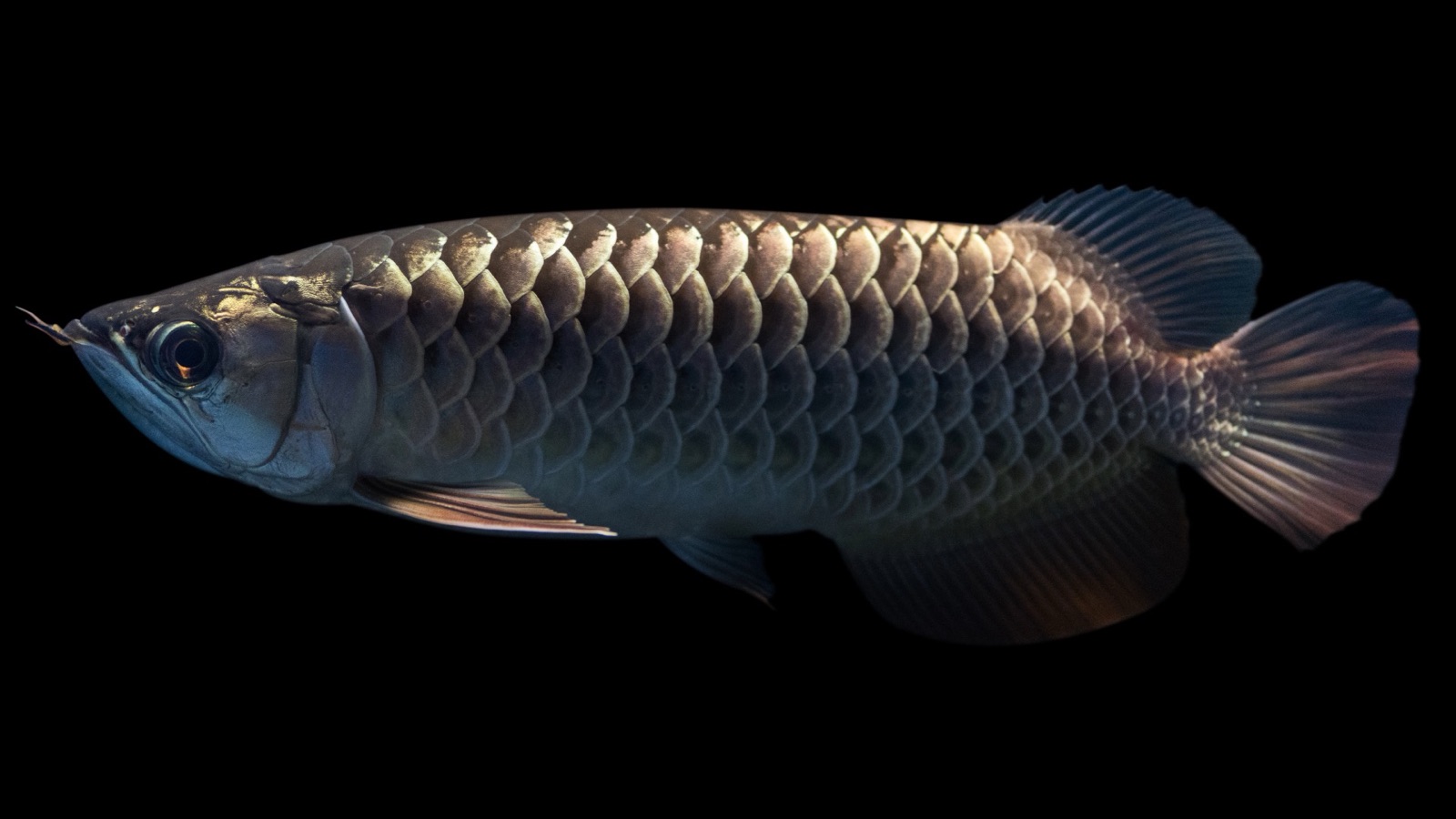
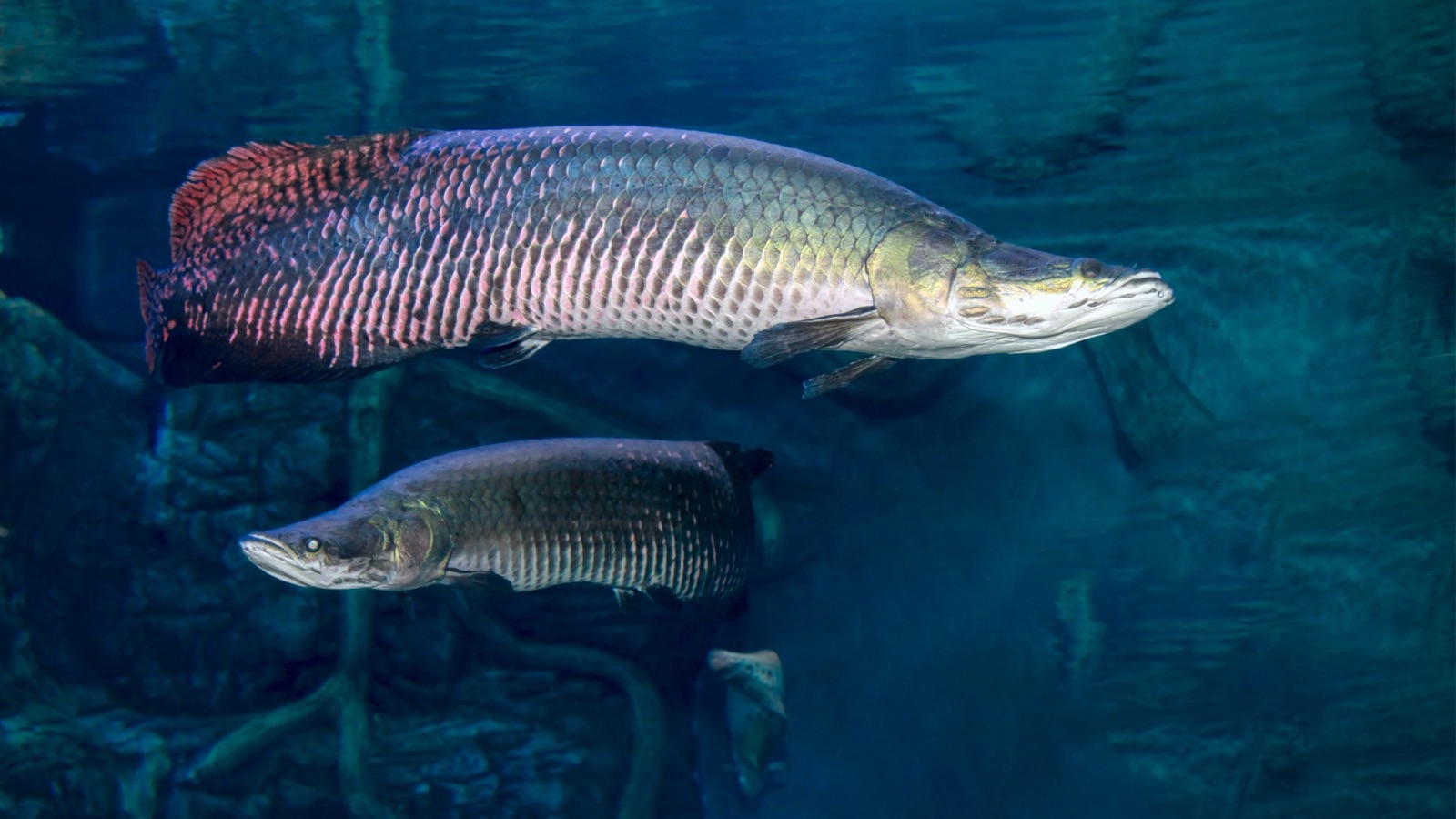
Osteoglossidae and Arapaimidae — the great bonytongues. The arowanas (silver and black Osteoglossum in South America, the Asian Scleropages formosus, the Australasian S. jardinii and S. leichardti, and the African Heterotis) are surface-cruising predators that LEAP clear of the water for prey — a tight, heavy lid is mandatory — and the Scleropages and Osteoglossum are paternal MOUTHBROODERS that carry the young in the mouth. The arapaima or pirarucu (Arapaima) is one of the largest freshwater fish on Earth at two to three metres and an obligate AIR-BREATHER: a public-aquarium fish, never a home-tank one. The Asian arowana is listed on CITES Appendix I — legally protected, farmed under certificate and microchip; we state this factually and give no trade or legal advice.
- Arapaima agassizii · Arapaima
- Arapaima gigas · Arapaima
- Arapaima leptosoma · Arapaima
- Arapaima mapae · Mapa arapaima
- Heterotis niloticus · African arowana
- Osteoglossum bicirrhosum · Silver arowana
- Osteoglossum ferreirai · Black arowana
- Scleropages formosus · Asian arowana
- Scleropages inscriptus · Myanmar arowana
- Scleropages jardinii · Gulf saratoga
- Scleropages leichardti · Southern saratoga
African butterflyfish · 1
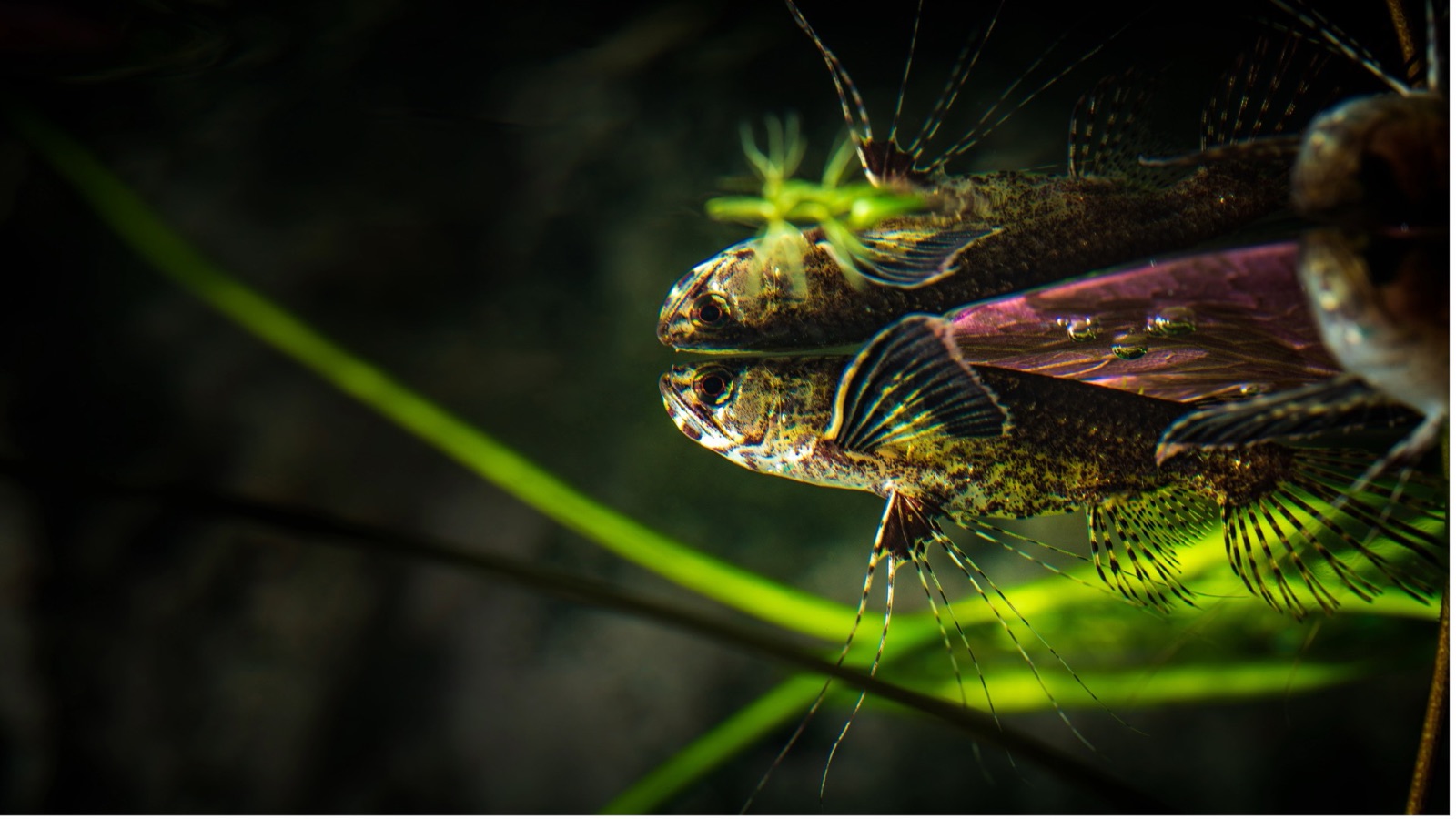
Pantodontidae — a single species, Pantodon buchholzi, of the soft, warm forest waters of West and Central Africa. A 'living leaf' that hangs at the surface with broad, wing-like pectoral fins spread flat, it is an upward-looking ambush predator that leaps to snatch insects and, like the arowanas, JUMPS — keep the lid shut. It stays around 10–13 cm and keeps to the top of the tank; it eats anything small enough to fit the mouth and is best with calm, surface-sharing tankmates. Little changed for tens of millions of years, it is one of the aquarium's true living fossils.
- Pantodon buchholzi · African butterflyfish
Featherback knifefishes · 11
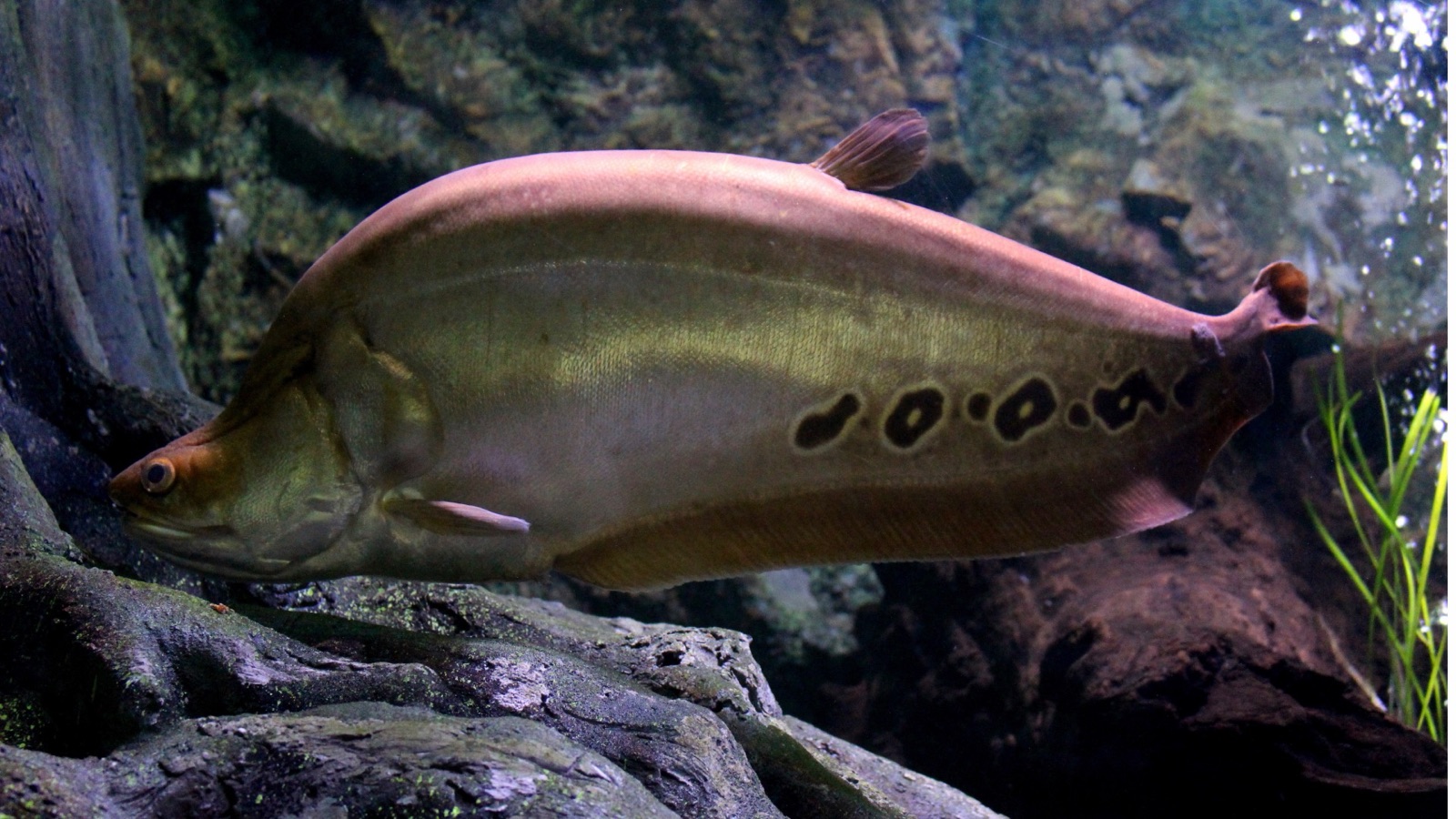
Notopteridae — the Old-World featherbacks: the Asian clown knife (Chitala ornata), the giant Chitala lopis, Notopterus, and the African Papyrocranus and Xenomystus. Named for the long ribbon-like anal fin that runs the body and drives a ghostly, undulating swim, they are nocturnal ambush predators that gulp air from a modified swimbladder. The clown knife is a SIZE TRAP — sold small, it reaches about a metre — while the little African brown knifefish Xenomystus (~20 cm) is the community-friendly exception. NOT the New-World electric knifefishes (Gymnotiformes), which they resemble only by convergence and which have their own section.
- Chitala blanci · Royal Featherback
- Chitala borneensis · Borneo featherback
- Chitala chitala · Humped featherback
- Chitala hypselonotus · Sumatran featherback
- Chitala lopis · Giant featherback
- Chitala ornata · Clown knifefish
- Notopterus notopterus · Bronze featherback
- Papyrocranus afer · Reticulated knifefish
- Papyrocranus congoensis · Congo black knife
- Xenomystus lucani · African knifefish
- Xenomystus nigri · African knifefish
Elephantnoses & mormyrids · 178
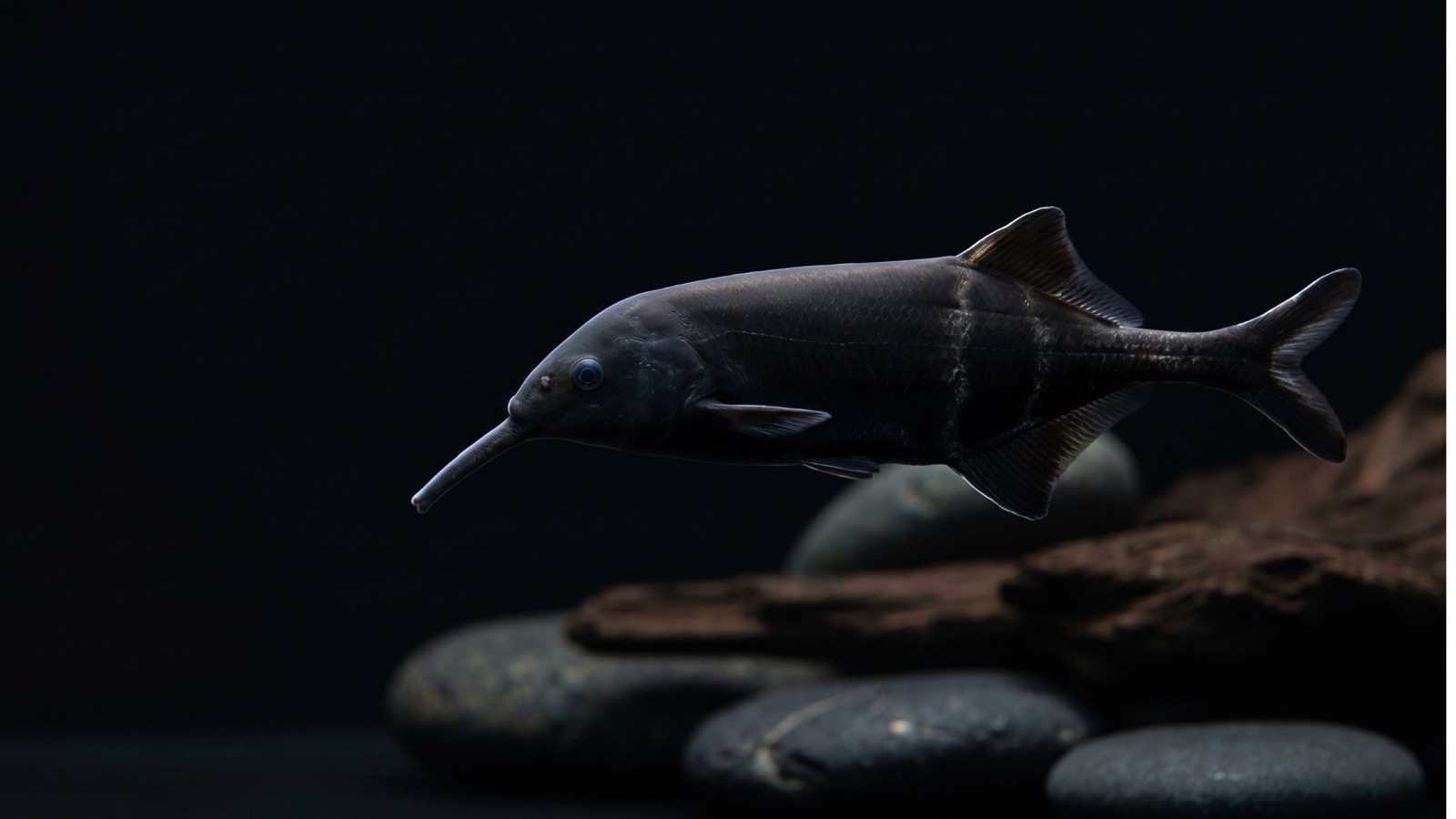
Mormyridae — the ~230 African elephantnoses and mormyrids (Gnathonemus, Campylomormyrus, Mormyrus, Marcusenius, Petrocephalus, Brienomyrus and kin) — plus the aba, Gymnarchus niloticus (Gymnarchidae). These are WEAKLY ELECTRIC fish: they generate an electric-organ discharge to electrolocate and to communicate, reading a dark, tannin-stained world by field distortions — a lineage entirely separate from, but convergent with, the New-World knifefishes. They are famous for one of the highest brain-to-body ratios of any fish. Keep them in soft, dim water, in groups where the species allows, with copper-free, gentle medication; they are essentially never bred in captivity. Gymnarchus is a large, aggressive, air-breathing, electric nest-builder.
- Boulengeromyrus knoepffleri
- Brevimyrus niger · Baby whale
- Brienomyrus adustus · Baby whale
- Brienomyrus brachyistius · Baby whale fish
- Brienomyrus longianalis
- Campylomormyrus alces · Stanley Falls elephantfish
- Campylomormyrus bredoi
- Campylomormyrus cassaicus · Donkey-faced elephantnose
- Campylomormyrus christyi
- Campylomormyrus compressirostris
- Campylomormyrus curvirostris · Matadi elephantfish
- Campylomormyrus elephas
- Campylomormyrus luapulaensis · Kabunda elephantfish
- Campylomormyrus mirus · Elephantnose
- Campylomormyrus numenius
- Campylomormyrus orycteropus · Pweto elephantfish
- Campylomormyrus phantasticus
- Campylomormyrus rhynchophorus · Double-trunk elephant nose
- Campylomormyrus tamandua · Worm-jawed mormyrid
- Campylomormyrus tshokwe
- Cryptomyrus ogoouensis
- Cryptomyrus ona
- Cyphomyrus discorhynchus · Zambezi parrotfish
- Cyphomyrus lufirae
- Genyomyrus donnyi
- Gnathonemus barbatus
- Gnathonemus echidnorhynchus · elephantnose
- Gnathonemus longibarbis
- Gnathonemus petersii · Peter's elephantnose
- Gymnarchus niloticus · Aba
- Heteromormyrus pappenheimi
- Heteromormyrus pauciradiatus
- Hippopotamyrus aelsbroecki
- Hippopotamyrus ansorgii · Slender stonebasher
- Hippopotamyrus castor
- Hippopotamyrus grahami · Graham's stonebasher
- Hippopotamyrus harringtoni
- Hippopotamyrus longilateralis · Slender stonebasher
- Hippopotamyrus macrops
- Hippopotamyrus macroterops
- Hippopotamyrus pappenheimi
- Hippopotamyrus paugyi · Kolente stonebasher
- Hippopotamyrus pictus · Marcusen's mormyrid
- Hippopotamyrus psittacus
- Hippopotamyrus szaboi
- Hippopotamyrus weeksii · Weeks' mormyrid
- Hippopotamyrus wilverthi
- Hyperopisus bebe · Bebe mormyrid
- Isichthys henryi
- Ivindomyrus marchei
- Ivindomyrus opdenboschi
- Marcusenius abadii · Djebba mormyrid
- Marcusenius altisambesi · Bulldog
- Marcusenius angolensis
- Marcusenius annamariae
- Marcusenius bentleyi
- Marcusenius brucii
- Marcusenius caudisquamatus · Mhlatuze mormyrid
- Marcusenius cuangoanus · Zovo mormyrid
- Marcusenius cyprinoides · Thicklipped trunkfish
- Marcusenius deboensis
- Marcusenius desertus
- Marcusenius devosi · Wenje mormyrid
- Marcusenius dundoensis · Dundo mormyrid
- Marcusenius friteli
- Marcusenius furcidens
- Marcusenius fuscus
- Marcusenius ghesquierei · Busira mormyrid
- Marcusenius gracilis
- Marcusenius greshoffii
- Marcusenius intermedius
- Marcusenius kainjii
- Marcusenius kaninginii
- Marcusenius kosi · Little Dolphin
- Marcusenius krameri
- Marcusenius kutuensis
- Marcusenius leopoldianus
- Marcusenius livingstonii · Livingston's bulldog
- Marcusenius lucombesi
- Marcusenius macrolepidotus · Bulldog
- Marcusenius macrophthalmus
- Marcusenius mento
- Marcusenius meronai
- Marcusenius monteiri
- Marcusenius moorii · Elephantnose
- Marcusenius multisquamatus
- Marcusenius ntemensis
- Marcusenius nyasensis
- Marcusenius pongolensis · Southern bulldog
- Marcusenius rheni
- Marcusenius sanagaensis
- Marcusenius schilthuisiae · Kutu mormyrid
- Marcusenius senegalensis
- Marcusenius stanleyanus
- Marcusenius thomasi
- Marcusenius ussheri
- Marcusenius verheyenorum
- Marcusenius victoriae
- Marcusenius wamuinii
- Mormyrops anguilloides · Cornish jack
- Mormyrops attenuatus
- Mormyrops batesianus · Bumba mormyrid
- Mormyrops boulengeri · Trumpet-nose mormyrid
- Mormyrops breviceps · Liberian elephantfish
- Mormyrops caballus
- Mormyrops citernii
- Mormyrops curtus · Boma mormyrid
- Mormyrops curviceps · Elephantnose
- Mormyrops engystoma · Engystoma bottlenose mormyrid
- Mormyrops furcidens
- Mormyrops intermedius
- Mormyrops lineolatus · elephantfish
- Mormyrops mariae
- Mormyrops masuianus
- Mormyrops microstoma · New Antwerp mormyrid
- Mormyrops nigricans
- Mormyrops oudoti
- Mormyrops parvus
- Mormyrops sirenoides
- Mormyrops tubirostris
- Mormyrops zanclirostris · Pool elephantfish
- Mormyrus bernhardi · Elephant-snout fish
- Mormyrus caballus · Elephant-snout fish
- Mormyrus casalis · Somali mormyrid
- Mormyrus caschive · Eastern bottlenose
- Mormyrus cyaneus · Lower Congo River mormyrid
- Mormyrus dendera · Elephant-snout fish
- Mormyrus dequesne
- Mormyrus ehrenbergii · Eastern bottlenose mormyrid
- Mormyrus felixi · Elephant-snout fish
- Mormyrus goheeni · Elephant-snout fish
- Mormyrus hasselquist · Elephant-snout fish
- Mormyrus hasselquistii · Elephant-snout fish
- Mormyrus herse · Elephant-snout fish
- Mormyrus hildebrandti · Hildebrandt's elephant-snout fish
- Mormyrus iriodes · Inga mormyrid
- Mormyrus joannisii
- Mormyrus kannume · Elephant-snout fish
- Mormyrus lacerda · Western bottlenose mormyrid
- Mormyrus longirostris · Dolphin mormyrid
- Mormyrus macrocephalus
- Mormyrus macrophthalmus
- Mormyrus macupe · Elephant-snout fish
- Mormyrus niloticus · Elephant-snout fish
- Mormyrus ovis
- Mormyrus rume · Elephant-snout fish
- Mormyrus subundulatus
- Mormyrus tapirus · Trunkfish
- Mormyrus tenuirostris · Athi elephant-snout fish
- Mormyrus thomasi
- Myomyrus macrodon
- Myomyrus macrops
- Myomyrus pharao
- Paramormyrops batesii
- Paramormyrops curvifrons · Ivindo mormyrid
- Paramormyrops gabonensis
- Paramormyrops hopkinsi · Ivindo electric fish
- Paramormyrops jacksoni
- Paramormyrops kingsleyae
- Paramormyrops longicaudatus · Longtailed mormyrid
- Paramormyrops ntotom
- Paramormyrops retrodorsalis · Bima elephantfish
- Paramormyrops sphekodes
- Paramormyrops tavernei
- Petrocephalus ansorgii · Agberi mormyrid
- Petrocephalus arnegardi
- Petrocephalus balayi
- Petrocephalus ballayi · Elephantfish
- Petrocephalus balteatus
- Petrocephalus bane
- Petrocephalus binotatus
- Petrocephalus boboto
- Petrocephalus bovei · Baby whale
- Petrocephalus catostoma · Churchill
- Petrocephalus christyi
- Petrocephalus congicus
- Petrocephalus cunganus
- Petrocephalus degeni