Taxonomy & naming
Melanochromis vermivorus was described by Ethelwynn Trewavas in 1935, originally as Pseudotropheus vermivorus, in her comprehensive synopsis of the cichlid fishes of Lake Nyasa (the lake's older name) — the same landmark survey that introduced dozens of new Malawi haplochromines and mbuna. It was later moved into Melanochromis, the genus Trewavas herself had erected that same year for a group of elongate, often dark-striped rock cichlids, whose name fuses Greek melas ("black") with chromis, the classic cichlid-genus suffix. The specific epithet vermivorus combines Latin vermis ("worm") with vorare ("to devour") — "worm-eating" — a name evidently drawn from stomach-content evidence available to Trewavas at the time of description, even though the species is understood today, in line with the rest of its genus, as a broadly omnivorous algae grazer rather than a worm specialist. The genus underwent a significant taxonomic revision by Konings and Stauffer in 2012, which clarified its modern boundaries.
Morphology
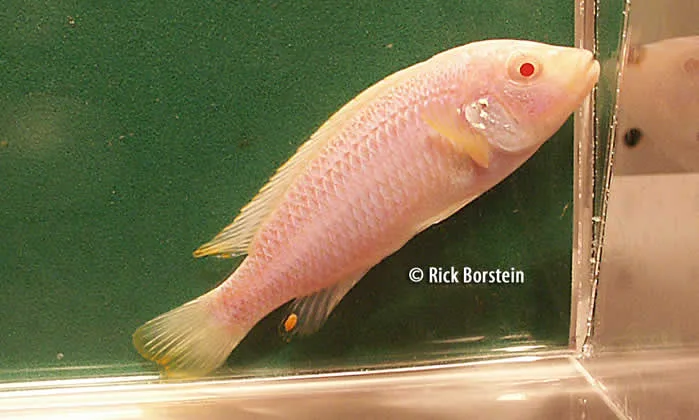
Melanochromis vermivorus carries the genus's characteristic elongate, torpedo-shaped body, more streamlined than the deeper-bodied Maylandia and Tropheops it shares reefs with. Melanochromis species typically run small to medium for mbuna, most congeners reaching roughly 3–4.5 in total length. Sexual dichromatism in this genus can be pronounced and, in some Melanochromis, is reversed relative to most cichlids — dominant males darkening dramatically while females retain brighter, paler colouration — though the specific colour pattern of vermivorus has not been documented in detail here, and readers should not assume the auratus-style colour reversal without direct confirmation for this species.
Habitat
Melanochromis vermivorus is documented from Boadzulu Island, a well-known rocky site in the southern basin of Lake Malawi. Like the rest of its genus it is expected to be a fish of the rocky littoral, tied to wave-washed boulder habitat rather than open sand, and — as with mbuna generally — largely restricted from crossing stretches of open sand between rocky outcrops, a barrier that helps isolate populations of rock-dwelling species from one island or reef to the next. The surrounding water carries the lake's characteristic warm, alkaline chemistry.
Feeding
Despite the worm-eating implication of its species name, Melanochromis vermivorus is understood, in keeping with the rest of its genus, to feed principally by grazing Aufwuchs — the dense felt of algae, diatoms, and small invertebrates coating sunlit rock — rather than specialising on worms as prey. The name most likely reflects specific stomach-content evidence recorded at the time of its original description rather than a lifelong dietary specialisation; Melanochromis as a genus are broadly omnivorous grazers that will take plankton and small invertebrates opportunistically alongside algae. Specific quantitative dietary data for this species beyond the historical basis for its name has not been documented here.
Mating
As in other Melanochromis, Melanochromis vermivorus is expected to be a polygynous, territorial breeder with no lasting pair bond. Mature males would defend a patch of rock or a crevice against rivals, courting ripe females with the vigorous display typical of mbuna and presenting the anal-fin egg-spots central to the group's spawning ritual. Females are expected to be non-territorial, moving among displaying males and choosing where to spawn. Courtship behaviour specific to this species has not been documented, so this account follows the well-established pattern shared across the genus.
Breeding
Like the rest of its genus, Melanochromis vermivorus is presumed to be a polygamous maternal mouthbrooder. After spawning, the female would carry the fertilised clutch in her mouth, drawing in the male's milt via the anal-fin egg-spot mechanism typical of mbuna, and would brood the developing eggs and larvae for roughly three to four weeks without feeding, before releasing free-swimming fry with no further paternal involvement. Clutch size has not been documented for this species; genus-typical broods for similarly sized Melanochromis run to several dozen eggs.
In the aquarium
Melanochromis vermivorus is an uncommon mbuna outside specialist Malawi circles, and dedicated keeping literature specific to it is limited; husbandry advice here follows the general Melanochromis template. As with most of this genus, keepers should expect real aggression and plan accordingly: a tank of at least 47 in with heavy rockwork, broken sightlines, and generous stocking to spread aggression across a group rather than concentrate it on a single target, kept as one male to several females. Water should replicate the lake — alkaline, well-buffered, and warm, maintained with strong filtration. Diet should lean toward a vegetable-based, spirulina-rich regimen typical of mbuna husbandry, since rich, meaty feeding is closely linked to the digestive illness hobbyists call Malawi bloat. Avoid mixing it with other Melanochromis, since the genus hybridises readily and its members can be difficult to tell apart, especially as juveniles or in female dress.
Conservation
No IUCN Red List assessment specific to Melanochromis vermivorus is confirmed here, so no status is asserted. As a rocky-shore endemic documented from at least one southern-lake site, it would share the general pressures facing Malawi's mbuna community: sedimentation of the rocky littoral from catchment deforestation and erosion, which smothers the algal turf it depends on, and collection for the ornamental fish trade. Its true conservation status and the full extent of its range remain to be formally established.